By unanimous vote, Ottawa's city council approved the contract to build a $2.1 billion light rail system for the Canadian capital this week, reports David Reevely. The vote comes after the failure of a similarly bold rail plan approved six years ago.


If all goes as planned, the residents of Ottawa will be hopping on board the 12.5-kilometer "Confederation Line" at one of 13 stations in 2018. Because a $725-million rail plan that city council approved in 2006 fell victim to shifting political winds, on the day of the most recent vote "the ghost of rail plans past haunted the council chamber," says Reevely
But rather than dwell on past failures, the councillors instead focused on the expected impact the rail project will have on the city. “Today we start a process of change and a process of growth … from a small-medium-sized city, to a big city,” Alta Vista Coun. Peter Hume said.
““This is a project for our city. It’s a project for my kids, and for their kids,” Knoxdale-Merivale’s Keith Egli said.
"Even at its peak," writes Reevely, "the last project got only about two-thirds support from the politicians of the day and never finally secured federal funding — which, for this project, arrived mid-meeting in the hands of Ottawa-Orléans MP Royal Galipeau, who bore two copies of a funding agreement signed by Transportation Minister Denis Lebel."
“You’re going to be proud that we have helped create a transportation system that will be the envy of many cities around the world, not just Canada,” mayor Jim Watson told the council.
FULL STORY: Ottawa train contract gets 24-0 approval from council

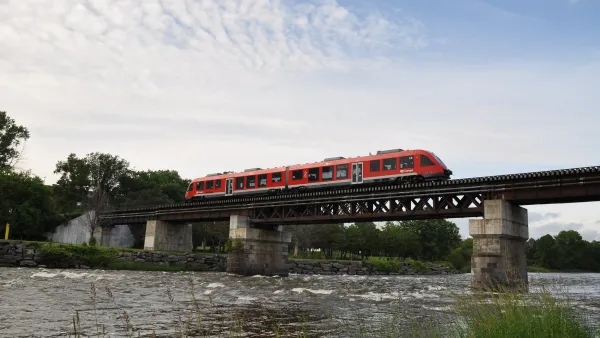
Ottawa Light Rail On Track to Expand
Canada's capital has approved a major set of extensions to its light rail O-Train system, encompassing 27.3 miles of new track and 24 new stations.
Ottawa Moving Ahead with Second Part of its Light Rail Plan
A new tunnel moving east under the Sir John A. Parkway gets approval from National Capital Commission.
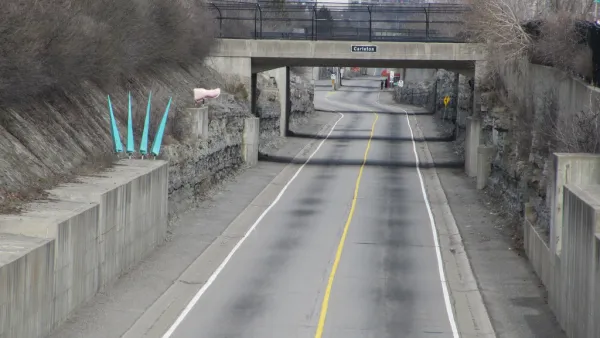
Ottawa Offers Lessons in Transitioning from BRT to Light Rail
Nour Aoude examines the planning efforts behind Ottawa's new Confederation light rail line, which will replace sections of the over-used Transitway bus rapid transit line.

The state-sanctioned urbicide of Austin
People don’t kill cities. Freeways do.

US to reduce Colorado River water deliveries to Mexico
A new Colorado Treaty amendment reduces Mexico’s Colorado River water allocation by 250,000 acre feet.

New Jersey’s second-largest city bans standalone data centers
Jersey City will continue to allow co-location facilities, such as those meant for research institutions that store their own data.

Amtrak not solely to blame for New Jersey commuter rail's unreliability, report finds
A new study from the Garden State Initiative found that NJ Transit’s budget grew 20% across a 4 year period, but reliability declined significantly over the same period.

EPA erases limits on planet-warming pollution from power plants
Under Monday’s plan, power plants would still have some limits on how much mercury, arsenic and other contaminants they can emit.

Phoenix announces new on-demand transit service, more frequent RAPID buses
Both new services will launch in October, and are part of Phoenix's Project Effective Access Solutions for Easing Congestion.

FREE Course: Walkable City 1: Why Walkability?
After describing his path towards focusing on walkability as the essence of good planning, Jeff Speck marches through his five principal reasons for making more walkable places.
Reinventing Malls: Planning Alchemy—Turning Gray Fields Into Gold
The course focuses on the opportunities and imperatives that shape reinvention of mall sites.

Eagle County Government
Harvard University Graduate School of Design
Nashville Planning Department
The Architects Foundation
University of Cincinnati Online
The Pocatello Development Authority
The Urban Renewal Agency of the City of Pocatello
Journal of the American Planning Association