A study by the Organisation for Economic Co-operation and Development (OECD) identified twenty coastal cities, which by population, would be most exposed to flooding and superstorms. Fifteen are mega-cities in Asia.


While the East Coast of the United States is now acutely aware of the dangers posed by rising sea levels and intensifying storms, the populations most at risk to such events (which are largely found in the developing world's megacities) have far less tools to respond to them. Experts are hoping the events of this week have caught the attention of leaders in such cities as Mumbai, Shanghai, and Bangkok.
"These cities are undergoing very rapid expansion and they are not only exposed to sea-level rise, they are also exposed to tropical cyclones," said Bob Ward, director of policy at the Grantham Research Institute on Climate Change and the Environment in London. "It is clear there isn't any urban planning going on, and they have a lot of poor people living in very low-quality housing who are going to be especially vulnerable and exposed."
"Awareness of the risks and good governance are key to diminishing the threat," said Ashvin Dayal, head of the Rockefeller Foundation in Asia, which supports strengthening the region's climate defenses. Preventative measures could include better planning, rebuilding natural defenses, cementing floors, and preserving flood plains.
Read the full story: Asia's mega-cities badly exposed to superstorms

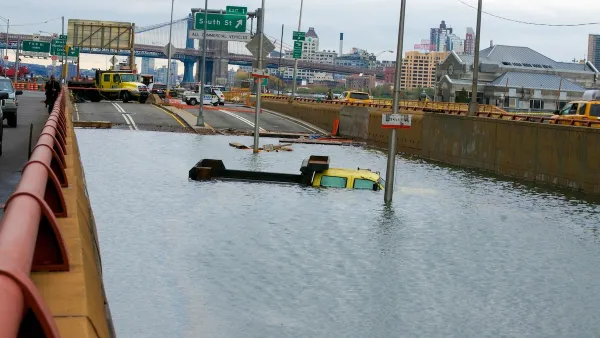
Over a Quarter of US Homes Face ‘Severe or Extreme’ Climate Risk
The number of U.S. homes at risk from hurricanes, fires, or flooding is valued at close to $13 trillion.

Rebuilding After Disaster: The Role of Social Connections in Resilience
Dr. Lucy Jones emphasizes that resilience in the face of climate-driven disasters like wildfires relies on building strong social connections, which empower communities to recover and adapt to an increasingly challenging future.
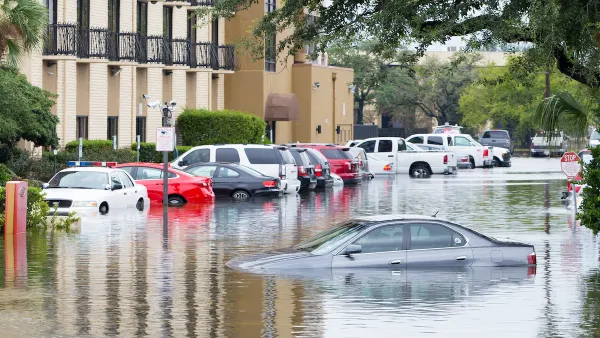
Migration to Disaster-Prone Areas Persists
Regions at high risk for flooding, wildfires, and other climate-fueled disasters continue to see rapid population growth.

Planetizen Federal Action Tracker
A weekly monitor of how Trump’s orders and actions are impacting planners and planning in America.

Amtrak, CN end decades-long dispute with eight-year agreement
The new operating agreement establishes an updated framework for the companies to work together, including processes to resolve disputes.

Judges permit Denver to divert 77,000 acre feet from the Colorado River for reservoir expansion
Overuse and climate change have caused the Colorado River’s water levels to plummet.

NYC DOT wants faster, more permanent street upgrades
The city is examining ways to build more concrete infrastructure without getting entangled in 'decades-long' projects.

'Something we’ve never seen before:' rising utility rates could strain city finances nationwide
Data centers, climate change and other factors have caused utility rates in the United States to increase by 38% since 2020.

Trump to overrule local leaders, lease millions of acres of America’s Pacific Island territories’ seafloors to mining companies
International law says that the Indigenous people of America’s territories have a right to prior and informed consent regarding projects that impact their countries.

FREE Course: Walkable City 1: Why Walkability?
After describing his path towards focusing on walkability as the essence of good planning, Jeff Speck marches through his five principal reasons for making more walkable places.
Reinventing Malls: Planning Alchemy—Turning Gray Fields Into Gold
The course focuses on the opportunities and imperatives that shape reinvention of mall sites.

Harvard University Graduate School of Design
KFH Group Inc.
Greater Baltimore Committee
The Architects Foundation
University of Cincinnati Online
The Pocatello Development Authority
The Urban Renewal Agency of the City of Pocatello