Two entrepreneurs and brothers take urban development matters into their own hands. The result? Lured by a contest offering free rent, and the associated buzz, Birmingham's South Avondale finds itself in the midst of a cultural renaissance.


"'White flight', population loss, and the closing of industrial businesses that manufactured goods such as cotton and bricks" writes Matt Stroud, all contributed to the demise of South Avondale, "[o]nce a small, thriving cultural district on the border of affluent sections of [Birmingham's] Southside."
Brothers Coby and Hunter Lake, however, capitalized on a combination of local policy changes and availability of federal stimulus money for "shovel ready" projects, by investing in real estate along South Avondale's main drag and building a brewery there, reports Stroud. They didn't stop there, however, in an effort to develop the neighborhood and attract more businesses, they also created a contest to give one new business owner six months of free rent in one of their vacant, ground level storefronts.
With the help of Main Street Birmingham, a public-private urban redevelopment organization that partners with the city, the brother's launched the, "Occupy Avondale" contest, which received 75 applications. The winner was Freshfully, "a grocery store designed for local farmers to sell their food and goods" and "additional businesses have since gravitated to South Avondale", writes Stroud.
This urban revitalization maneuver apparently worked for South Avondale in Birmingham, and to varying degrees in places like Cleveland, an Indiana town called Lawrenceburg, and Buffalo. "For some businesses, especially when they're starved for cash, six months of free rent is great," says Robert Simons, an urban studies professor at Cleveland State University specializing in real estate development and public economics, "It can make all the difference."
"South Avondale had plenty of help from the federal stimulus," writes Stroud, "along with help from a new set of alcohol laws," but the Lake brothers were able to create the buzz and critical mass needed to sustain their business investment in the long run.
Read the full story: Is Free Rent Enough to Jumpstart a Sleepy Commercial District?
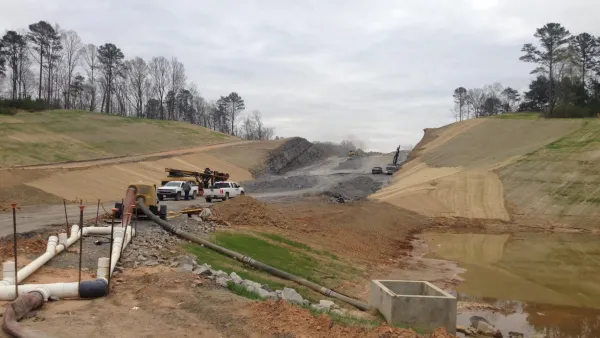
Alabama DOT wants to fill wetlands for interstate project
The Birmingham Northern Beltline would run roughly 52 miles through forests and wetlands that are home to multiple endangered species.
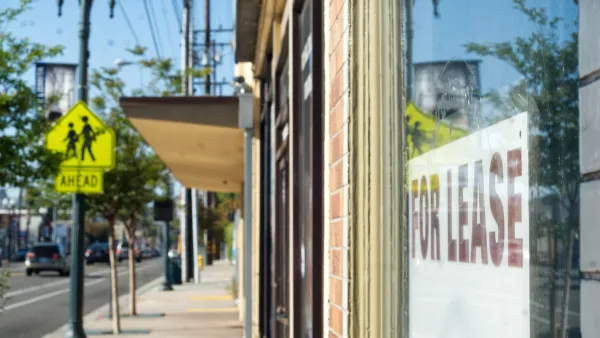
New California Law Protects Commercial Tenants
The law, modeled on residential tenants’ rights, acknowledges the uneven power dynamics between many small business owners and their commercial landlords.

New Jersey Bill Would Ease Permitting for Home-Based Businesses
The proposed law would eliminate the need for home-based business owners to undergo a review by their local zoning boards to encourage small entrepreneurship.

Planetizen Federal Action Tracker
A weekly monitor of how Trump’s orders and actions are impacting planners and planning in America.

Eastern Nebraska is running out of electricity
Data centers and electrification are straining eastern Nebraska’s grid, throttling economic development.

Study reveals best places in the U.S. for cycling, walking
New research from Streetlight Data examines bicycle and pedestrian miles per capita in the 100 largest U.S. cities by population.

All sides of BRT debate unhappy with CDOT’s most recent move
The Colorado Department of Transportation is no longer considering center-running bus lanes for Colorado Boulevard.

Massachusetts bogs generate both power, and cranberries
Putting solar panels above farmland is one way Massachusetts is advancing toward its goal of net-zero carbon emissions by 2050.

What could the future of LA transit look like under Raman?
The mayor-elect views broken sidewalks and potholes as crises that can be fixed with better governance.

FREE Course: Walkable City 1: Why Walkability?
After describing his path towards focusing on walkability as the essence of good planning, Jeff Speck marches through his five principal reasons for making more walkable places.
Reinventing Malls: Planning Alchemy—Turning Gray Fields Into Gold
The course focuses on the opportunities and imperatives that shape reinvention of mall sites.

City of Rosemead
Rutgers University, Edward J. Bloustein School of Planning and Public Policy
One Hundred Miles
University of Michigan School for Environment and Sustainability (SEAS)
Hunter College, City University of New York (CUNY)
The Architects Foundation
City of Cambridge
The Pocatello Development Authority
The Urban Renewal Agency of the City of Pocatello