The law, modeled on residential tenants’ rights, acknowledges the uneven power dynamics between many small business owners and their commercial landlords.


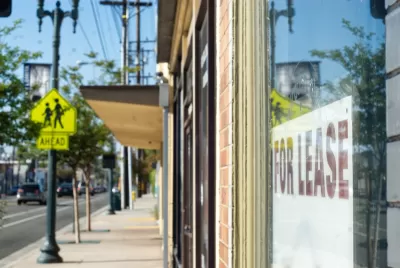
A new California law adds new protections for small commercial tenants, including fair notice of rent increase or termination of tenancy requirements, reports Oscar Perry Abello in Next City.
The law is meant to even the playing field for small business owners and nonprofits and limit the reach of institutional investors unfamiliar with the local community. “Businesses covered under the new law have the right to a lease written in the language that was used for negotiation with the landlord, security deposits limited to one month’s rent, and a right for documentation from landlords that explains how building maintenance fees are calculated, including any new increases in fees.”
Abello points out that speculative development by large investors has followed the expansion of the Los Angeles Metro rail system, which is finally building stations in some of the city’s historically underserved neighborhoods. Elsewhere in California, the rise of the tech industry in the San Francisco Bay Area fueled similar speculation, displacement, and gentrification.
According to Abello, “Pushing for these new commercial tenant rights is part of a multi-pronged strategy to counteract the real estate speculation displacing small businesses.” Cities like Los Angeles are also launching programs aimed at supporting legacy businesses and preventing their displacement, while activist organizations are banding together to help business owner groups purchase properties through community land trusts and other mechanisms.
FULL STORY: California’s New Commercial Tenant Rights Could Change the Game


LA’s Laws Against Rent Gouging are Going Unused — Not Because it’s not Happening
The county has not fined anyone under new laws passed after last year’s wildfires.

DC Housing Advocates Warn of ‘Critical Data Gap’ as District is Poised to Roll Back Tenant Protections
The District lacks a system for tracking evictions trends.
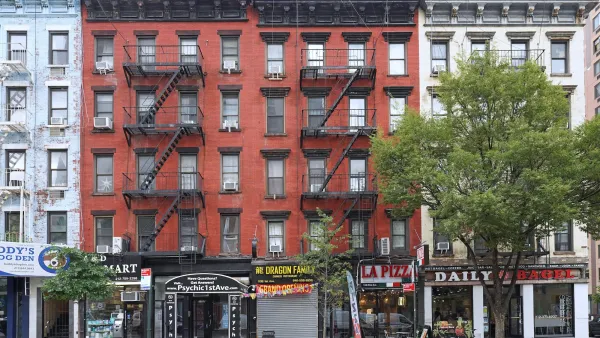
NYC Rent Transparency Act Requires Public Notices on Rent-stabilized Apartments
The new law requires publicly posted notices in all buildings with at least one rent-stabilized unit.

Planetizen Federal Action Tracker
A weekly monitor of how Trump’s orders and actions are impacting planners and planning in America.

The state-sanctioned urbicide of Austin
People don’t kill cities. Freeways do.

US to reduce Colorado River water deliveries to Mexico
A new Colorado Treaty amendment reduces Mexico’s Colorado River water allocation by 250,000 acre feet.

Amtrak not solely to blame for New Jersey commuter rail's unreliability, report finds
A new study from the Garden State initiative found that NJ Transit’s budget grew 20% across a 4 year period, but reliability declined significantly over the same period.

EPA erases limits on planet-warming pollution from power plants
Under Monday’s plan, power plants would still have some limits on how much mercury, arsenic and other contaminants they can emit.

Phoenix announces new on-demand transit service, more frequent RAPID buses
Both new services will launch in October, and are part of Phoenix's Project Effective Access Solutions for Easing Congestion.

FREE Course: Walkable City 1: Why Walkability?
After describing his path towards focusing on walkability as the essence of good planning, Jeff Speck marches through his five principal reasons for making more walkable places.
Reinventing Malls: Planning Alchemy—Turning Gray Fields Into Gold
The course focuses on the opportunities and imperatives that shape reinvention of mall sites.

Eagle County Government
Harvard University Graduate School of Design
Nashville Planning Department
The Architects Foundation
University of Cincinnati Online
The Pocatello Development Authority
The Urban Renewal Agency of the City of Pocatello
Journal of the American Planning Association