The District lacks a system for tracking evictions trends.



Washington, D.C. is poised to enact the Rebalancing Expectations for Neighbors, Tenants and Landlords (RENTAL) Act, a rollback of pandemic-era tenant protections that could lead to a rising number of evictions in the District.
But as Yuliya Panfil and Sabiha Zainulbhai explaoins in an analysis in Greater Greater Washington, the District lacks the data to understand how this will impact residents. According to the authors, “The annual counts the Superior Court does publish show that tens of thousands of DC renters receive an eviction filing each year. Yet councilmembers are not able to track why these filings happen, where in the city they are concentrated, and who is most impacted.”
The article notes that “without accessible and comprehensive data on evictions, it’s nearly impossible to pass data-driven, targeted, and effective policies that keep people housed. It’s also difficult to counter misleading narratives that suggest that allowing evictions to occur on a faster timeline will improve housing stability citywide.”
The authors’ research team collected and released the first public data on D.C. eviction filings since 2019. According to their research, “eviction filings across the District have plunged nearly 60% since before the pandemic, dropping from an average of 30,455 per year between 2016 and 2019 to a projected 12,565 in 2025.” This is in part due to protections put in place during the Covid-19 pandemic that the RENTAL Act will undo. The authors urge D.C. councilmembers to create the mechanisms to more accurately tracks eviction data and trends across the District as the RENTAL Act takes effect.
Read the full story: DC is rolling back tenant protections — without the data to track the consequences

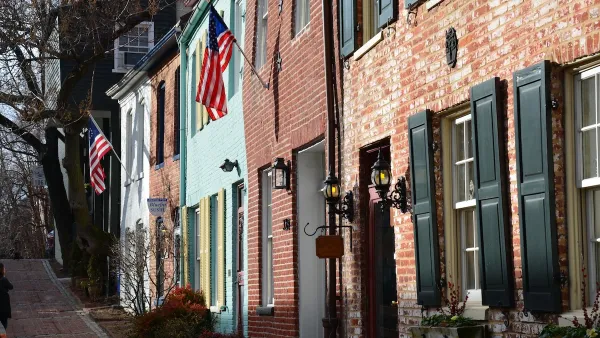
Report: Proposed DC RENTAL Law Would Harm Black and Low-Income Residents
The proposal would speed up evictions, eliminate some protections for tenants, and exempt buildings from a law that requires tenants have first right of purchase.
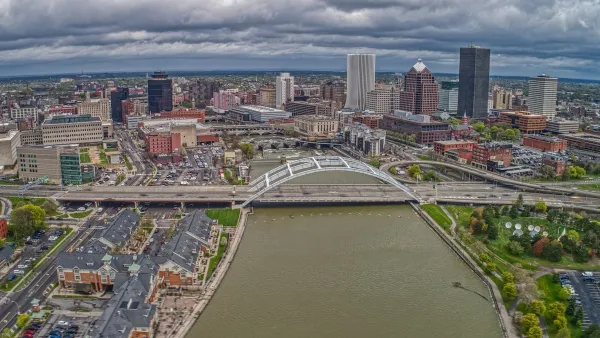
Rochester Approves Tenant Protections
The city adopted the strictest possible version of New York state’s ‘Good Cause’ eviction protections, which cap rent increases at 10 percent.
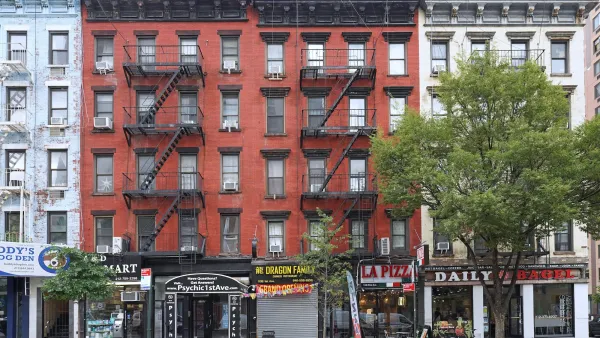
NYC Rent Transparency Act Requires Public Notices on Rent-stabilized Apartments
The new law requires publicly posted notices in all buildings with at least one rent-stabilized unit.

Planetizen Federal Action Tracker
A weekly monitor of how Trump’s orders and actions are impacting planners and planning in America.

California plans to bury El Niño’s downpour
If the state plays its cards right, it may be able to store a billion acre-feet of El Niño’s water in aquifers.

Chicago breaks ground on $3 billion megadevelopment
The new neighborhood, titled Foundry Park, will one day host 3,700 residences.

California High-Speed Rail Authority CEO resigns after $600,000 scandal
Under Ian Choudri, the authority used taxpayer dollars to fund first class flights and trips to nightclubs.

Want to study the Missouri River? Soon, you may need unanimous approval from 10 states
Legislation would require 10 governors’ permission to study or build projects moving water outside the basin.

Desperate measures: Advocates weigh draining Lake Powell to fill Colorado River
Draining the reservoir could reduce evaporation losses by a couple hundred thousand acre-feet.

FREE Course: Walkable City 1: Why Walkability?
After describing his path towards focusing on walkability as the essence of good planning, Jeff Speck marches through his five principal reasons for making more walkable places.
Reinventing Malls: Planning Alchemy—Turning Gray Fields Into Gold
The course focuses on the opportunities and imperatives that shape reinvention of mall sites.

City of Rosemead
Rutgers University, Edward J. Bloustein School of Planning and Public Policy
One Hundred Miles
Hunter College, City University of New York (CUNY)
The Architects Foundation
University of Cincinnati Online
City of Cambridge
Montrose County
The Pocatello Development Authority