Recent headlines over the fight to protect a home designed by Frank Lloyd Wright for his son in Phoenix touch upon the city's larger struggle to protect its dwindling cache of historic buildings, reports Fernanda Santos.


Despite the proven economic benefits of historic preservation in neighboring states such as Colorado, a business community smitten with the "new, new, new" and laws that protect property owner rights are imperiling Phoenix's extant history.
"Preserving history is a tricky business in Arizona," writes Santos, "where so many old
structures have been felled by fire, decay or development that the
state's colorful past is often celebrated in recreated settings. Voters
in 2006 approved a ballot measure giving property owners the right to
file claims against the government if its regulations, like a historic
or landmark designation, resulted in a decrease in their property's
value."
The national debate over fate of the David Wright House overshadows the recent and impending loses of buildings of local importance such as the the Madison Hotel and the National Register listed Hotel St. James.
"Jim McPherson, the president of the Arizona Preservation Foundation,
a nonprofit group, said that because so many people in Phoenix did not
have roots here and knew little, or nothing, about its history, 'the
hotels were just meaningless old buildings, nothing else.'"
"The question that ought to be asked, Mr. McPherson said, is, 'How do you
continue to tell a city's story if the remnants of its past have all
come down?'"
Read the full story: Struggling to Save the Old in a Town That Values the New

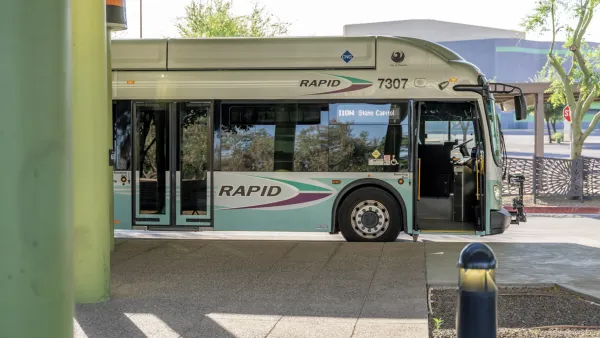
Phoenix announces new on-demand transit service, more frequent RAPID buses
Both new services will launch in October, and are part of Phoenix's Project Effective Access Solutions for Easing Congestion.

Phoenix cuts transit fares for low-income riders, tables fare-free days
The city council tabled discussions of four free transit days until it could do more research on the economic impact.
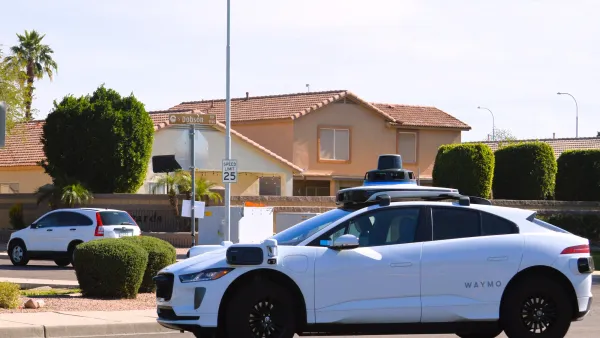
Uber and Waymo part ways in Phoenix
The companies ended a three-year pilot program, with Waymo saying it plans to keep its Phoenix robotaxi fleet available through its own app.

Planetizen Federal Action Tracker
A weekly monitor of how Trump’s orders and actions are impacting planners and planning in America.

The state-sanctioned urbicide of Austin
People don’t kill cities. Freeways do.

Colorado’s Largest Data Center Could Rise Next to Homes — Without a Public Hearing
The proposed campus would consume 11 times the power of Denver International Airport; as it has across the country, opposition mounts.
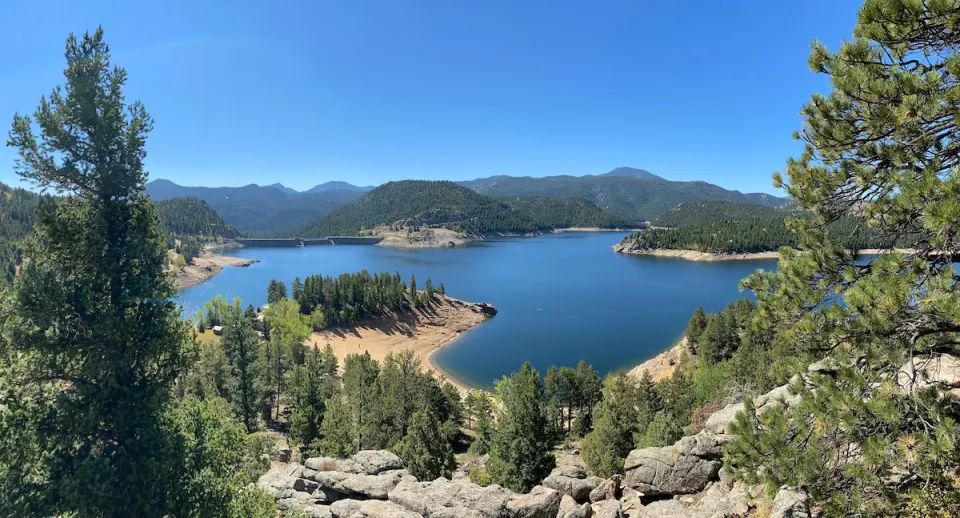
Judges permit Denver to divert 77,000 acre feet from the Colorado River for reservoir expansion
Overuse and climate change have caused the Colorado River’s water levels to plummet.

Amtrak, CN end decades-long dispute with eight-year agreement
The new operating agreement establishes an updated framework for the companies to work together, including processes to resolve disputes.

Raised interest rates may kill financially vulnerable construction projects
The chief economist at ConstructConnect warns that if construction project owners are negatively impacted by the raised rates, it could result in delayed payments to contractors.

FREE Course: Walkable City 1: Why Walkability?
After describing his path towards focusing on walkability as the essence of good planning, Jeff Speck marches through his five principal reasons for making more walkable places.
Reinventing Malls: Planning Alchemy—Turning Gray Fields Into Gold
The course focuses on the opportunities and imperatives that shape reinvention of mall sites.

Greater Baltimore Committee
Eagle County Government
Harvard University Graduate School of Design
The Architects Foundation
University of Cincinnati Online
The Pocatello Development Authority
The Urban Renewal Agency of the City of Pocatello
Journal of the American Planning Association