As Vanessa Quirk reports, the house Frank Lloyd Wright designed for his son, David, is one of the renowned designer's "more unusual architectural specimens." Located in Arcadia, Arizona, the home is at imminent risk of demolition by developers.


Constructed from 1950-52, the David Wright House has been described by Neil Levine, architectural historian and Harvard professor, as "one of Frank Lloyd Wright's most innovative, unusual and personal works of architecture."
Levine continues, "it is the only residence by the world-famous
architect that is based on the circular spiral plan of the Guggenheim
Museum in New York, whose construction followed it by six years. When
the house was first published in 1953, it was stated that no other
Wright house since Fallingwater was as praiseworthy and remarkable.
Since then its reputation has only increased and several architectural
historians and architecture critics consider it to be among the 20 most
significant Wright buildings."
According to Quirk, an online petition to the City of Phoenix has been set-up while the city deliberates "whether to bestow historic preservation and landmark designation upon the house...as of right now, they're 360 signatures short of their 1,000 person goal."
Read the full story: UPDATE: Save A Frank Lloyd Wright! Sign the Petition Now!

The Importance of Botanical Gardens
During the COVID-19 pandemic, public gardens like the Los Angeles County Arboretum and Botanic Garden have become very popular destinations, serving as places of respite and recreation for a weary public.
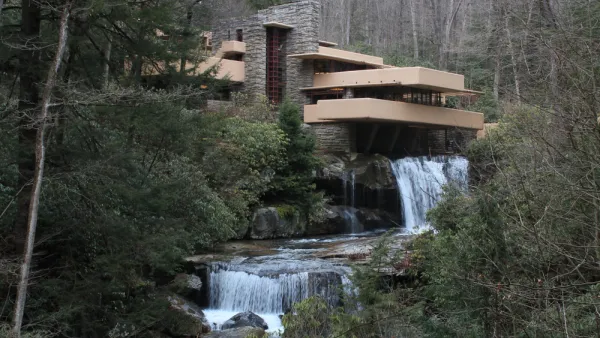
8 Frank Lloyd Wright Buildings Named World Heritage Sites
Eight buildings designed by Frank Lloyd Wright are the first works of U.S. modern architecture to be named UNESCO World heritage sites.
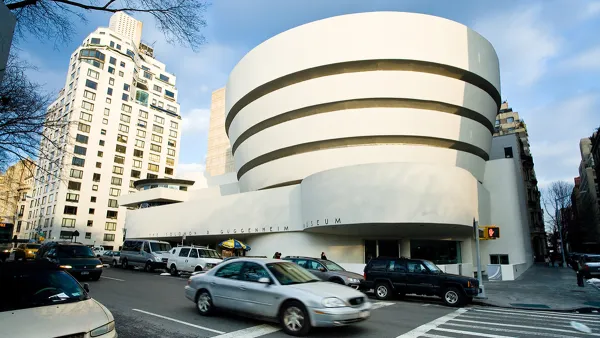
8 Frank Lloyd Wright Buildings Nominated as UNESCO World Heritage Sites
If accepted as UNESCO World Heritage sites, the eight Frank Lloyd Wright buildings would be the first examples of modern architecture in the United States included in that august company.

Planetizen Federal Action Tracker
A weekly monitor of how Trump’s orders and actions are impacting planners and planning in America.

California plans to bury El Niño’s downpour
If the state plays its cards right, it may be able to store a billion acre-feet of El Niño’s water in aquifers.

Desperate measures: Advocates weigh draining Lake Powell to fill Colorado River
Draining the reservoir could reduce evaporation losses by a couple hundred thousand acre-feet.

Mamdani’s pied-à-terre tax survives legal challenge
A panel of judges found that the plaintiffs failed to demonstrate injury as a result of New York City's implementation of the tax.

Eastern Nebraska is running out of electricity
Data centers and electrification are straining eastern Nebraska’s grid, throttling economic development.

Seattle passes record-breaking transit services expansion
Proposition 1 will double the city’s transit tax to add 95,000 more bus trips and preserve 180,000 bus trips annually.

FREE Course: Walkable City 1: Why Walkability?
After describing his path towards focusing on walkability as the essence of good planning, Jeff Speck marches through his five principal reasons for making more walkable places.
Reinventing Malls: Planning Alchemy—Turning Gray Fields Into Gold
The course focuses on the opportunities and imperatives that shape reinvention of mall sites.

City of Rosemead
Rutgers University, Edward J. Bloustein School of Planning and Public Policy
One Hundred Miles
Hunter College, City University of New York (CUNY)
The Architects Foundation
University of Cincinnati Online
City of Cambridge
Montrose County
The Pocatello Development Authority