If accepted as UNESCO World Heritage sites, the eight Frank Lloyd Wright buildings would be the first examples of modern architecture in the United States included in that august company.


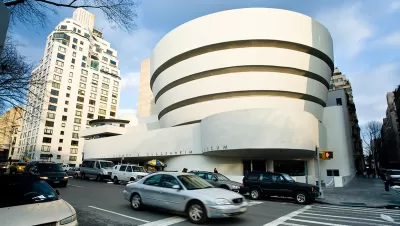
"The Frank Lloyd Wright Building Conservancy nominated eight of Wright’s buildings to become a UNESCO World Heritage site in 2019," reports Liz Stinson. "Remarkably, Wright’s buildings are the first pieces of modern architecture to be submitted for the honor by the United States."
The collection of nominated buildings spans 50 years of the architect's career, explains Stinson, from the early 20th century to the 1950s. "The buildings were carefully chosen to highlight Wright’s architectural through-lines and show how his designs fundamentally shaped the landscape of American architecture."
Here are the FLW buildings included on the list of nominees:
- Taliesin (Spring Green, Wisconsin)
- Unity Temple (Oak Park, Illinois)
- Frederick C. Robie House (Chicago)
- Fallingwater (Mill Run, Pennsylvania)
- The Hollyhock House (Los Angeles)
- Herbert and Katherine Jacobs House (Madison, Wisconsin)
- Taliesin West (Scottsdale, Arizona)
- The Guggenheim Museum (New York City)
FULL STORY: 8 Frank Lloyd Wright buildings nominated to be World Heritage Sites

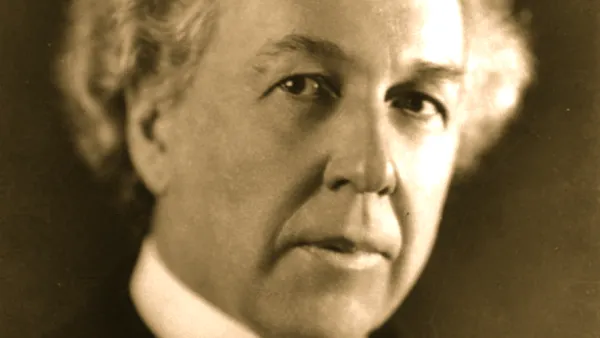
Celebrate Frank Lloyd Wright's 150th Birthday Today
June 8 marks the 150th anniversary of the birth of Frank Lloyd Wright, and Dezezen has rounded up 10 ways to celebrate nationwide.
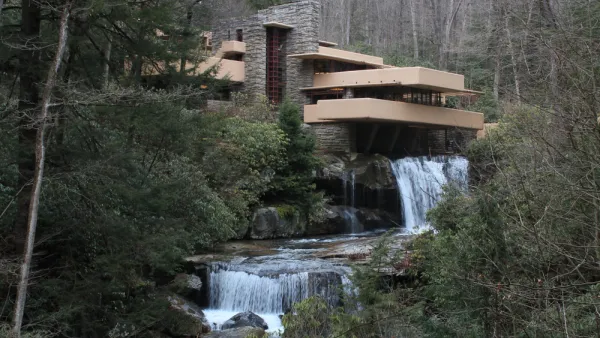
8 Frank Lloyd Wright Buildings Named World Heritage Sites
Eight buildings designed by Frank Lloyd Wright are the first works of U.S. modern architecture to be named UNESCO World heritage sites.
It Seemed Like a Good Idea
Witold Rybczynski takes a look at architecture that has fared poorly with time.

Planetizen Federal Action Tracker
A weekly monitor of how Trump’s orders and actions are impacting planners and planning in America.

The state-sanctioned urbicide of Austin
People don’t kill cities. Freeways do.

US to reduce Colorado River water deliveries to Mexico
A new Colorado Treaty amendment reduces Mexico’s Colorado River water allocation by 250,000 acre feet.

5 New England states march closer to 800 megawatt wind energy project
Securing federal approval for the project may be complicated under the Trump administration, which has historically been hostile towards domestic wind power.

Baltimore to break ground on $50 million Transit Priority Project
The project will bring faster bus trips, safer streets and better bike connections to Baltimore.

Airbnb launches $250 million 'last-dollar financing' housing accelerator, makes first investment in Austin
The company will put $6.4 million towards affordable housing development in Texas’ capital.

FREE Course: Walkable City 1: Why Walkability?
After describing his path towards focusing on walkability as the essence of good planning, Jeff Speck marches through his five principal reasons for making more walkable places.
Reinventing Malls: Planning Alchemy—Turning Gray Fields Into Gold
The course focuses on the opportunities and imperatives that shape reinvention of mall sites.

Eagle County Government
Harvard University Graduate School of Design
Nashville Planning Department
The Architects Foundation
University of Cincinnati Online
The Pocatello Development Authority
The Urban Renewal Agency of the City of Pocatello
Journal of the American Planning Association