As the third and final phase of the immensely popular High Line breaks ground in New York, Mayor Bloomberg responds to recent criticism about the gentrifying effect of the park, reports Matt Chaban.


As with any new project that attracts flocks of tourists and developers with dollar signs in their eyes, New York's immensely popular, and much admired new park has also attracted a rising backlash, oriented around complaints of gentrification. Last week, Mayor Bloomberg took up the debate surrounding the High Line's effect, sort of. "Asked about these changes today," says Chaban, "Mayor Bloomberg did not necessarily disagree with the situation, just the sentiment."
"Cities have to evolve," the mayor explained. "We have a constant
influx of people from around the world moving to this city, and the
needs of the people who are here change. Today people are staying
because the schools are better. Today we have a challenge because we
need to provide more activities for more kids than we used to have.
People from around the world want to come here. There's always a
challenge how you have enough affordable housing, how you build housing
when the marketplace says it's more and more valuable because more and
more people want to come."
"We're going to keep changing, and that's what's great about New York," the mayor concluded.
Read the full story: Bloomberg to High Line Haters: Cities Change, Get Over It
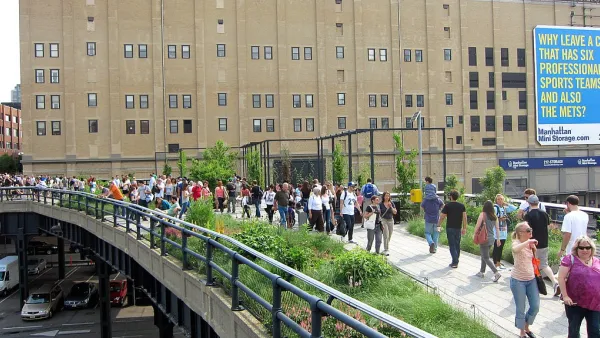
How to Prevent 'Green Gentrification'
A new report examines a range of strategies that limit the displacement effects of park projects.
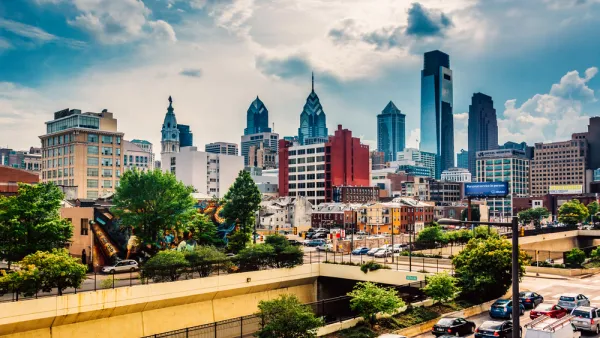
Working to Avoid the Pitfalls of the High Line
A highly anticipated linear park project in Philadelphia will open this year. Planners and activists have been working in anticipation of increased pressure on the local housing market.
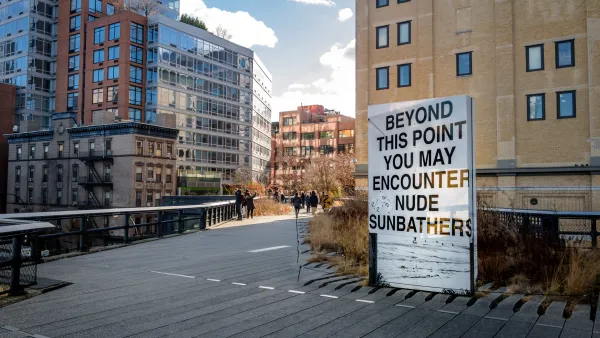
The 'Deliberately Unkind' Public Art of the High Line
"You could be forgiven for reading the art as a message to less-than-opulent New Yorkers: You’ve lost your place," writes Michael Friedman.

Planetizen Federal Action Tracker
A weekly monitor of how Trump’s orders and actions are impacting planners and planning in America.

California plans to bury El Niño’s downpour
If the state plays its cards right, it may be able to store a billion acre-feet of El Niño’s water in aquifers.

Desperate measures: Advocates weigh draining Lake Powell to fill Colorado River
Draining the reservoir could reduce evaporation losses by a couple hundred thousand acre-feet.

Los Angeles just elected an urban planner as its mayor
Transportation analysts are optimistic that Raman will be more aggressive in addressing transit issues than Bass.

Mamdani’s pied-à-terre tax survives legal challenge
A panel of judges found that the plaintiffs failed to demonstrate injury as a result of New York City's implementation of the tax.

Eastern Nebraska is running out of electricity
Data centers and electrification are straining eastern Nebraska’s grid, throttling economic development.

FREE Course: Walkable City 1: Why Walkability?
After describing his path towards focusing on walkability as the essence of good planning, Jeff Speck marches through his five principal reasons for making more walkable places.
Reinventing Malls: Planning Alchemy—Turning Gray Fields Into Gold
The course focuses on the opportunities and imperatives that shape reinvention of mall sites.

City of Rosemead
Rutgers University, Edward J. Bloustein School of Planning and Public Policy
One Hundred Miles
University of Michigan School for Environment and Sustainability (SEAS)
Hunter College, City University of New York (CUNY)
The Architects Foundation
City of Cambridge
Montrose County
The Pocatello Development Authority