Eric Jaffe reports that taxing vehicle-miles traveled (VMT) is getting a closer look in cities across America. But will concerns over privacy and government competence scuttle a promising path to reducing congestion and increasing revenue?


Last month, The Associated Press reported on a new proposal in the San Francisco Bay Area that could alleviate traffic congestion and increase road maintenance funds: implement a tax on vehicle-miles traveled that would be put towards updating and maintaining roads.
Miles traveled could be tracked either via GPS or odometer monitoring systems and would "charge drivers anywhere from fractions of a penny per mile up to a dime depending on the time of day. Based on current driving patterns, the mileage tax could deliver the Bay a daily revenue in the area of $15 million," notes Jaffe.
Although some transportation experts see a VMT fee system as a logical replacement for the outdated gas tax, and recent trial runs have produced some promising results, public feedback has not been positive. Says Jaffe, "The technology is here, and empirical justification isn't too far behind, and the need is arguably past."
Read the full story: Is a VMT Tax a Good Idea?

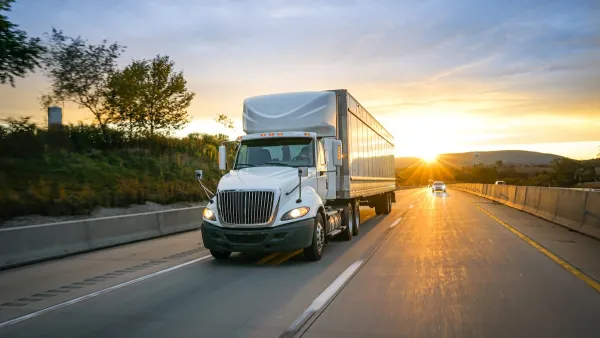
How a Truck Tax Could Save the Highway Trust Fund
The freight trucking industry is a prime candidate for a mileage tax that would boost road maintenance revenue.
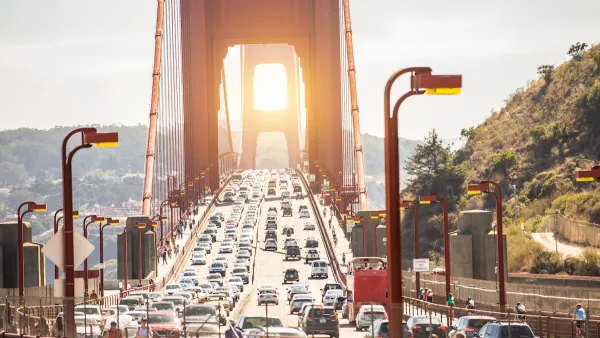
San Francisco ‘Best-Performing Metro’ for VMT, Traffic Reduction
The city saw a 13 percent drop in miles driven per capita in the last five years.
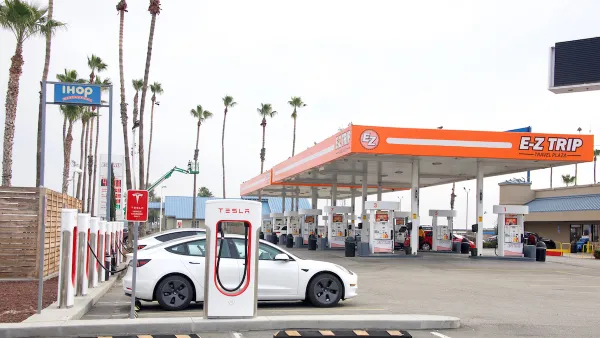
California Poised to Lose Up to $4 Billion in Gas Tax Revenue
States must find other ways to fund transportation projects as the transportation sector moves toward decarbonization.

Amtrak, CN end decades-long dispute with eight-year agreement
The new operating agreement establishes an updated framework for the companies to work together, including processes to resolve disputes.

Judges permit Denver to divert 77,000 acre feet from the Colorado River for reservoir expansion
Overuse and climate change have caused the Colorado River’s water levels to plummet.
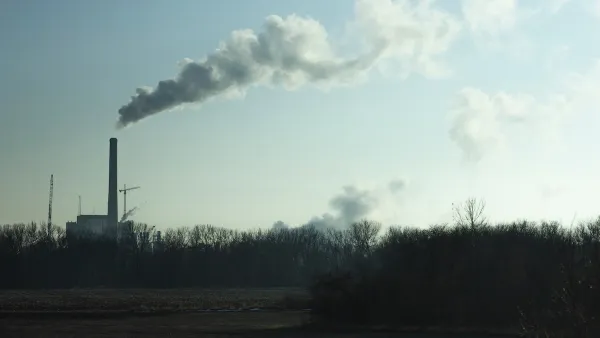
Nation's most wind-powered state turns to coal as data centers increase energy demand
For the first time in decades, Iowa has increased its generation of coal power.

Boston has spent millions making the Green Line more accessible — and there’s no end in sight
While the city has invested millions into expanding and adding platforms to the Green Line to make it more accessible, new train cars set to arrive next year will be too tall for disabled passengers to board without raising the current platforms.

Idaho may see an 18% drop in federal surface transit funding — the largest estimated cut in the US
Transit systems in rural communities are much more reliant on federal funding to provide their services.

How ‘post-disaster gentrification’ alters neighborhoods after natural calamities
After hurricanes, fires or other calamities, the original residents of a community are often replaced by younger, wealthier residents.

FREE Course: Walkable City 1: Why Walkability?
After describing his path towards focusing on walkability as the essence of good planning, Jeff Speck marches through his five principal reasons for making more walkable places.
Reinventing Malls: Planning Alchemy—Turning Gray Fields Into Gold
The course focuses on the opportunities and imperatives that shape reinvention of mall sites.

City of Wisconsin Rapids
Harvard University Graduate School of Design
KFH Group Inc.
The Architects Foundation
University of Cincinnati Online
The Pocatello Development Authority
The Urban Renewal Agency of the City of Pocatello