The era of American cities such as Chicago and New York leading the way in urban innovation went out with the close of the 20th century, says Dustin Roasa. Its China's turn to show the world what the city of the future will look like.


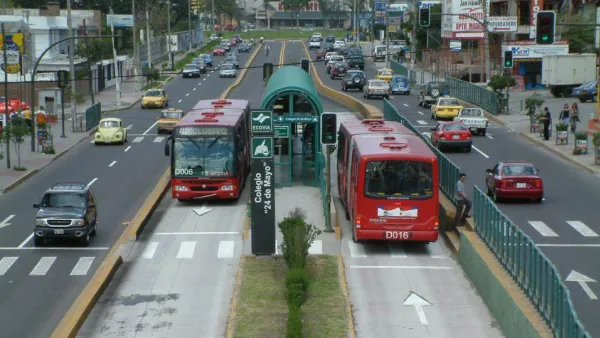
Although his colleague at Foreign Policy, Peter Calthorpe, cautions against China's urban future mirroring America's sprawling past, Roasa sees China as the world's new leader in urban technology. Exploring ideas that run the gamut from pie-in-the-sky to already implemented, Roasa looks at examples of urban innovations such as modular skyscrapers, traffic-jumping buses, and cutting-edge recycling.
One area in which the Chinese are already aggressive is the expansion the country's share of electric vehicles:
"Hoping to become the global leader in electric vehicles, the Chinese government wants
500,000 electric and plug-in hybrid vehicles on China's roads by 2015,
and more than 5 million by 2020. It is already backing these aspirations
with a range of subsidies, including up to $8,800 for every electric vehicle purchased by taxi companies and local governments."
"As a result, China has more electric taxis in operation than anywhere in the world and is likely to extend its lead."
Read the full story: Cities of the Future: Made in China

Madison’s Electric Buses Keep Running Through Brutal Freeze
A late January winter storm offered a key test for electric buses that often falter in cold temperatures.

Fighting Climate Change Requires Serious Transportation Reform
The federal government can encourage public transit use and electrification through reforms in transportation systems and land use policies.
Urban Transportation's Four Separate Challenges
At the Shared Use Mobility Summit in Chicago, Jarrett Walker cautioned the tech world to keep four key transportation problems in mind.

Planetizen Federal Action Tracker
A weekly monitor of how Trump’s orders and actions are impacting planners and planning in America.

California plans to bury El Niño’s downpour
If the state plays its cards right, it may be able to store a billion acre-feet of El Niño’s water in aquifers.

Desperate measures: Advocates weigh draining Lake Powell to fill Colorado River
Draining the reservoir could reduce evaporation losses by a couple hundred thousand acre-feet.

In Texas, data centers are swallowing promised parkland
Residents who moved to Taylor, Texas for a rural community now have to contend with three data centers in their backyard.

How a Chicago-sized wind farm beat the odds and powered on
The project spanned five presidential administrations and a standoff with a U.S. military base.

MTA gives itself 30 days to transform pit into basketball court
The site has been under construction since 2022; the city originally estimated it would finish the court in 2024.

FREE Course: Walkable City 1: Why Walkability?
After describing his path towards focusing on walkability as the essence of good planning, Jeff Speck marches through his five principal reasons for making more walkable places.
Reinventing Malls: Planning Alchemy—Turning Gray Fields Into Gold
The course focuses on the opportunities and imperatives that shape reinvention of mall sites.

City of Rosemead
Rutgers University, Edward J. Bloustein School of Planning and Public Policy
One Hundred Miles
Hunter College, City University of New York (CUNY)
The Architects Foundation
University of Cincinnati Online
City of Cambridge
Montrose County
The Pocatello Development Authority