Amanda Erickson explains how communities could wield the power of eminent domain to rescue residents with "underwater" mortgages, by condemning homes and allowing owners to refinance their mortgages and pay a new, lower rate.


While U.S. homeowners continue to struggle through the economic recession and maintain their mortgage payments, 14 million of them are making payments on mortgages that are worth more than their home. California-based community advisory company Mortgage Resolution Partners believes they have the answer for these "underwater" homeowners.
Erickson outlines MRP's streamlined process, stating that cities could "condemn 'underwater' homes that meet this criteria. Under the law, they would then pay mortgage holders (the trusts) only the 'market value' of the home, or the value the house is worth today. Then, instead of booting the residents, the city would allow them to refinance their mortgage and pay a new, lower rate."
Questions of legality come into play, but, Erickson writes, the 2005 case of Kelo vs. New London made the utilization of eminent domain for economic development an acceptable action. "At this point, I guess you'd have to say all bets are off in terms of what is and isn't eminent domain," says Columbia University law professor Thomas W. Merrill.
Read the full story: Can Eminent Domain Solve Our Mortgage Woes?

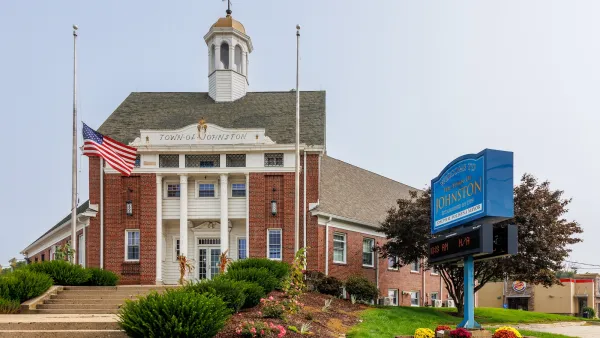
Judge says Rhode Island town can't seize private lot to block affordable housing
The town of Johnston moved to seize a lot for municipal buildings after its owners submitted a plan for a 254-unit housing development.
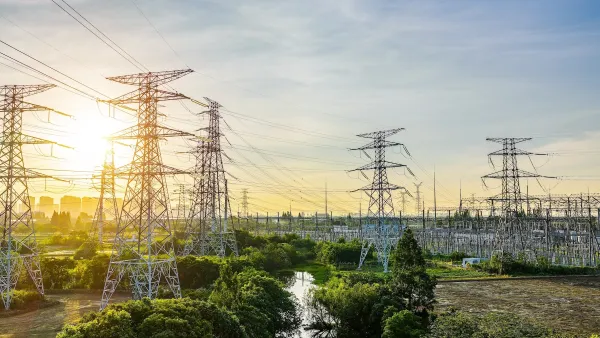
When can a power company take your land for data center infrastructure?
Meeting data center power demands will mean building more transmission lines and acquiring more land to put them on.
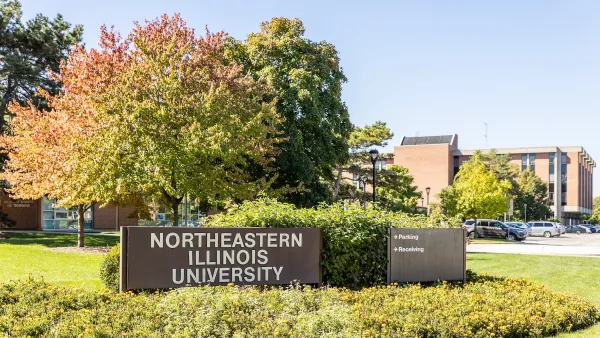
This university-owned city block in Chicago has languished for over a decade. Neighbors say it's time to let go
The university never built its planned student housing, letting a row of storefronts sit vacant for years.

Planetizen Federal Action Tracker
A weekly monitor of how Trump’s orders and actions are impacting planners and planning in America.

California plans to bury El Niño’s downpour
If the state plays its cards right, it may be able to store a billion acre-feet of El Niño’s water in aquifers.

Chicago breaks ground on $3 billion megadevelopment
The new neighborhood, titled Foundry Park, will one day host 3,700 residences.

California High-Speed Rail Authority CEO resigns after $600,000 scandal
Under Ian Choudri, the authority used taxpayer dollars to fund first class flights and trips to nightclubs.

Want to study the Missouri River? Soon, you may need unanimous approval from 10 states
Legislation would require 10 governors’ permission to study or build projects moving water outside the basin.

Desperate measures: Advocates weigh draining Lake Powell to fill Colorado River
Draining the reservoir could reduce evaporation losses by a couple hundred thousand acre-feet.

FREE Course: Walkable City 1: Why Walkability?
After describing his path towards focusing on walkability as the essence of good planning, Jeff Speck marches through his five principal reasons for making more walkable places.
Reinventing Malls: Planning Alchemy—Turning Gray Fields Into Gold
The course focuses on the opportunities and imperatives that shape reinvention of mall sites.

City of Rosemead
Rutgers University, Edward J. Bloustein School of Planning and Public Policy
One Hundred Miles
Hunter College, City University of New York (CUNY)
The Architects Foundation
University of Cincinnati Online
City of Cambridge
Montrose County
The Pocatello Development Authority