As they wait for construction materials to arrive, the race is on to see which of Chicago's two permitted parklets, which the CDOT calls "People Spots," will be the city's first to be completed.


The Lakeview and Andersonville neighborhoods will soon be blessed with Chicago's first foray into the growing nationwide trend in parklets, the quick and cheap repurposing of parking spots as small public spaces. "Their locations, inception stories, and designs differ," reports Steven Vance, "but the projects
have many similarities: local architecture firms are working pro bono
to design and obtain permitting; the respective Chambers of Commerce are
contributing construction funds."
Both teams of designers were careful to craft spaces that felt like miniature parks, rather than just extensions of neighboring eating establishments. Such was the motivation for Kevin Toukoumidis, the principal at dSPACE Studio, who designed the Lakeview parklet. "His intention was to activate a space
differently than a sidewalk cafe," writes Vance. "If people see just tables, they think
it's part of an establishment. This isn't," Toukoumidis said.
Read the full story: Park Your Fanny!

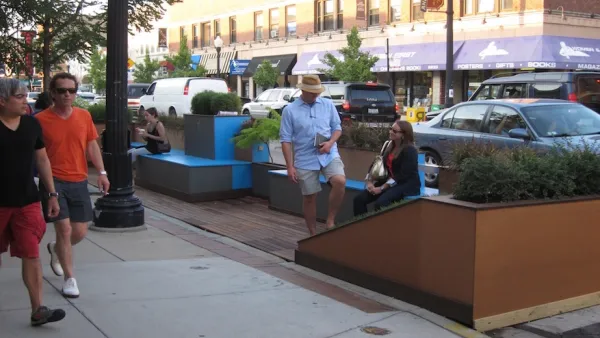
Chicago Parklet Designed to Be Flexible and Cost Effective
A newly installed parklet in Chicago is part of a larger program to engage the city’s public spaces.
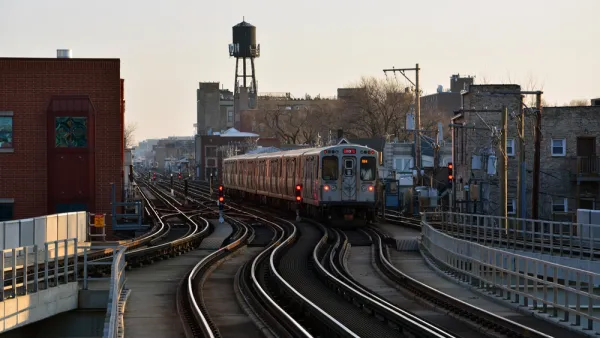
Demolition Starts for CTA's Controversial Flyover Project
The Chicago Transit Authority's Red-Purple Bypass Project will add an additional track to speed up trains passing through the Belmont Station. The project requires the demolition of several neighborhood buildings.

Cook County Property Taxes Cheat the Poor
In Cook County, which contains the city of Chicago and some of its suburbs, property values have been manipulated to disguise the value of homes, helping the rich at the expense of the poor (particularly poor minorities).

Planetizen Federal Action Tracker
A weekly monitor of how Trump’s orders and actions are impacting planners and planning in America.

Amtrak, CN end decades-long dispute with eight-year agreement
The new operating agreement establishes an updated framework for the companies to work together, including processes to resolve disputes.

Northwest rail fans eager for Sept. 30 debut of Amtrak’s Airo fleet
Get ready for that new train smell and more seats. But they won’t go faster or run more frequently on the Cascades route in Washington and Oregon.

St. Louis Metro to test if single-car trains can reduce operating costs, maintain rider satisfaction
The pilot program will run from October to spring 2027, and begin with one single-car train operating on Metrolink’s Red and Blue lines.

Pennsylvania is building data centers in abandoned mines
Housing data centers in mines provides an alternative to destroying local forests and may spare residents from data centers’ noise and air pollution.

If Corpus Christi can’t revive desalination plant project, it may owe Texas $235 million
Earlier this month, city officials declined to pursue developing the plant for the second time in a year.

FREE Course: Walkable City 1: Why Walkability?
After describing his path towards focusing on walkability as the essence of good planning, Jeff Speck marches through his five principal reasons for making more walkable places.
Reinventing Malls: Planning Alchemy—Turning Gray Fields Into Gold
The course focuses on the opportunities and imperatives that shape reinvention of mall sites.

City of Thousand Oaks
City of Wisconsin Rapids
Harvard University Graduate School of Design
The Architects Foundation
University of Cincinnati Online
The Pocatello Development Authority
The Urban Renewal Agency of the City of Pocatello