David Kilcullen creates maps to empower disenfranchised people in developing countries around the world. By combining social science and technology his firm solves tough problems in "frontier environments," reports David Holmes.


Mapping as a social justice tool - this was not the path that the founder of Caerus Associates had in mind when he joined the Australian military 25 years ago. After working under David Petraeus through the Iraq war, David Kilcullen realized that collaborative relationships were necessary to get a real understanding of development patterns in remote locations. His company now uses crowdsourcing to map development and socio-economic patterns in Nigeria, Liberia, and other nations where war or internal conflicts have stymied efforts to track settlement.
Kilcullen's firm has empowered communities in hostile areas by allowing them to stand up to over-reaching governments and multinational corporations. Before Caerus Associates, many of his client communities were literally not on the map.
This bold company chooses to make many of its findings publicly available and not to carry weapons into dangerous environments. Kilcullen describes it as "two-thirds tech, one-third social science, with a dash of special operations."
The ultimate impact of intrepid start-ups like Caerus Associates is still an open question. Without strong civic infrastructure to continue tracking demographic patterns, will these efforts be in vain?
Thanks to Nick Helmholdt
Read the full story: "Let’s Map Who Owes The Local Warlord Money": Meet An Urban Planner For Cities That Don't Yet Exist
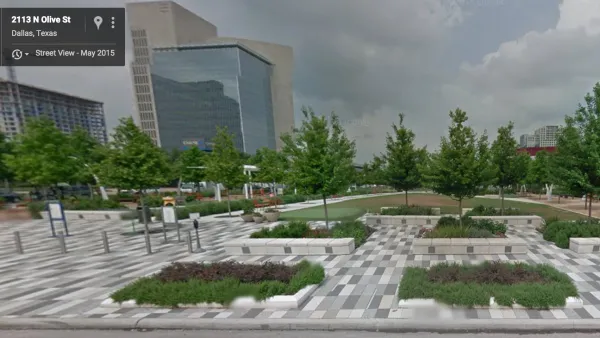
Op-Ed: Tech Can Enhance Parks
In the traditional view, nature and digital technology clash. But for many people, tech can offer ways to better engage with parks.
Creating a 3D Record of Africa's Heritage Sites
Fast Company points to a project at the University of Cape Town which seeks to create 3-D renderings of Africa's endangered monuments and heritage sites.
Mapping: Not Just For Geographers Anymore
Citizen volunteers are democratizing the field of online mapping, spreading out to document neighborhoods and streets worldwide.

Planetizen Federal Action Tracker
A weekly monitor of how Trump’s orders and actions are impacting planners and planning in America.

California plans to bury El Niño’s downpour
If the state plays its cards right, it may be able to store a billion acre-feet of El Niño’s water in aquifers.

Desperate measures: Advocates weigh draining Lake Powell to fill Colorado River
Draining the reservoir could reduce evaporation losses by a couple hundred thousand acre-feet.

Housing is the top priority of Seattle’s sole new councilmember
Jenks campaigned on building 1,000 new units of affordable housing.

New tax cuts may slash $1.5 billion in funding for Miami transit, public parks
Amendment 3 will save Miami-Dade homeowners $2,700 in 2028.

Arizona, Wisconsin, Pennsylvania hope to finally advance climate goals post-midterms
The three states have spent years under Republican or divided control.

FREE Course: Walkable City 1: Why Walkability?
After describing his path towards focusing on walkability as the essence of good planning, Jeff Speck marches through his five principal reasons for making more walkable places.
Reinventing Malls: Planning Alchemy—Turning Gray Fields Into Gold
The course focuses on the opportunities and imperatives that shape reinvention of mall sites.

City of Rosemead
Rutgers University, Edward J. Bloustein School of Planning and Public Policy
One Hundred Miles
University of Michigan School for Environment and Sustainability (SEAS)
Hunter College, City University of New York (CUNY)
The Architects Foundation
City of Cambridge
Montrose County
The Pocatello Development Authority