A recently released Amtrak plan doesn't envision high-speed rail servicing the Northeast Corridor until 2040. Paul Nussbaum looks at whether an incremental approach might bring increased speed and amenities to passengers sooner.


If you don't live in California's Central Valley, that probably means true high-speed rail isn't in your city's immediate future. But, according the "international manufacturers who are touting the prospects of smooth,
quiet, luxurious rides for American passengers", that doesn't mean you can't have a European- or Japanese-style high-speed rail "experience" at speeds well below 220-m.p.h., writes Nussbaum.
"'Higher-speed'
trains with many of the same aerodynamic features and interior
amenities of France's TGV or Japan's Shinkansen may be the American
stepping-stone to true high-speed rail, as the United States looks for
affordable improvements to its old-fashioned, slow passenger rail
network."
And apparently, these manufacturers are bullish on the prospects for America adopting an incremental approach: "Foreign-based high-speed train-builders, such as Alstom (France),
Siemens (Germany), and Talgo (Spain), have opened American factories to
make modern trains that can run on conventional tracks in the United
States, with hopes of eventually winning high-speed contracts, as well."
FULL STORY: ‘Higher-speed' trains to precede true high-speed rail in U.S.

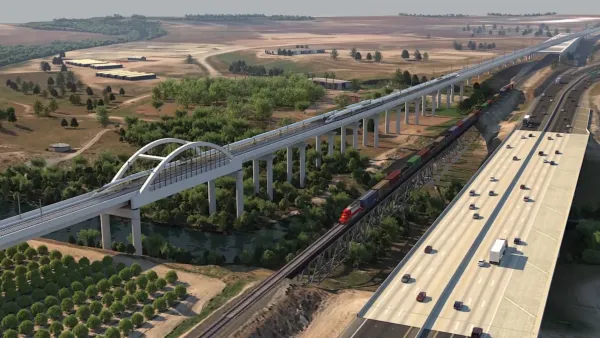
Tracking U.S. ‘Higher-Speed’ Rail Progress
Five projects are moving the United States forward on so-called “higher-speed” rail.
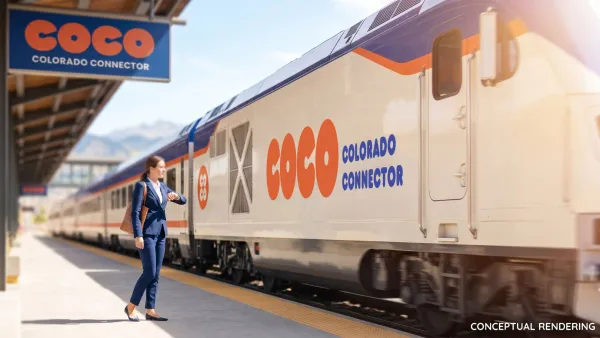
Colorado unveils fox mascot, branding for 'CoCo' high-speed rail
The new Denver-to-Fort Collins train is expected to begin service in 2029.
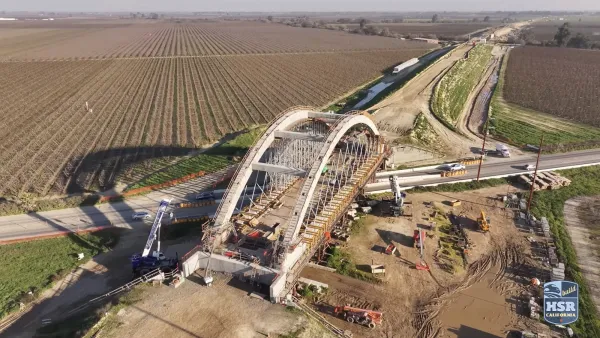
California High-Speed Rail wants to leverage data center revenue to fund trains
By positioning the rail line as a tech and renewable energy corridor, the agency hopes to increase revenue opportunities.

The state-sanctioned urbicide of Austin
People don’t kill cities. Freeways do.

US to reduce Colorado River water deliveries to Mexico
A new Colorado Treaty amendment reduces Mexico’s Colorado River water allocation by 250,000 acre feet.

New Jersey’s second-largest city bans standalone data centers
Jersey City will continue to allow co-location facilities, such as those meant for research institutions that store their own data.

Amtrak not solely to blame for New Jersey commuter rail's unreliability, report finds
A new study from the Garden State Initiative found that NJ Transit’s budget grew 20% across a 4 year period, but reliability declined significantly over the same period.

EPA erases limits on planet-warming pollution from power plants
Under Monday’s plan, power plants would still have some limits on how much mercury, arsenic and other contaminants they can emit.

Phoenix announces new on-demand transit service, more frequent RAPID buses
Both new services will launch in October, and are part of Phoenix's Project Effective Access Solutions for Easing Congestion.

FREE Course: Walkable City 1: Why Walkability?
After describing his path towards focusing on walkability as the essence of good planning, Jeff Speck marches through his five principal reasons for making more walkable places.
Reinventing Malls: Planning Alchemy—Turning Gray Fields Into Gold
The course focuses on the opportunities and imperatives that shape reinvention of mall sites.

Eagle County Government
Harvard University Graduate School of Design
Nashville Planning Department
The Architects Foundation
University of Cincinnati Online
The Pocatello Development Authority
The Urban Renewal Agency of the City of Pocatello
Journal of the American Planning Association