A so-called "eco-friendly" apartment complex complete with solar panels that derives more than 90% of its energy needs from coal? China struggles to take sustainable development seriously.


As one of the world's most polluted nations, with its fast-expanding cities filling with polluting factories and ports, and clogged with automobiles, China is struggling to find the balance between cost-effective affordable development and expensive, but much needed, environmentally and health-friendly construction. As Calum MacLeod, of USA Today reports, "China is building more eco-cities designed to be low-carbon and energy-saving than any other country, according to a survey by the University of Westminster in London. The USA ranked second."
Still, "China's buyers don't appear to be motivated by environmentalism," notes MacLeod. Instead, basic needs trump sustainability.
Many projects appear stalled and are nothing more than "promotional gimmicks by commercial developers," says MacLeod. "Housing Vice Minister Qiu Baoxing said the eco-city concept has been overused in China, and some projects actually damaged the environment, reported the state-run Xinhua News Agency."
Read the full story: China builds most ecologically friendly cities.

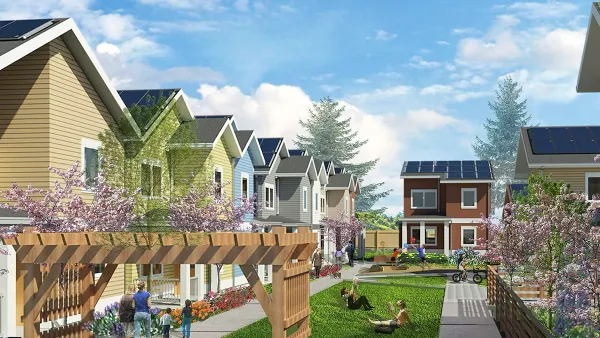
‘Fish-Friendly’ Washington Development Blends Affordability and Sustainability
A community land trust took on a difficult site in suburban Seattle — and ended up with a sustainable, diverse, mixed-ownership-form development that challenges multiple norms.
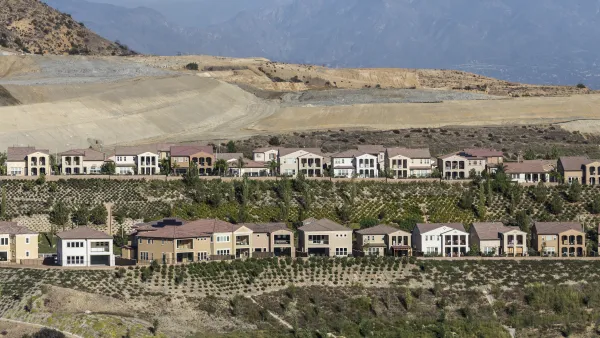
Study: How California Can Shift Away From Car-Oriented Development
While the state continues to rely on driving as a primary means of transportation, fighting climate change and the worsening housing crisis means implementing policies that encourage infill development, higher density, and public transit.
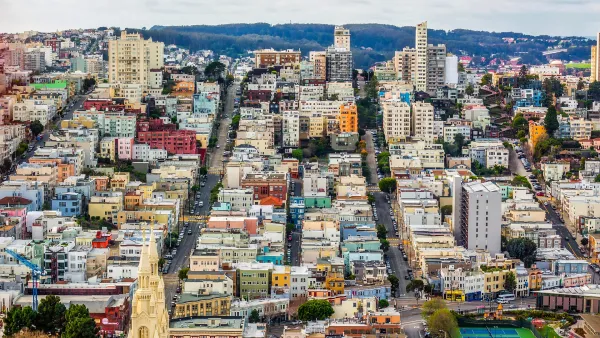
San Francisco’s Housing Woes: How the Past Informs the Present
A zoning history dating back to the 19th century still has significant impacts on the city’s housing in the present day.

Planetizen Federal Action Tracker
A weekly monitor of how Trump’s orders and actions are impacting planners and planning in America.

California plans to bury El Niño’s downpour
If the state plays its cards right, it may be able to store a billion acre-feet of El Niño’s water in aquifers.

Chicago breaks ground on $3 billion megadevelopment
The new neighborhood, titled Foundry Park, will one day host 3,700 residences.

This road in NYC is infamously dangerous — and Mamdani can't fix it
New York City's Ocean Parkway is known for reckless driving, but the power to implement safety measures lies with the state rather than the city.

One of Denver’s busiest corridors to gain BRT
The project will span 18 miles and contain 74 bus rapid transit stations.

275,000 bus trips are at stake on Seattle's ballot
If passed, the Seattle Transit Measure would trigger a 0.3% sales tax and raise an average of $138 million per year to maintain and expand Seattle’s bus services.

FREE Course: Walkable City 1: Why Walkability?
After describing his path towards focusing on walkability as the essence of good planning, Jeff Speck marches through his five principal reasons for making more walkable places.
Reinventing Malls: Planning Alchemy—Turning Gray Fields Into Gold
The course focuses on the opportunities and imperatives that shape reinvention of mall sites.

City of Rosemead
Rutgers University, Edward J. Bloustein School of Planning and Public Policy
One Hundred Miles
Hunter College, City University of New York (CUNY)
The Architects Foundation
University of Cincinnati Online
City of Cambridge
Montrose County
The Pocatello Development Authority