Steven Stern explores New York's Newtown Creek through the eyes of Mitch Waxman, a self-taught historian and unlikely devotee of the aquatic wastedump-turned-Superfund site.


The bustling factories of old New York began spewing toxic waste into Newtown Creek at least a century and a half ago. Just within the last 100 years, the city's industry has spilt over 17 million gallons of oil into the currentless estuary – "more than the Exxon Valdez," Stern points out – topping the surface of the water with a 15-foot thick layer of "black mayonnaise". And Mitch Waxman, an amateur historian from nearby Queens, can recount in harrowing detail the evolution of businesses and practices that made it so.
"Formerly a comic-book artist and writer, Mr. Waxman earns his living doing photo retouching out of his apartment in Astoria," Stern explains. But after suffering a heart attack at the age of 39, Waxman began exploring the city on foot as a way to maintain his health. By 2009, he developed a morbid fondness for the creek, which he documents on his blog, The Newtown Pentacle.
His curiosity led him on an investigative search for a clear picture of the creek's history, "through countless solitary walks and countless nights poring over obscure archives." In the process, Waxman has made allies with environmental advocates, who look to him as the creek's resident historian, and taken on a role as a tour guide for the Newtown Creek Alliance.
"Mr. Waxman calls the area a 'municipal sacrifice zone,'" Stern writes - "the urban equivalent of the bomb test sites of Nevada."
Read the full story: Your Guide to a Tour of Decay

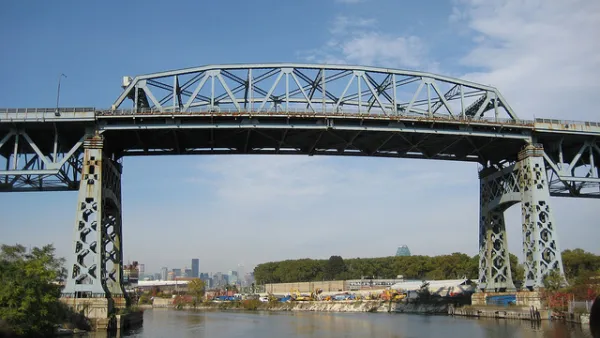
New York City's Kosciuszko Bridge Getting Demolished
Traffic-plagued Kosciuszko will soon be replaced, and some commuters are celebrating its demise.
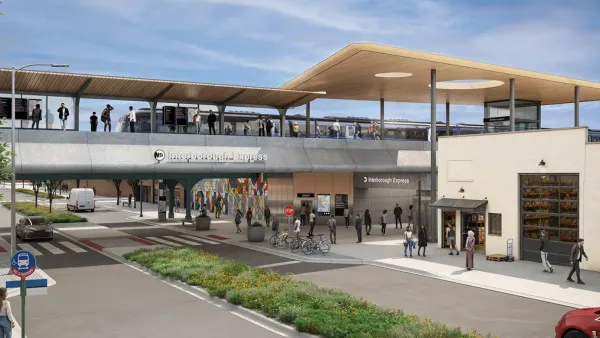
NYC releases new renderings for $5.5 billion Interborough Express
The slated stations will have a modern look, enhanced lighting and improved audio announcements.
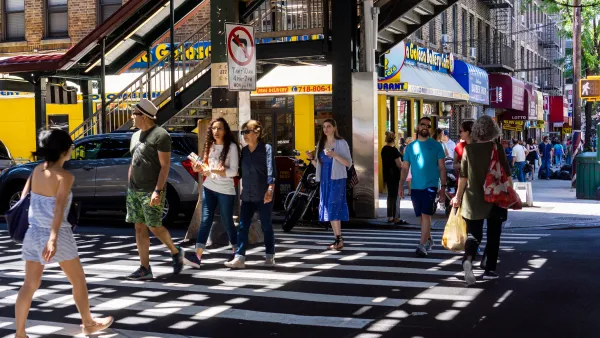
NYC needs 700,000 new homes to resolve housing crisis, report states
The report gave every neighborhood a non-binding development target.

Planetizen Federal Action Tracker
A weekly monitor of how Trump’s orders and actions are impacting planners and planning in America.

Amtrak, CN end decades-long dispute with eight-year agreement
The new operating agreement establishes an updated framework for the companies to work together, including processes to resolve disputes.

Judges permit Denver to divert 77,000 acre feet from the Colorado River for reservoir expansion
Overuse and climate change have caused the Colorado River’s water levels to plummet.

NYC DOT wants faster, more permanent street upgrades
The city is examining ways to build more concrete infrastructure without getting entangled in 'decades-long' projects.

'Something we’ve never seen before:' rising utility rates could strain city finances nationwide
Data centers, climate change and other factors have caused utility rates in the United States to increase by 38% since 2020.

Trump to overrule local leaders, lease millions of acres of America’s Pacific Island territories’ seafloors to mining companies
International law says that the Indigenous people of America’s territories have a right to prior and informed consent regarding projects that impact their countries.

FREE Course: Walkable City 1: Why Walkability?
After describing his path towards focusing on walkability as the essence of good planning, Jeff Speck marches through his five principal reasons for making more walkable places.
Reinventing Malls: Planning Alchemy—Turning Gray Fields Into Gold
The course focuses on the opportunities and imperatives that shape reinvention of mall sites.

Harvard University Graduate School of Design
KFH Group Inc.
Greater Baltimore Committee
The Architects Foundation
University of Cincinnati Online
The Pocatello Development Authority
The Urban Renewal Agency of the City of Pocatello