Zócalo Public Square has gathered together four accomplished planning and development professionals to give their opinions on which scholar or intellectual of the last 50 years has had the greatest impact on the cities we live in today.


Respondents Mitchell Silver, president of the American Planning Association (APA), Shelley Poticha, director for the Office of Sustainable Housing and Communities at HUD, author and educator Max Grinnell, and Alfredo Brillembourg, co-principal of Urban-Think Tank, discuss their picks for the thinkers who've had a lasting impact on the form and character of our contemporary cities.
Silver recognizes planner and educator Kevin Lynch, who, "influenced a generation of planners and designers at a time when cities were not fashionable or the preferred places to live...Twenty-first century cities owe Kevin Lynch a debt of gratitude for the resurgence of placemaking and good urban design-a resurgence that has been 50 years in the making."
Grinnell cites James Q. Wilson, author of the landmark article on the "broken windows" theory. According to Grinnell, "his [Wilson's] work has found its way into the daily operations of dozens, yea hundreds, of police departments around the United States...Wilson's work has given local law enforcement agencies the intellectual rigor and scholarly backing to engage in a carte blanche type of selective enforcement of certain violations, often leading to a continued marginalization of inner-city communities, most frequently those containing people of color."
Read the full story: Revenge of the (Urban) Nerds

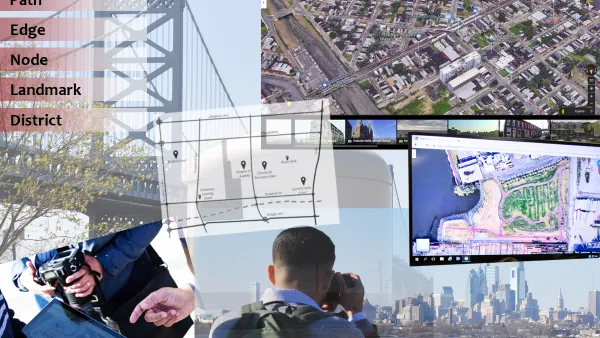
Analyzing Lynch's City Imageability in the Digital Age
Mahbubur Meenar of Rowan University writes about a recent article he co-authored in the Journal of Planning Education and Research
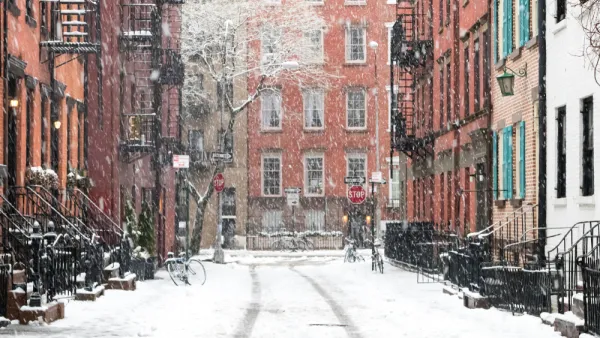
The Sweet Smell of Density? Subconscious Influences on Perceptions of Urban Form
Michael Hooper of Harvard University writes about a recent article in the Journal of Planning Education and Research
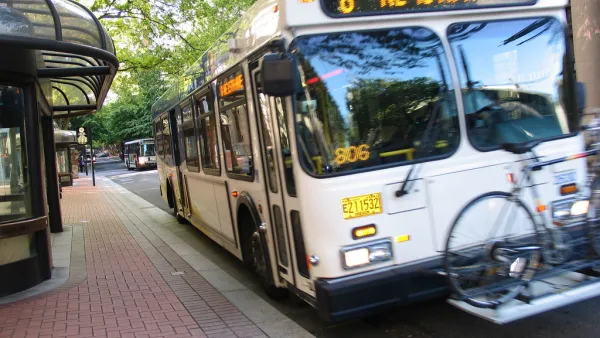
Portland Lowers Penalties for Fare Evasion
Fines will be waived for low-income riders, among other changes aimed at bringing "fairness and equity" to TriMet's enforcement system.

Planetizen Federal Action Tracker
A weekly monitor of how Trump’s orders and actions are impacting planners and planning in America.

Amtrak, CN end decades-long dispute with eight-year agreement
The new operating agreement establishes an updated framework for the companies to work together, including processes to resolve disputes.

Judges permit Denver to divert 77,000 acre feet from the Colorado River for reservoir expansion
Overuse and climate change have caused the Colorado River’s water levels to plummet.

NYC DOT wants faster, more permanent street upgrades
The city is examining ways to build more concrete infrastructure without getting entangled in 'decades-long' projects.

'Something we’ve never seen before:' rising utility rates could strain city finances nationwide
Data centers, climate change and other factors have caused utility rates in the United States to increase by 38% since 2020.

Trump to overrule local leaders, lease millions of acres of America’s Pacific Island territories’ seafloors to mining companies
International law says that the Indigenous people of America’s territories have a right to prior and informed consent regarding projects that impact their countries.

FREE Course: Walkable City 1: Why Walkability?
After describing his path towards focusing on walkability as the essence of good planning, Jeff Speck marches through his five principal reasons for making more walkable places.
Reinventing Malls: Planning Alchemy—Turning Gray Fields Into Gold
The course focuses on the opportunities and imperatives that shape reinvention of mall sites.

Harvard University Graduate School of Design
KFH Group Inc.
Greater Baltimore Committee
The Architects Foundation
University of Cincinnati Online
The Pocatello Development Authority
The Urban Renewal Agency of the City of Pocatello