As architecture and design observers bemoan what recent job moves mean for the future of mainstream architectural criticism, Vanessa Quirk sees reason to be optimistic.


Although the recently announced departure of Paul Goldberger from The New Yorker and the elevation of Michael Kimmelman, a reporter with no architectural training, to the most visible architectural criticism post in the country have some feeling blue, Quirk argues that, "criticism hasn't died the way you think. It's just been changed beyond recognition. And frankly, for the better."
Noting a general shift in the profession towards serving "a higher moral purpose," Quirk calls for a similar shift in focus for criticism. "It means moving beyond the description of the building as 'object' and delving into its context; it means talking to the people who live down the block; discovering how the average man perceives it; determining the extent to which it serves humanity."
And she celebrates the "transformation" signaled by Kimmelman's creation of "a socially-oriented oeuvre that not only recognizes Architecture's lofty goals, but harks back to old-school Huxtable: it defends the rights of the city-goer."
Read the full story: The Architect Critic Is Dead (just not for the reason you think)

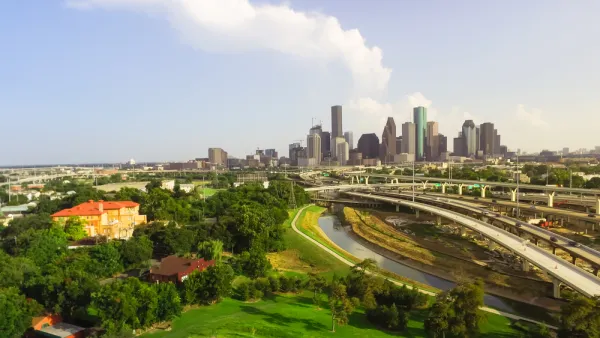
Challenges in Rebuilding Houston Extend Beyond Development
Michael Kimmelman, architecture critic of The New York Times, looks beyond sprawl and development issues that challenge Houston in its rebuilding efforts. An anti-urban, anti-regulation bias from the statehouse isn't helping matters.
Formidable Barriers Threaten Penn Station Renovation
Last month N.Y. Gov. Andrew Cuomo proposed that Empire Station replace Penn Station, but many challenging parts, e.g., the Hudson River Tunnels, moving Madison Square Garden, could derail it. A related piece delves into the prior ARC tunnel project.
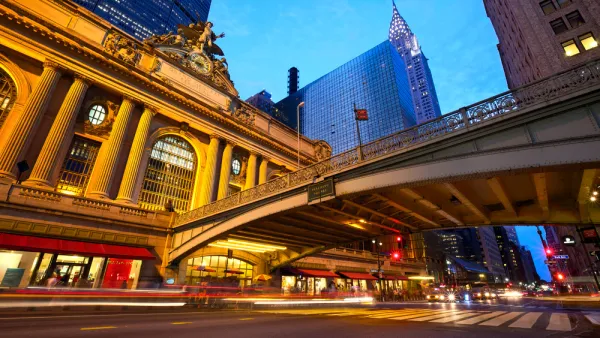
Mr. Kimmelman's Metropolis
The New York Times architecture critic is making good on his promise to focus on the social context and redemptive qualities of urban architecture and design. A recent lecture in Denver identified several imperatives for the planning profession.

Planetizen Federal Action Tracker
A weekly monitor of how Trump’s orders and actions are impacting planners and planning in America.

Amtrak, CN end decades-long dispute with eight-year agreement
The new operating agreement establishes an updated framework for the companies to work together, including processes to resolve disputes.

Judges permit Denver to divert 77,000 acre feet from the Colorado River for reservoir expansion
Overuse and climate change have caused the Colorado River’s water levels to plummet.

Idaho may see an 18% drop in federal surface transit funding — the largest estimated cut in the US
Transit systems in rural communities are much more reliant on federal funding to provide their services.

How ‘post-disaster gentrification’ alters neighborhoods after natural calamities
After hurricanes, fires or other calamities, the original residents of a community are often replaced by younger, wealthier residents.

Maryland local governments examine if they should have more power to raise property taxes
Maryland’s housing market is out of reach for the majority of moderate-income residents.

FREE Course: Walkable City 1: Why Walkability?
After describing his path towards focusing on walkability as the essence of good planning, Jeff Speck marches through his five principal reasons for making more walkable places.
Reinventing Malls: Planning Alchemy—Turning Gray Fields Into Gold
The course focuses on the opportunities and imperatives that shape reinvention of mall sites.

Harvard University Graduate School of Design
KFH Group Inc.
Greater Baltimore Committee
The Architects Foundation
University of Cincinnati Online
The Pocatello Development Authority
The Urban Renewal Agency of the City of Pocatello