Matt Chaban explores the divided opinions on the work of the fairly new architecture critic for The New York Times, Michael Kimmelman, who some complain isn't writing enough about Architecture.


Many of Kimmelman's pieces written over his first four months on the job have focused on larger issues of urbanism and public design, which has his detractors clamoring for more traditionally defined architectural analysis. At a recent talk at Columbia, earlier this week, Kimmelman acknowledged the thrust of his work as described above, but parried his critics, "[a] false dichotomy has been set up; there's this idea that writing about urban affairs and architecture are separate," he said. "They're part of the same world."
According to Chaban, Kimmelman went on to explain at the event how he might write about a specific building, such as Zaha Hadid's MAXXI Museum in Rome, by investigating its impact on the larger neighborhood.
This framing of analysis may seem natural, and even desirable to most planners, or those concerned with the interaction between architecture and larger forces, but for Chaban it is startling, and leaves something to be desired.
"It is a new and bracing way to write about architecture. In the past, the museum would likely have been compared to others of its ilk, alongside MoMA, the Guggenheim Bilbao, maybe Daniel Libeskind's severe Denver Art Museum. It is peg versus peg."
"Kimmelman seems to care very little for these games and would rather focus on whether or not that peg fits into the hole into which it has been placed, something that really does not happen enough. The only problem is it can lead to articles that read quite a lot alike. At least that is the superficial reading."
Read the full story: Michael Kimmelman Will Not Play Your Architecture Games

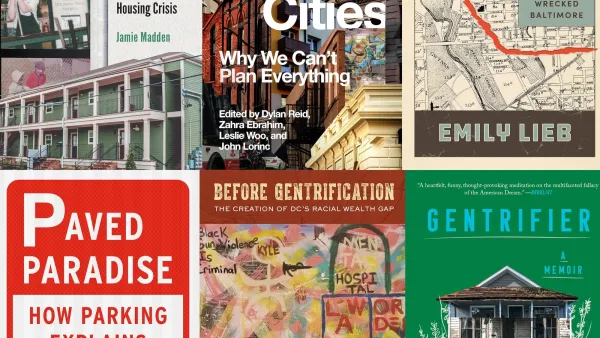
10 great urban planning summer reads
Wherever you're going (or staying) this summer, here are some suggestions for books to bring along.
April must-reads: Top 10 articles from last month
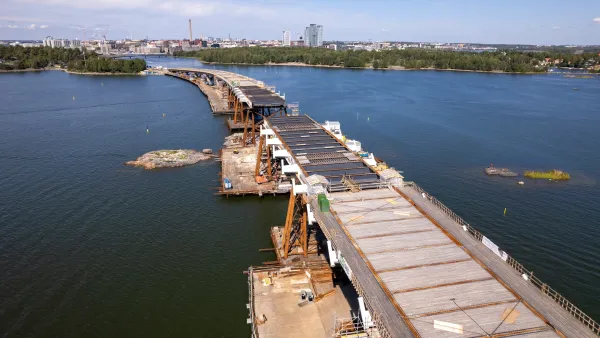
The world's longest car-free bridge opens in Finland, Amtrak's new Mardi Gras line shatters ridership predictions, and Bay Area commuters could lose a third of Caltrain stations.

Northwest Arkansas grapples with growth as it prepares to host New Urbanism gathering
A compelling story of a fast-growing, polycentric region grappling with identity and affordability, Susan Henderson reframes CNU 34 as a hands-on workshop, inviting planners to explore Northwest Arkansas as it decides what it will become.

Planetizen Federal Action Tracker
A weekly monitor of how Trump’s orders and actions are impacting planners and planning in America.

Amtrak, CN end decades-long dispute with eight-year agreement
The new operating agreement establishes an updated framework for the companies to work together, including processes to resolve disputes.

Judges permit Denver to divert 77,000 acre feet from the Colorado River for reservoir expansion
Overuse and climate change have caused the Colorado River’s water levels to plummet.

Boston has spent millions making the Green Line more accessible — and there’s no end in sight
While the city has invested millions into expanding and adding platforms to the Green Line to make it more accessible, new train cars set to arrive next year will be too tall for disabled passengers to board without raising the current platforms.

Idaho may see an 18% drop in federal surface transit funding — the largest estimated cut in the US
Transit systems in rural communities are much more reliant on federal funding to provide their services.

How ‘post-disaster gentrification’ alters neighborhoods after natural calamities
After hurricanes, fires or other calamities, the original residents of a community are often replaced by younger, wealthier residents.

FREE Course: Walkable City 1: Why Walkability?
After describing his path towards focusing on walkability as the essence of good planning, Jeff Speck marches through his five principal reasons for making more walkable places.
Reinventing Malls: Planning Alchemy—Turning Gray Fields Into Gold
The course focuses on the opportunities and imperatives that shape reinvention of mall sites.

Harvard University Graduate School of Design
KFH Group Inc.
Greater Baltimore Committee
The Architects Foundation
University of Cincinnati Online
The Pocatello Development Authority
The Urban Renewal Agency of the City of Pocatello