After bemoaning cities as the domain of Democrats, GOP presidential candidate Rick Santorum tries to appeal to his party by extending his criticism to suburbs, calling them "too close to cities."


Santorum has been trying to make the case that he appeals to the true Republicans of the country – those who live outside of Democrat-dominated cities. But after making anti-urban remarks at a recent campaign stop, Santorum suffered attacks from his own supporters for not going far enough in his attack on cities.
As a result, Santorum took to the stage recently in rural Bloomfield, Kentucky, to make his case stronger.
"You good people are the Republicans I want on my side," Santorum told the small crowd in this town of 900. "I don't want the city vote. I'll let my so-called Republican competition take it. I don't even want the suburban voters. They're too close to cities. Those people clearly are not the real Republicans."
Read the full story: Anti-Urban Presidential Candidate Now Anti-Suburban, Too


Self-Driving Cars Still Can't Recognize the Difference Between a Wedding Planner and an Urban Planner
Pundits agree that planners need to prepare for self-driving cars. Self-driving cars still need to prepare for planners.
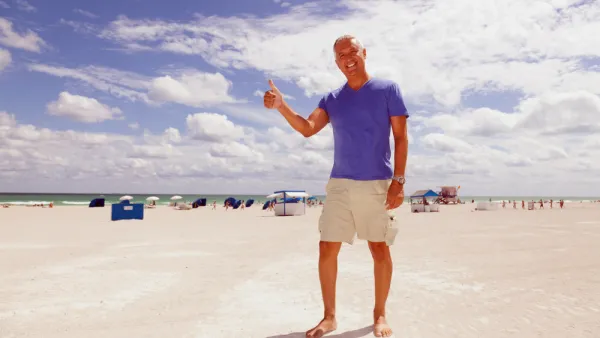
Florida Man Thought the New Comp Plan Included Zoning Changes
A Florida man is accused of not realizing an entirely separate process would be required to implement the zoning changes recommended in a recently approved comprehensive plan.

April Fool's Headlines That Didn't Make the Cut
"Who's the more foolish, the fool, or the fool who follows him?"

Planetizen Federal Action Tracker
A weekly monitor of how Trump’s orders and actions are impacting planners and planning in America.

Amtrak, CN end decades-long dispute with eight-year agreement
The new operating agreement establishes an updated framework for the companies to work together, including processes to resolve disputes.

Northwest rail fans eager for Sept. 30 debut of Amtrak’s Airo fleet
Get ready for that new train smell and more seats. But they won’t go faster or run more frequently on the Cascades route in Washington and Oregon.

Brightline Florida files for bankruptcy
The transit company is over $5 billion in debt.

St. Louis Metro to test if single-car trains can reduce operating costs, maintain rider satisfaction
The pilot program will run from October to spring 2027, and begin with one single-car train operating on Metrolink’s Red and Blue lines.

Pennsylvania is building data centers in abandoned mines
Housing data centers in mines provides an alternative to destroying local forests and may spare residents from data centers’ noise and air pollution.

FREE Course: Walkable City 1: Why Walkability?
After describing his path towards focusing on walkability as the essence of good planning, Jeff Speck marches through his five principal reasons for making more walkable places.
Reinventing Malls: Planning Alchemy—Turning Gray Fields Into Gold
The course focuses on the opportunities and imperatives that shape reinvention of mall sites.

City of Thousand Oaks
City of Wisconsin Rapids
Harvard University Graduate School of Design
The Architects Foundation
University of Cincinnati Online
The Pocatello Development Authority
The Urban Renewal Agency of the City of Pocatello