Various environmental groups have joined a lawsuit aimed at SANDAG's (San Diego's MPO) 2050 regional transportation plan for not going far enough in state mandated efforts to reduce greenhouse gas emissions, explains Damien Newton.


When the San Diego Association of Governments (SANDAG) 2050 Regional Transportation Plan was the first out of the gate amongst California MPOs to adhere to state mandates to reduce greenhouse gas emissions, it was celebrated as a victory for integrated sustainable land use and transportation planning.
Now, several environmental groups along with the Environmental Caucus of the California Democratic Party, and even the state's Attorney General, have come out against the plan in public and in court.
According to Newton, "The major issue in the lawsuit is that while the SANDAG plan does outline a major growth in the region's transit network, most of the transit planning is in the last years of the project. The early years call for a rapid increase in the area's highway network through a new high occupancy/toll lane system (HOT Lanes). SANDAG spokespeople claim that because the lanes can be used free by transit, they should be considered transit projects."
There is disagreement on where the funding should be allocated. The final plan will be voted on in March.
Read the full story: SANDAG’s 2050 Transportation Plan Drawing More and More Heat


San Diego High-Speed Rail Plan Counts on Future Density
Despite slowing population growth statewide, officials believe the region will "grow into" the new rail system if cities promote dense development around transit stations.
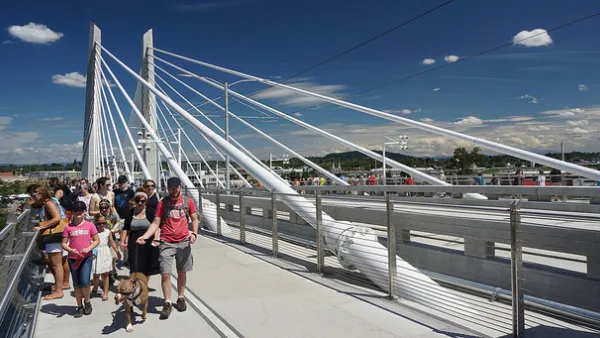
Final Public Comment for Portland Area's $42 Billion Regional Transportation Plan
Oregon Metro's Regional Transportation Plan sets policy and project goals through 2040.
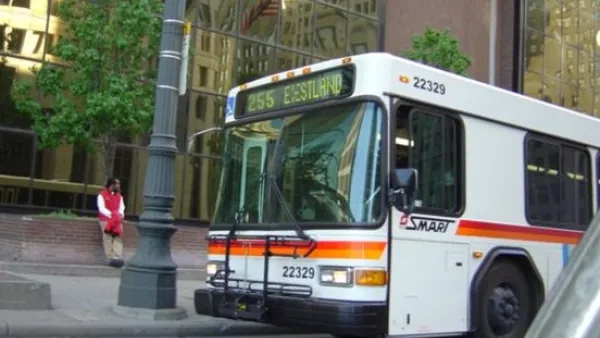
Detroit CEOs Want a Regional Transit Plan
The idea has failed before, most recently in 2016, but the attempt at wooing Amazon has the idea of a regional approach to public transit back on the table in Detroit.

Planetizen Federal Action Tracker
A weekly monitor of how Trump’s orders and actions are impacting planners and planning in America.

California plans to bury El Niño’s downpour
If the state plays its cards right, it may be able to store a billion acre-feet of El Niño’s water in aquifers.

Chicago breaks ground on $3 billion megadevelopment
The new neighborhood, titled Foundry Park, will one day host 3,700 residences.

California High-Speed Rail Authority CEO resigns after $600,000 scandal
Under Ian Choudri, the authority used taxpayer dollars to fund first class flights and trips to nightclubs.

Want to study the Missouri River? Soon, you may need unanimous approval from 10 states
Legislation would require 10 governors’ permission to study or build projects moving water outside the basin.

Desperate measures: Advocates weigh draining Lake Powell to fill Colorado River
Draining the reservoir could reduce evaporation losses by a couple hundred thousand acre-feet.

FREE Course: Walkable City 1: Why Walkability?
After describing his path towards focusing on walkability as the essence of good planning, Jeff Speck marches through his five principal reasons for making more walkable places.
Reinventing Malls: Planning Alchemy—Turning Gray Fields Into Gold
The course focuses on the opportunities and imperatives that shape reinvention of mall sites.

City of Rosemead
Rutgers University, Edward J. Bloustein School of Planning and Public Policy
One Hundred Miles
Hunter College, City University of New York (CUNY)
The Architects Foundation
University of Cincinnati Online
City of Cambridge
Montrose County
The Pocatello Development Authority