Although they played a part in the ensuing financial panic, noted economist Mark Zandi argues why Fannie Mae and Freddie Mac don't deserve to be blamed for the housing bubble.


Zandi sees many groups to blame for the U.S. housing bubble of the last decade, but finds that Fannie and Freddie, who were making just a fraction of the subprime loans as the private sector at the height of the bubble, should not be considered among them. He sees America's broken mortgage securitization machine as the fundamental source of the problem.
"Getting history right for this dark economic period is critical if we are to design a better mortgage finance system for the future. If Fannie Mae and Freddie Mac are responsible for the debacle, then perhaps government's role in a future mortgage finance system should be minimal. But if private lenders deserve most of the blame, the case grows for giving government an important role in backstopping and overseeing the system."
Read the full story: Fannie and Freddie don’t deserve blame for bubble
Will the Housing Bubble Swallow the Fed?
J.P. Morgan's federally-back purchase of Bear Stearns holds billions in dubious "mortgage backed securities," and Fannie Mae and Freddie Mac are pumping hundreds of billions into the market. Time may be running out for the Federal Reserve.
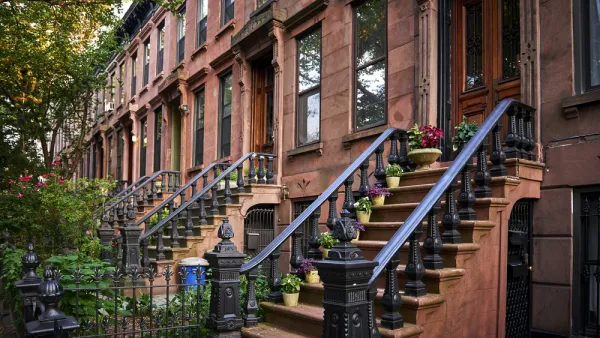
The Underappreciated Role of Freddie Mac and Fannie Mae in Access to Affordable Housing
A housing researcher formerly with the Obama administration's Treasury Department explains the role of government-sponsored enterprises in opening the housing market with more affordable options.
After $10.2 Billion Treasury Deposit—What Next for Fannie and Freddie?
Fannie Mae and Freddie Mac will deliver $10.2 billion in dividends to the U.S. Treasury next month, but Congress could soon "wind down" the companies by approving the significant Johnson-Crapo bill.

Planetizen Federal Action Tracker
A weekly monitor of how Trump’s orders and actions are impacting planners and planning in America.

California plans to bury El Niño’s downpour
If the state plays its cards right, it may be able to store a billion acre-feet of El Niño’s water in aquifers.

Desperate measures: Advocates weigh draining Lake Powell to fill Colorado River
Draining the reservoir could reduce evaporation losses by a couple hundred thousand acre-feet.

Chicago voters approve permanent festival grounds, penalty for vacant property owners
Currently, major summer and fall festivals take over public parks for weeks at a time, drawing criticism from nearby residents

NYC votes to cut outdoor dining red tape, speed up permitting
New York City also voted to allow the Department of Transportation to begin work on urgent projects before notifying elected officials.

California appears to reject Prop. 45
The proposition would have expanded the projects that qualify for a streamlined environmental review, effectively paring down the California Environmental Quality Act.

FREE Course: Walkable City 1: Why Walkability?
After describing his path towards focusing on walkability as the essence of good planning, Jeff Speck marches through his five principal reasons for making more walkable places.
Reinventing Malls: Planning Alchemy—Turning Gray Fields Into Gold
The course focuses on the opportunities and imperatives that shape reinvention of mall sites.

City of Rosemead
Rutgers University, Edward J. Bloustein School of Planning and Public Policy
One Hundred Miles
Hunter College, City University of New York (CUNY)
The Architects Foundation
University of Cincinnati Online
City of Cambridge
Montrose County
The Pocatello Development Authority