As the strip malls ubiquitous across the suburbs of the United States and Canada lose favor and become increasingly derelict, planners and developers debate whether there is anything about the 'retail relics' worth salvaging.


As developers seek to profit from their redevelopment, and planners seek to densify and improve walkability in their communities, it would appear that the end is nigh for strip malls across North America. However, "at least one Canadian academic sees value in maintaining the ubiquitous local retailing plazas, and has amassed proposals such as adding community gardens or toboggan slides, or morphing them into giant bee hives or parking lots for food caravans."
"There's still a demand for local retail services and these facilities are standing there and so the question is, how can they be reused to make suburbs more vibrant and more sustainable?" says Rob Shields, a sociology professor at the University of Alberta in Edmonton.
Read the full story: Canada rethinks strip malls

The Case for Protecting Strip Malls from 'Commercial Gentrification'
As our suburbs diversify, the most affordable commercial districts found in such areas (often in strip malls) become an important entry point for immigrants to build their 'American Dream'. Kaid Benfield asks if such opportunities deserve protection.
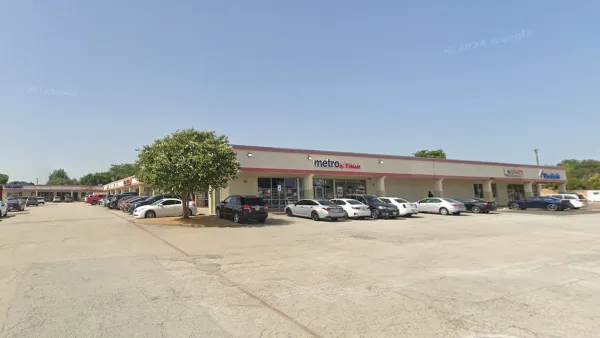
Adaptive Reuse Will Create Housing in a Suburban Texas Strip Mall
A developer is reimagining a strip mall property as a mixed-use complex with housing and retail.
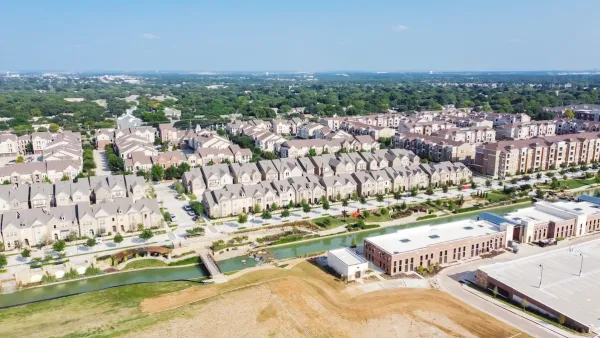
Texas Bill Supports Adaptive Reuse in Commercial Areas
Senate Bill 840, which was preliminarily approved by the state House, would allow residential construction in areas previously zoned for offices and commercial uses.

Planetizen Federal Action Tracker
A weekly monitor of how Trump’s orders and actions are impacting planners and planning in America.

The state-sanctioned urbicide of Austin
People don’t kill cities. Freeways do.

Colorado’s Largest Data Center Could Rise Next to Homes — Without a Public Hearing
The proposed campus would consume 11 times the power of Denver International Airport; as it has across the country, opposition mounts.

Nation's most wind-powered state turns to coal as data centers increase energy demand
For the first time in decades, Iowa has increased its generation of coal power.

NYC cools commuters with city's first rain garden above a bus stop
New York City officials say the plants in the rain garden can absorb 16 gallons of rainwater during heavy storms.

Brightline West’s future may rely on $6 billion federal loan
The company has until Nov. 2 to make a $400 million equity investment into its proposed high-speed rail line.

FREE Course: Walkable City 1: Why Walkability?
After describing his path towards focusing on walkability as the essence of good planning, Jeff Speck marches through his five principal reasons for making more walkable places.
Reinventing Malls: Planning Alchemy—Turning Gray Fields Into Gold
The course focuses on the opportunities and imperatives that shape reinvention of mall sites.

Greater Baltimore Committee
Eagle County Government
Harvard University Graduate School of Design
The Architects Foundation
University of Cincinnati Online
The Pocatello Development Authority
The Urban Renewal Agency of the City of Pocatello
Journal of the American Planning Association