In an opinion piece, noted economist Jeffrey Sachs explores what it will take to achieve the 'triple bottom line' of sustainable development, which the UN puts at the top of the global agenda.


Taking a new report issued by the UN's Global Sustainability Panel as his jumping off point, Sachs explores the economic, social, and environmental pillars of sustainable development, the foremost global issues of our time. "The GSP rightly notes that sustainable development has three pillars: ending extreme poverty; ensuring that prosperity is shared by all, including women, youth, and minorities; and protecting the natural environment."
Sachs see the promise of technology, coupled with an embrace of common values, as the key to solving our collective challenges.
"The benefits of information and communications technologies can be found in every area of human activity: better farming using GPS and micro-dosing of fertilizers; precision manufacturing; buildings that know how to economize on energy use; and, of course, the transformative, distance-erasing power of the Internet....Yet getting from here to sustainable development will not just be a matter of technology."
Read the full story: Sustainable Humanity
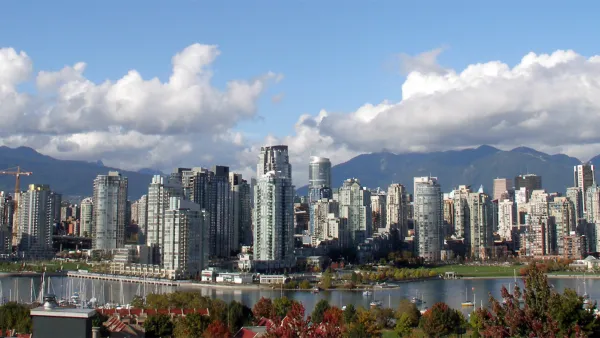
World Cities Report 2016 Released by UN-Habitat
The UN Human Settlements Programme (UN-Habitat) has published a flagship report intended to inform preparation of the New Urban Agenda at the Habitat III meetings in Quito in October.

US casts sole dissenting vote against UN road safety declaration
The UN declaration calls for cutting road deaths in half by 2030.
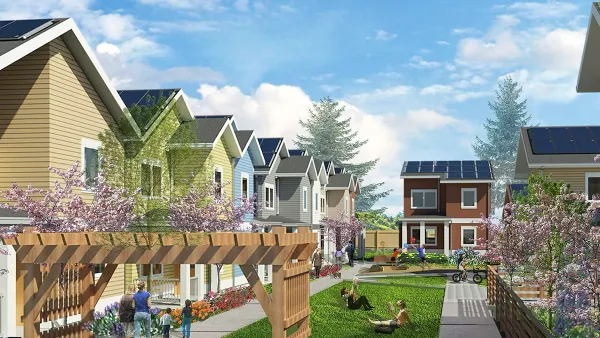
‘Fish-Friendly’ Washington Development Blends Affordability and Sustainability
A community land trust took on a difficult site in suburban Seattle — and ended up with a sustainable, diverse, mixed-ownership-form development that challenges multiple norms.

Desperate measures: Advocates weigh draining Lake Powell to fill Colorado River
Draining the reservoir could reduce evaporation losses by a couple hundred thousand acre-feet.

Eastern Nebraska is running out of electricity
Data centers and electrification are straining eastern Nebraska’s grid, throttling economic development.

Malls are becoming the midtowns of the future
Mall and office park redevelopments are a generational opportunity to create new nodes of urbanity.

NYC breaks ground on anti-flooding infrastructure project
New York City's new system will reduce stormwater flows to local sewers by 90%.

One Kentucky town’s secret to affordable housing
The Smoketown Community Land Trust has already built seven affordable homes for community members.

Houston gains petal-shaped cooling infrastructure to make streets more ‘delightful’
The city has installed the pavilions along 15 blocks in Houston.

FREE Course: Walkable City 1: Why Walkability?
After describing his path towards focusing on walkability as the essence of good planning, Jeff Speck marches through his five principal reasons for making more walkable places.
Reinventing Malls: Planning Alchemy—Turning Gray Fields Into Gold
The course focuses on the opportunities and imperatives that shape reinvention of mall sites.

City of Rosemead
Rutgers University, Edward J. Bloustein School of Planning and Public Policy
One Hundred Miles
University of Michigan School for Environment and Sustainability (SEAS)
Hunter College, City University of New York (CUNY)
The Architects Foundation
City of Cambridge
Montrose County
The Pocatello Development Authority