An increasing number of cities, often led by entrepreneurial mayors, are thinking and acting like startups. The qualities that make a startup company and a city successful, are "remarkably similar".


"[T]he ingredients for a successful startup and a successful city are remarkably similar. You need to build stuff that people want. You need to attract quality talent. You have to have enough capital to get your fledgling ideas to a point of sustainability. And you need to create a world-class culture that not only attracts the best possible people, but encourages them to stick around even when things aren't going so great," writes author Jon Bischke, an advisor to several startups.
"As we roll into an election year, many cities are in a state of crisis. Budgets are a mess and job growth has been minimal for a good swath of the country. Cities in need don't just need strong leadership, they require transformational leadership. It's no easy feat but it's likely that the more that mayors view their cities through an entrepreneurial lens, the better they will be able to adapt to a rapidly-changing world."
Jon Bischke discusses examples from Cornell's recent bid to build a tech campus on Roosevelt Island, and efforts in Los Angeles, Silicon Valley and Connecticut.
Read the full story: A City Is A Startup: The Rise Of The Mayor-Entrepreneur

California Getting Way More New Jobs Than New Housing
Even with tons of building permits already issued this year, the outlook for the state’s affordability crisis is pretty grim.
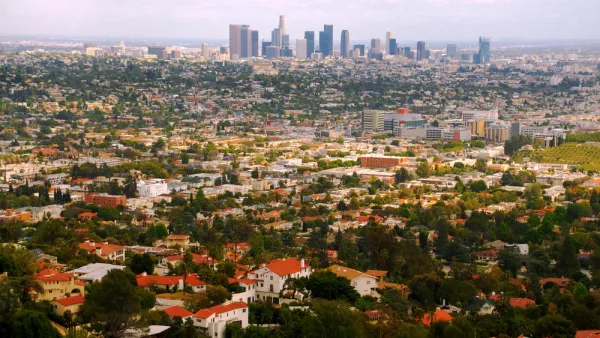
City of Los Angeles Tops 4 Million in Latest State Population Report
As usual, California's fastest growing counties were inland, far from coastal job centers. The big surprise was that the fastest growing city was an affluent Silicon Valley suburb that had been sued in 2012 by affordable housing advocates.

Nevada's Most Interesting City: Reno
Long considered a desert backwater and second fiddle to Las Vegas, the city of Reno is having a resurgence. Small entrepreneurs, industrial giants like Tesla, and artists inspired by Burning Man are converging to overshadow the fading casino economy.

Planetizen Federal Action Tracker
A weekly monitor of how Trump’s orders and actions are impacting planners and planning in America.

California plans to bury El Niño’s downpour
If the state plays its cards right, it may be able to store a billion acre-feet of El Niño’s water in aquifers.

Desperate measures: Advocates weigh draining Lake Powell to fill Colorado River
Draining the reservoir could reduce evaporation losses by a couple hundred thousand acre-feet.

Los Angeles just elected an urban planner as its mayor
Transportation analysts are optimistic that Raman will be more aggressive in addressing transit issues than Bass.

Mamdani’s pied-à-terre tax survives legal challenge
A panel of judges found that the plaintiffs failed to demonstrate injury as a result of New York City's implementation of the tax.

Eastern Nebraska is running out of electricity
Data centers and electrification are straining eastern Nebraska’s grid, throttling economic development.

FREE Course: Walkable City 1: Why Walkability?
After describing his path towards focusing on walkability as the essence of good planning, Jeff Speck marches through his five principal reasons for making more walkable places.
Reinventing Malls: Planning Alchemy—Turning Gray Fields Into Gold
The course focuses on the opportunities and imperatives that shape reinvention of mall sites.

City of Rosemead
Rutgers University, Edward J. Bloustein School of Planning and Public Policy
One Hundred Miles
University of Michigan School for Environment and Sustainability (SEAS)
Hunter College, City University of New York (CUNY)
The Architects Foundation
City of Cambridge
Montrose County
The Pocatello Development Authority