The Institute on Taxation and Economic Policy has released a '50-state report' on state gas excise taxes - when they were last raised, the revenue loss to each state due to failure to maintain the tax, and what it would cost drivers to raise it.


There have been many reports and federal commissions on transportation funding that have studied the ramifications of the federal government's failure to raise federal fuel excise taxes since 1993. The Institute on Taxation and Economic Policy (ITEP), "a non-profit, non-partisan research organization that works on federal, state, and local tax policy issues" is the first to provide a detailed analysis for each state on the consequences of their gas tax policies.
""Building a Better Gas Tax: How to Fix One of State Government's Least Sustainable Revenue Sources" documents state-by-state figures including the costs and benefits of proposed remedies. Today's state gas taxes make up a smaller portion of family budgets than at any time since the tax was first widely instituted in the 1920s."
"Unfortunately, many politicians won't consider touching the gas tax," said Carl Davis, senior analyst at ITEP and author of the study. "They are raising sales taxes, fees on vehicles, tolls on roads, even looting education funds, all to make up for the stagnant gas tax. But they can't bring themselves to modernize the biggest source of transportation revenue that's actually under their control. It makes no sense."
From ITEP press release (PDF): "Building a Better Gas Tax" shows that the average state has not increased its gas tax rate in over a decade, and 14 states have gone 20 years or longer without an increase."
Thanks to Anne Singer
Read the full story: New Report: Stagnant State Gas Taxes Costing States $10 Billion Each Year, Undermining Commerce and Forcing Raids on General Fun

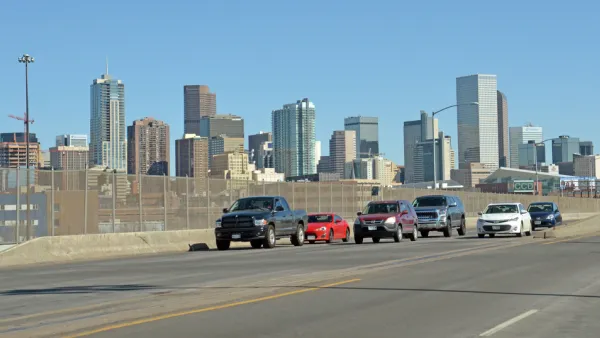
Colorado DOT Issues Final Report on Road Usage Charge Pilot Program
Most of the 150 volunteers who participated in the 4-month program were pleased. Simulated invoices charged for vehicle-miles traveled after gas taxes paid were credited. Three technologies, including one with GPS, were available to record mileage.
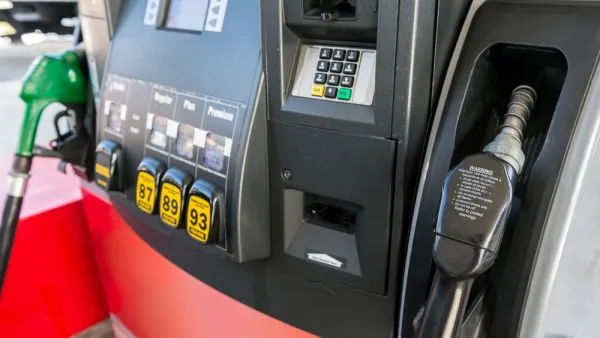
The Vital Role of Gas Tax Indexing
Without an automatic adjustment for gas taxes, revenue from the tax declines due to increasing fuel efficiency standards while road maintenance and construction costs increase due to inflation. Witness Wisconsin's woes.
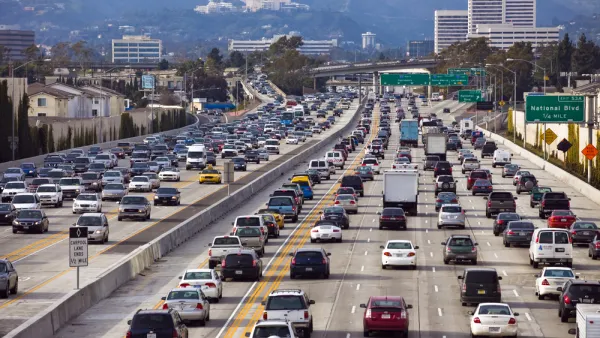
Lowest Gas Prices in 12 Years Contribute to Record Travel This Holiday Weekend
Two new reports on transportation funding issued in advance of the July 4th weekend focus attention on gas prices and vehicle travel. Seven states will increase gas taxes on July 1 according to the Institute on Taxation and Economic Policy.

Planetizen Federal Action Tracker
A weekly monitor of how Trump’s orders and actions are impacting planners and planning in America.

Amtrak, CN end decades-long dispute with eight-year agreement
The new operating agreement establishes an updated framework for the companies to work together, including processes to resolve disputes.

Northwest rail fans eager for Sept. 30 debut of Amtrak’s Airo fleet
Get ready for that new train smell and more seats. But they won’t go faster or run more frequently on the Cascades route in Washington and Oregon.

Trump administration unlawfully slashed $7 billion in clean energy grants, judge rules
The Environmental Protection Agency ended the Solar For All program, which provided the grants, after President Donald Trump’s inauguration.

Record-breaking wildlife overpass in Colorado brings 91% reduction in animal collisions
Prior to the overpass, vehicles were hitting one deer per day on Colorado’s Interstate 25.

California lawmakers approve just 5% of much-needed LA28 transportation funding
State legislators appear just as unwilling as Trump to pay for Olympics-related transportation projects.

FREE Course: Walkable City 1: Why Walkability?
After describing his path towards focusing on walkability as the essence of good planning, Jeff Speck marches through his five principal reasons for making more walkable places.
Reinventing Malls: Planning Alchemy—Turning Gray Fields Into Gold
The course focuses on the opportunities and imperatives that shape reinvention of mall sites.

City of Thousand Oaks
City of Wisconsin Rapids
Harvard University Graduate School of Design
The Architects Foundation
University of Cincinnati Online
The Pocatello Development Authority
The Urban Renewal Agency of the City of Pocatello