Various reports detail how Mumbai can become a world-class city by listing infrastructure and development goals, but, as Nayantara Kilachand points out, "cultural and social nuance" need to be--but aren't--factored in.


"'The basic problem with ‘Vision Mumbai' is that the ‘City' is missing in its ‘World Class City,'' says Gyan Prakash, Princeton University history professor and author of 'Mumbai Fables' – a book on the city's history.
'For it, the city means just an efficient transportation network and other infrastructures that facilitate the smooth functioning of the economy and generate growth,' he says. 'Yes, transportation needs big improvements, and housing requires massive efforts. But where in its plan for a ‘world-class city' is the vision for urban life except as a technocratic dream?'"
Read the full story: Mumbai Journal: Weren’t We Supposed to Be Shanghai by Now?


India’s Women-only ‘Pink Parks:’ Safe Refuge or Segregated Enclaves?
Women-only public spaces can provide safety and community, but critics argue they fail to address deeper structural problems.
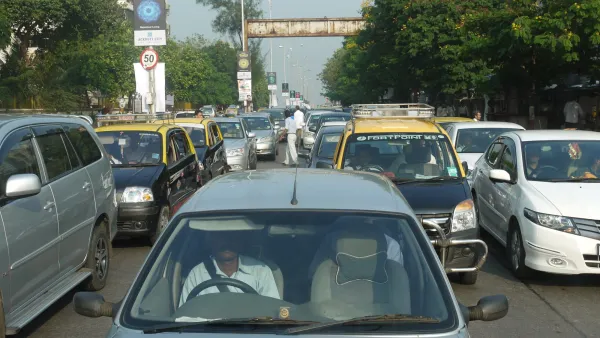
To Curb the Honking, Mumbai’s 'Punishing Signal'
Incessant honking just adds to the chaos on city streets, so Mumbai police put up a clever device to remind drivers that making noise will not ease traffic woes.

As Temperatures Increase, Maps Show Sea-Level Rise Will Devastate Cities
Data visualizations illustrate the catastrophic consequences of single-digit global temperature increases.

Planetizen Federal Action Tracker
A weekly monitor of how Trump’s orders and actions are impacting planners and planning in America.

‘Going backwards:’ Baltimore mayor, students rally against state's transit funding plan
Maryland's proposed six-year plan provides no funding for Baltimore’s BMORE bus program and reduces its road maintenance funding.
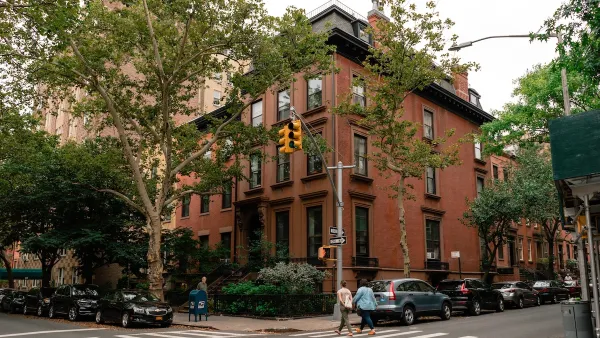
Mamdani sent nearly 6,000 pied-à-terre tax warnings to homes that didn’t qualify
A judge has ordered the administration to cancel thousands of pied-à-terre tax notices after it sent 35% of them erroneously.

Alaska takes public comment on new long-term plan for roads, bridges and more
Alaska's draft Statewide Transportation Improvement Program includes over $1 billion for the Alaska Marine Highway System.

A Colorado neighborhood is the testing ground for the future of home energy
A start up may have found a way to quickly bring geothermal energy to new communities.

Mamdani sent nearly 6,000 pied-à-terre tax warnings to homes that didn’t qualify
A judge has ordered the administration to cancel thousands of pied-à-terre tax notices after it sent 35% of them erroneously.

FREE Course: Walkable City 1: Why Walkability?
After describing his path towards focusing on walkability as the essence of good planning, Jeff Speck marches through his five principal reasons for making more walkable places.
Reinventing Malls: Planning Alchemy—Turning Gray Fields Into Gold
The course focuses on the opportunities and imperatives that shape reinvention of mall sites.

City of Thousand Oaks
City of Wisconsin Rapids
Harvard University Graduate School of Design
The Architects Foundation
University of Cincinnati Online
Northern Illinois Transit Authority (NITA)
The Pocatello Development Authority
The Urban Renewal Agency of the City of Pocatello