It's becoming increasingly common for adults to "double" up with other households, indicating that the recession is still affecting families. But are they officially homeless? It depends on who you ask, of course. Emily Badger reports.


"'In a lot of ways, those people are maybe more vulnerable than folks who've just had an eviction notice,' says Molly Scott, a research associate with the Urban Institute, 'because a lot of them have already had an eviction notice.'
Homeless advocacy groups have lobbied for the Department of Housing and Urban Development to expand its definition of homelessness to consider such families (and particularly their children) when applying homeless prevention and assistance funds.
Last week, however, HUD released a final ruling clarifying its definition of homelessness. The new rule includes families and individuals who don't have a 'fixed, regular and adequate' place to sleep, and those who've been staying in an emergency shelter or some 'place not meant for human habitation.'"
Read the full story: How Do You Define Who's Homeless in a Recession?

LA has no plan — or funding — to help unhoused people displaced by Olympics security efforts
City and county officials say they don't have the funds to offer housing to the up to 1,600 people that will be displaced by perimeters around event venues.
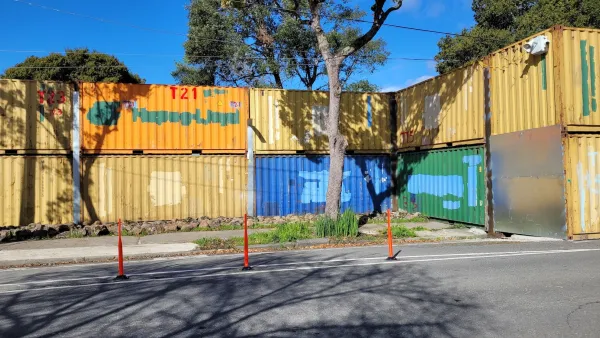
Berkeley promised to build supportive housing in People's Park. Where is it?
More than two years after People's Park was cordoned off, there is no word on a timeline for a promised affordable housing project.
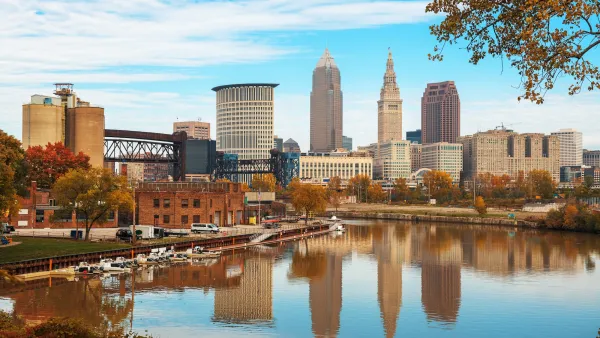
Cleveland program has housed 200 people since 2024
The A Home For Every Neighbor initiative successfully moves people into housing in under two weeks.

Desperate measures: Advocates weigh draining Lake Powell to fill Colorado River
Draining the reservoir could reduce evaporation losses by a couple hundred thousand acre-feet.

Eastern Nebraska is running out of electricity
Data centers and electrification are straining eastern Nebraska’s grid, throttling economic development.

Malls are becoming the midtowns of the future
Mall and office park redevelopments are a generational opportunity to create new nodes of urbanity.

NYC breaks ground on anti-flooding infrastructure project
New York City's new system will reduce stormwater flows to local sewers by 90%.

One Kentucky town’s secret to affordable housing
The Smoketown Community Land Trust has already built seven affordable homes for community members.

Houston gains petal-shaped cooling infrastructure to make streets more ‘delightful’
The city has installed the pavilions along 15 blocks in Houston.

FREE Course: Walkable City 1: Why Walkability?
After describing his path towards focusing on walkability as the essence of good planning, Jeff Speck marches through his five principal reasons for making more walkable places.
Reinventing Malls: Planning Alchemy—Turning Gray Fields Into Gold
The course focuses on the opportunities and imperatives that shape reinvention of mall sites.

City of Rosemead
Rutgers University, Edward J. Bloustein School of Planning and Public Policy
One Hundred Miles
University of Michigan School for Environment and Sustainability (SEAS)
Hunter College, City University of New York (CUNY)
The Architects Foundation
City of Cambridge
Montrose County
The Pocatello Development Authority