In fact, that's putting it positively, as the battle may already have been lost according to House Transportation Chair John Mica. Enhancements, most of which fund pedestrian and bicyle projects, may become voluntary rather than a requirement.


"The question is this: With the nation facing a transportation crisis that has gotten little attention outside of policy wonks and Washington, should the federal government continue to mandate that states spend federal dollars on pedestrian safety, bicycling trails, landscaping and historic preservation?"
Readers may recall that this issue - the requirement that states and metropolitan transportation organizations include funding for transportation enhancements - that also include landscaping by freeways and transportation museums, making the entire enhancement program an attractive target by some, was targeted by Sen Tim Coburn (R-OK) who held up the extension of transportation funding bill, threatening to end collection of the federal gas tax come Sept. 30.
"House Transportation Committee Chair Mica (R-Fla.) said (enhancements) won't be included in the long-term (transportation) funding bill he expects to produce this fall. And Coburn said he has received assurances on the Senate side that the spending will be made optional rather than mandatory.
"The federal transportation enhancement program governed the spending of $927.5 million federal dollars in fiscal 2011, about 2 percent of the total $40.2 billion highway budget.
"This program has been the lifeblood of the nation's trails, biking and walking programs," said Kevin Mills, vice president of the Rails-to-Trails Conservancy. "It's wildly popular across the country."
Outside of enhancements, there appears to be harmony between the House and Senate approaches to reauthorization of the transportation funding bill.
From Republicans pitch transportation construction bill as major, bipartisan jobs program": "Their support for higher funding levels is a very positive thing," Sen. Barbara Boxer, (chair of the Environment and Public Works Committee) said in an email. "I am confident that (the Senate) will pass a two-year bill which would be fully paid for, and I am very open to a six-year bill as long as it is fully paid for in a way that has bipartisan support and does not cut jobs elsewhere in the economy to pay for transportation."
Thanks to Streetsblog Capitol Hill
FULL STORY: Federal transportation funding mandates — the coming Capitol Hill battle

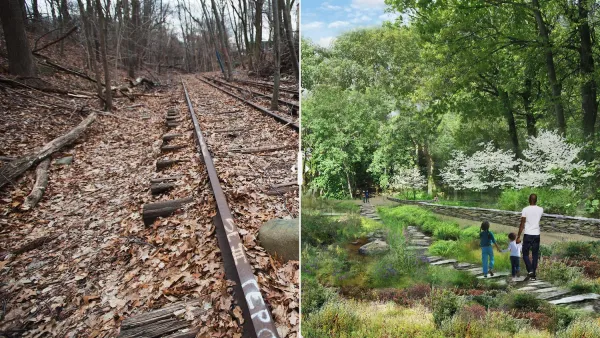
From Queens to Chattanooga, Federal Funding Cuts are Killing Park Projects
Cuts to grants from the Department of Transportation to the EPA are impacting small and large park projects across the country.
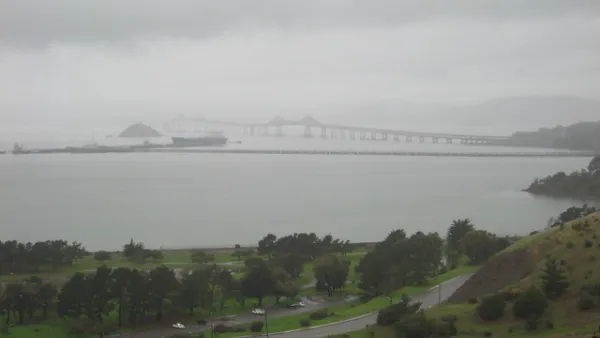
Trails and Rails Battle in San Francisco Bay Shoreline Park
Can freight trains and a scenic shoreline park along San Francisco Bay coexist, or are they incompatible uses? The East Bay Regional Park District voted to remove old rail tracks that BNSF Railway wants to reactivate. A local court may decide.
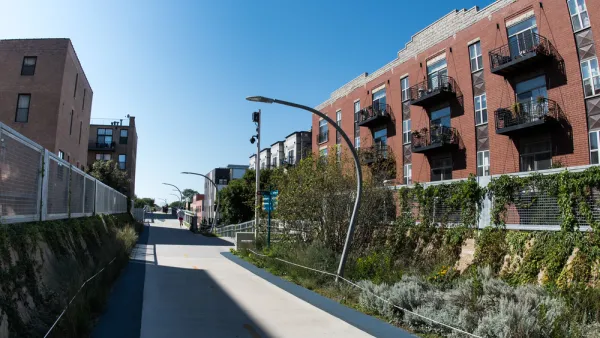
Chicago's 606 Bike Path Made Gentrification Inevitable, Expert Claims
Because the rails to trails project left housing up to the market, rising rents were inevitable, claims a new report.

Planetizen Federal Action Tracker
A weekly monitor of how Trump’s orders and actions are impacting planners and planning in America.

The state-sanctioned urbicide of Austin
People don’t kill cities. Freeways do.

US to reduce Colorado River water deliveries to Mexico
A new Colorado Treaty amendment reduces Mexico’s Colorado River water allocation by 250,000 acre feet.

5 New England states march closer to 800 megawatt wind energy project
Securing federal approval for the project may be complicated under the Trump administration, which has historically been hostile towards domestic wind power.

Baltimore to break ground on $50 million Transit Priority Project
The project will bring faster bus trips, safer streets and better bike connections to Baltimore.

Airbnb launches $250 million 'last-dollar financing' housing accelerator, makes first investment in Austin
The company will put $6.4 million towards affordable housing development in Texas’ capital.

FREE Course: Walkable City 1: Why Walkability?
After describing his path towards focusing on walkability as the essence of good planning, Jeff Speck marches through his five principal reasons for making more walkable places.
Reinventing Malls: Planning Alchemy—Turning Gray Fields Into Gold
The course focuses on the opportunities and imperatives that shape reinvention of mall sites.

Eagle County Government
Harvard University Graduate School of Design
Nashville Planning Department
The Architects Foundation
University of Cincinnati Online
The Pocatello Development Authority
The Urban Renewal Agency of the City of Pocatello
Journal of the American Planning Association