An easement often grants a third party, mainly a utility company, limited rights to properties not belonging to them. In North Fork, Colorado, conservation easements do the opposite by preserving the "heaven here on earth," says Kathy Browning.


Many utility companies use eminent domain and easements to run power lines and cable lines in certain areas even if the landowners oppose them. In Colorado, "The word easement doesn't actually mean what we think it does. Most people think of an easement as a right of passage, and in fact it is a right of passage through time for land to stay intact," Susan Lohr said. Conservation easements provide communities with scenic open space by preserving the natural environment.
Even with a Conservation Assistance Program (CAP), there is still a chance your land may be taken away. "An easement doesn't eliminate the potential for eminent domain by the government, but they would have to compensate the family. This is rare and usually it's for a strip of land to widen a highway," says Kathy Browning. Conservation easements also keep land values steady because the land cannot be developed on.
"Over 70 easements have been placed in the North Fork Valley by CAP. That amounts to 8,300 acres that will be preserved," says Kathy Browning.
Read the full story: Conservation Easements Preserve What We love About the North Fork
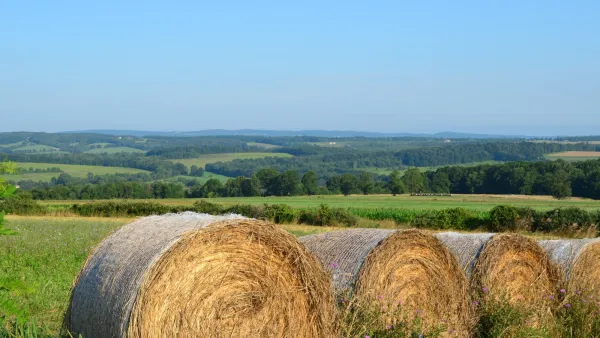
Conservation Easement Program Protects 100,000 Acres of Agricultural Land in New York State
A state famous for its largest city is making a concerted effort to protect agricultural lands as part of a larger national push.

Conservation Easements: Crafted With Good Intentions and Now Exploited for Tax Benefits
A tax break designed to protect land has become just another massive tax loophole. It looks like conservation easements are here to stay.
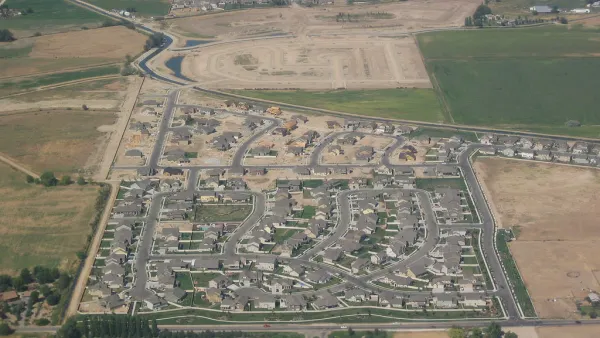
Farmland Preservation a Hot Topic in Idaho's Most Populous County
As the city of Boise and surrounding communities in Ada County, Idaho continue to grow and sprawl outward, agricultural land in the county may become a thing of the past.

Planetizen Federal Action Tracker
A weekly monitor of how Trump’s orders and actions are impacting planners and planning in America.

Eastern Nebraska is running out of electricity
Data centers and electrification are straining eastern Nebraska’s grid, throttling economic development.

Study reveals best places in the U.S. for cycling, walking
New research from Streetlight Data examines bicycle and pedestrian miles per capita in the 100 largest U.S. cities by population.

Officials look to alter BART extension as price goes through the roof
Tariffs and the war with Iran are behind the rising cost.

To power data centers, Utah company may build hundreds of nuclear reactors on state land
In its permit application, Valar asked for the county to confirm that changes within its outlined plan would still be covered by the permit.

San Antonio is using environmental review to stall ICE detention center
San Antonio sued last month to pause work on the new detention center until the federal government studied its effect on the surrounding area.

FREE Course: Walkable City 1: Why Walkability?
After describing his path towards focusing on walkability as the essence of good planning, Jeff Speck marches through his five principal reasons for making more walkable places.
Reinventing Malls: Planning Alchemy—Turning Gray Fields Into Gold
The course focuses on the opportunities and imperatives that shape reinvention of mall sites.

City of Charlotte
City of Rosemead
Rutgers University, Edward J. Bloustein School of Planning and Public Policy
University of Michigan School for Environment and Sustainability (SEAS)
Hunter College, City University of New York (CUNY)
The Architects Foundation
City of Cambridge
The Pocatello Development Authority
The Urban Renewal Agency of the City of Pocatello