Recent crashes involving the subway in Shanghai has caused speculation that the rails are unsafe and poorly built.


A collision between two subway trains on September 27 that injured more than 280 people prompted Adam Minter to give his personal experience using the Shanghai rail system.
"...Bungling conductors who often ignore signals and don't line up train cars with platform doors. One day, a train car's glass doors spontaneously shattered. Another day, a conductor led a train down the wrong track, only to then make the dangerous decision to back the train up."
He notes that, "As Shanghai's housing prices rise, residents have little choice but to move further and further away from the city center. They rely on the subway lines to get to work, but the lines were built quickly and shoddily. A common feeling among Shanghai's commuters is that the subway was not designed to serve them, but to enhance the status of Shanghai's Communist Party leaders."
Thanks to Cathie Pagano
Read the full story: Shanghai Rail Commuters Get on Board with a Prayer
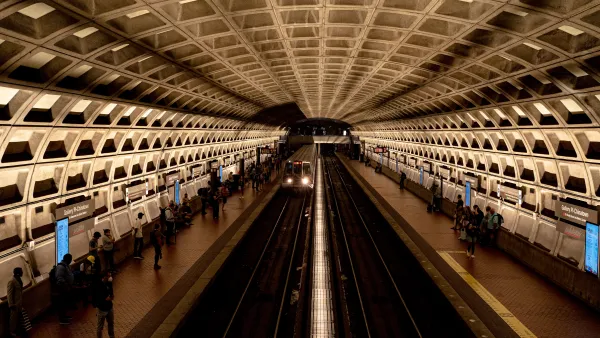
D.C. Leads the Nation for Transit Recovery
Ridership on the region’s rail systems is rebounding faster than other major transit systems.
China Plans Rapid Growth in Urban Rail Systems
Unlike its slowing economy, infrastructure projects across China continue to expand. Already home to three of the world's most-used transit systems, China plans to invest $127 billion in the coming decade to build dozens of new urban rail projects.
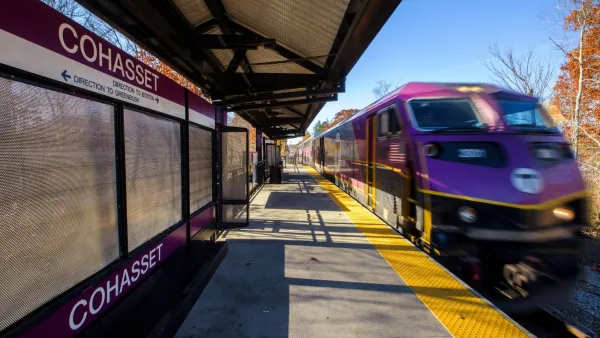
MBTA extends commuter rail discounts and lowers express bus fare to keep passengers riding into the fall
Boston-area commuters can access half-price monthly passes through November.

Planetizen Federal Action Tracker
A weekly monitor of how Trump’s orders and actions are impacting planners and planning in America.

California plans to bury El Niño’s downpour
If the state plays its cards right, it may be able to store a billion acre-feet of El Niño’s water in aquifers.

Desperate measures: Advocates weigh draining Lake Powell to fill Colorado River
Draining the reservoir could reduce evaporation losses by a couple hundred thousand acre-feet.

In Texas, data centers are swallowing promised parkland
Residents who moved to Taylor, Texas for a rural community now have to contend with three data centers in their backyard.

How a Chicago-sized wind farm beat the odds and powered on
The project spanned five presidential administrations and a standoff with a U.S. military base.

MTA gives itself 30 days to transform pit into basketball court
The site has been under construction since 2022; the city originally estimated it would finish the court in 2024.

FREE Course: Walkable City 1: Why Walkability?
After describing his path towards focusing on walkability as the essence of good planning, Jeff Speck marches through his five principal reasons for making more walkable places.
Reinventing Malls: Planning Alchemy—Turning Gray Fields Into Gold
The course focuses on the opportunities and imperatives that shape reinvention of mall sites.

City of Rosemead
Rutgers University, Edward J. Bloustein School of Planning and Public Policy
One Hundred Miles
Hunter College, City University of New York (CUNY)
The Architects Foundation
University of Cincinnati Online
City of Cambridge
Montrose County
The Pocatello Development Authority