Brown's main reason for signing the bills: "Too Damn Many Regulations". One gives environmental clearance for the AEG stadium in downtown LA, and the other other accelerates environmental review for projects costing at least $100 million.


Brown: "We're gonna remove some regulations, we're gonna speed things up and we're gonna protect the environment. But we're also gonna do it in a practical way, because there are too damn many regulations. Let's be clear about that!" (Audio available).
The two bills the governor signed were SB 292: California Environmental Quality Act: administrative and judicial review procedures: City of Los Angeles - stadium and AB 900: Jobs and Economic Improvement Through Environmental Leadership Act of 2011. One CEQA-reform bill remains on his desk, SB 226, that would "exempt from the requirements of CEQA the installation of a solar energy system, including associated equipment, on the roof of an existing building or an existing parking lot meeting specified conditions."
From LA Times/Environment: Jerry Brown signs bill that limits delays to L.A. stadium project: "...the massive project inched closer to execution Tuesday when Gov. Jerry Brown signed into law a controversial bill that limits lawsuits that could delay it. Speaking at a news conference... Brown said California's high unemployment demands "big ideas and big projects."
"But not everyone cheered Brown's move.
On Tuesday, the Los Angeles County Board of Supervisors said public and nonprofit projects should also be eligible for expedited judicial review. And the environmental community has found itself divided over the bills, even though both require projects to include green features."
Thanks to The Nooner
Read the full story: Brown Signs Two Measures to Streamline Environmental Reviews

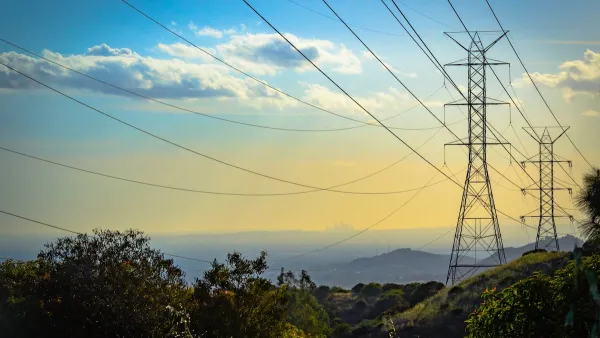
California Governor Suspends CEQA Reviews for Utilities in Fire Areas
Utility restoration efforts in areas affected by the January wildfires in Los Angeles will be exempt from environmental regulations to speed up the rebuilding of essential infrastructure.
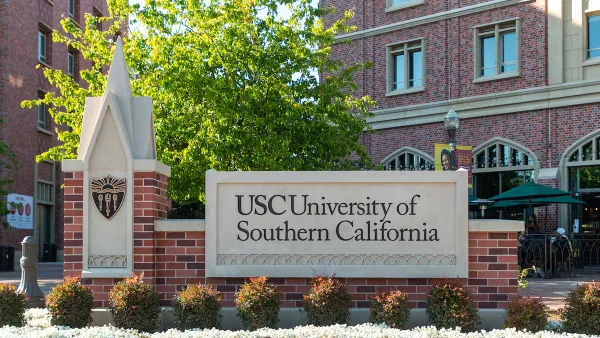
Berkeley Noise Pollution Precedent Blocks Los Angeles Housing
Opponents to a new university housing project cited a recent Berkeley case in which noise pollution was successfully used to deny an exemption from environmental review.
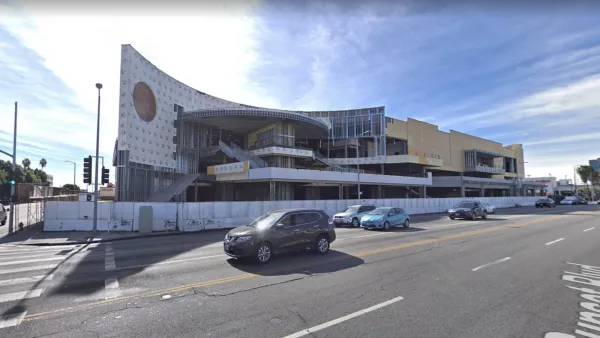
Two Signs of Approval Process Failure Finally to Proceed in Los Angeles
Neighborhood groups blocked the construction and completion of a Target-anchored retail complex and a 22-story residential high rise for years. Developers and the city have finally moved forward.

Planetizen Federal Action Tracker
A weekly monitor of how Trump’s orders and actions are impacting planners and planning in America.

Amtrak, CN end decades-long dispute with eight-year agreement
The new operating agreement establishes an updated framework for the companies to work together, including processes to resolve disputes.

Judges permit Denver to divert 77,000 acre feet from the Colorado River for reservoir expansion
Overuse and climate change have caused the Colorado River’s water levels to plummet.

Boston has spent millions making the Green Line more accessible — and there’s no end in sight
While the city has invested millions into expanding and adding platforms to the Green Line to make it more accessible, new train cars set to arrive next year will be too tall for disabled passengers to board without raising the current platforms.

Idaho may see an 18% drop in federal surface transit funding — the largest estimated cut in the US
Transit systems in rural communities are much more reliant on federal funding to provide their services.

How ‘post-disaster gentrification’ alters neighborhoods after natural calamities
After hurricanes, fires or other calamities, the original residents of a community are often replaced by younger, wealthier residents.

FREE Course: Walkable City 1: Why Walkability?
After describing his path towards focusing on walkability as the essence of good planning, Jeff Speck marches through his five principal reasons for making more walkable places.
Reinventing Malls: Planning Alchemy—Turning Gray Fields Into Gold
The course focuses on the opportunities and imperatives that shape reinvention of mall sites.

City of Wisconsin Rapids
Harvard University Graduate School of Design
KFH Group Inc.
The Architects Foundation
University of Cincinnati Online
The Pocatello Development Authority
The Urban Renewal Agency of the City of Pocatello