While other NYC development is stalled out, colleges and universities are "on a building spree", writes Mitchell Moss, and they are revitalizing old buildings and infrastructure.


"What's essential to recognize is that as New York's economy and population have evolved, colleges and universities have moved out of the shadows and are playing a more powerful and forceful role in land development," writes Moss for The Architect's Newspaper.
Moss looks at expansion plans from Columbia, NYU, CUNY, and several smaller schools like John Jay College and Medgar Evers College. Because these colleges are urban, they necessarily find themselves pushing against planning and zoning requirements and the needs of their surrounding neighborhoods. Many are finding intense resistance, despite the clear economic benefits higher education brings to the city. Part of the problem, writes Moss, is that "leaders of the city's colleges and universities are anything but shy when it comes to expanding their campuses."
Read the full story: Feature> Class Struggle

Evidence-based planning in a time of information overload
The field of academic publishing has become complex and crowded. What does it mean for urban planners?
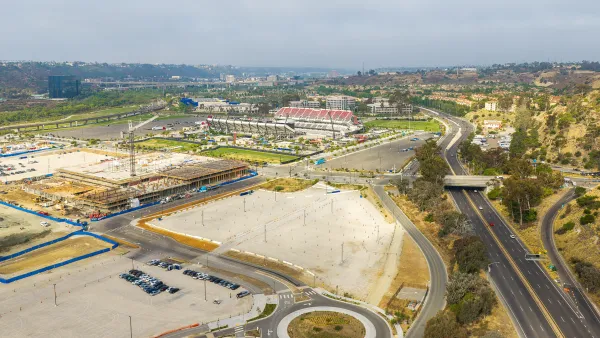
San Diego State intergenerational housing project will bring 250 homes for older adults to campus
The project is part of the university's Mission Valley campus that includes 4,600 housing units.
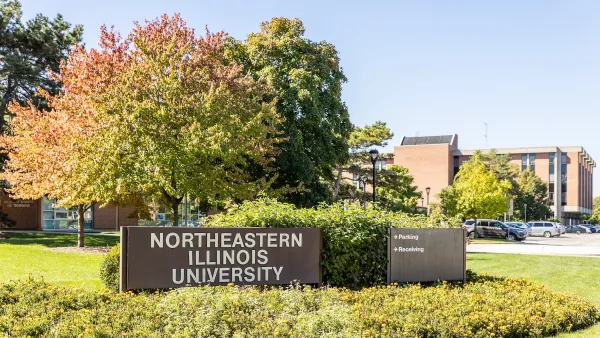
This university-owned city block in Chicago has languished for over a decade. Neighbors say it's time to let go
The university never built its planned student housing, letting a row of storefronts sit vacant for years.

Planetizen Federal Action Tracker
A weekly monitor of how Trump’s orders and actions are impacting planners and planning in America.

Eastern Nebraska is running out of electricity
Data centers and electrification are straining eastern Nebraska’s grid, throttling economic development.

Study reveals best places in the U.S. for cycling, walking
New research from Streetlight Data examines bicycle and pedestrian miles per capita in the 100 largest U.S. cities by population.

Officials look to alter BART extension as price goes through the roof
Tariffs and the war with Iran are behind the rising cost.

To power data centers, Utah company may build hundreds of nuclear reactors on state land
In its permit application, Valar asked for the county to confirm that changes within its outlined plan would still be covered by the permit.

San Antonio is using environmental review to stall ICE detention center
San Antonio sued last month to pause work on the new detention center until the federal government studied its effect on the surrounding area.

FREE Course: Walkable City 1: Why Walkability?
After describing his path towards focusing on walkability as the essence of good planning, Jeff Speck marches through his five principal reasons for making more walkable places.
Reinventing Malls: Planning Alchemy—Turning Gray Fields Into Gold
The course focuses on the opportunities and imperatives that shape reinvention of mall sites.

City of Charlotte
City of Rosemead
Rutgers University, Edward J. Bloustein School of Planning and Public Policy
University of Michigan School for Environment and Sustainability (SEAS)
Hunter College, City University of New York (CUNY)
The Architects Foundation
City of Cambridge
The Pocatello Development Authority
The Urban Renewal Agency of the City of Pocatello