Not that it's a real surprise that trees clean the air, but a new study shows that greenery in cities can have a significant effect on air quality.


A new study out of the University of Kent in the UK found that a 10 percent increase in urban tree coverage in mid-size cities, like Leicester, can absorb about 12 percent of carbon emissions, contributing to cleaner air. The study is yet another addition to the argument that any sound urban planning or transit policy to improve air quality must be supplemented with green spaces.
To reach their intuitive, yet essential, conclusion, the conservation scientists first calculated tree density and vegetation on a city-wide scale, and later derived the biomass and carbon storage potential in each vegetation category. Based on their calculations, the researchers found that above-ground vegetation stores 231,521 tons of carbon, of which 97.3 percent is stored by trees.
And although the study brings some much needed positive news to the greenhouse gas debate, the researchers express the importance of maintaining this valuable resource for the city's air quality.
Thanks to Jeffrey Riecke
Read the full story: Urban Green Space Key in Improving Air Quality
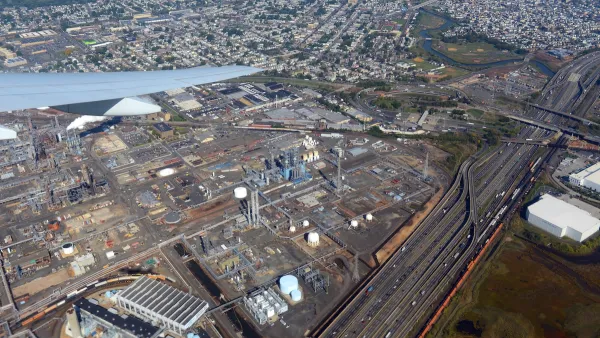
New Jersey to Consider Charging Fossil Fuel Companies for Pollution
A proposed law would make companies liable for damages caused by burning fossil fuels.
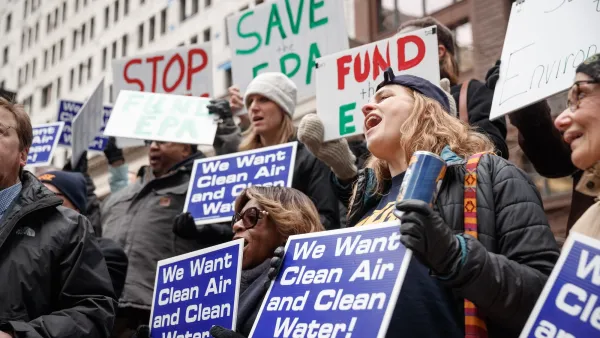
EPA Guts Emissions Regulations
The agency is eliminating the endangerment finding that underpins the agency’s authority to regulate greenhouse gas emissions.
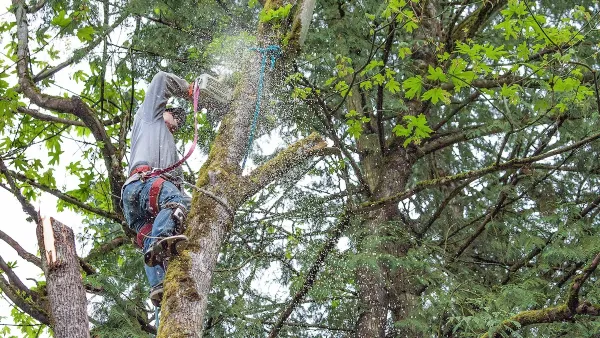
Seattle Conflict Between Trees and Housing Heats up
A 2023 update to Seattle’s tree ordinance has led to sharp increase in the number of trees being cut down for redevelopment, prompting advocates to call for better protection of the city’s tree canopy.

Planetizen Federal Action Tracker
A weekly monitor of how Trump’s orders and actions are impacting planners and planning in America.

California plans to bury El Niño’s downpour
If the state plays its cards right, it may be able to store a billion acre-feet of El Niño’s water in aquifers.

Desperate measures: Advocates weigh draining Lake Powell to fill Colorado River
Draining the reservoir could reduce evaporation losses by a couple hundred thousand acre-feet.

Chicago voters approve permanent festival grounds, penalty for vacant property owners
Currently, major summer and fall festivals take over public parks for weeks at a time, drawing criticism from nearby residents

NYC votes to cut outdoor dining red tape, speed up permitting
New York City also voted to allow the Department of Transportation to begin work on urgent projects before notifying elected officials.

California appears to reject Prop. 45
The proposition would have expanded the projects that qualify for a streamlined environmental review, effectively paring down the California Environmental Quality Act.

FREE Course: Walkable City 1: Why Walkability?
After describing his path towards focusing on walkability as the essence of good planning, Jeff Speck marches through his five principal reasons for making more walkable places.
Reinventing Malls: Planning Alchemy—Turning Gray Fields Into Gold
The course focuses on the opportunities and imperatives that shape reinvention of mall sites.

City of Rosemead
Rutgers University, Edward J. Bloustein School of Planning and Public Policy
One Hundred Miles
Hunter College, City University of New York (CUNY)
The Architects Foundation
University of Cincinnati Online
City of Cambridge
Montrose County
The Pocatello Development Authority