A city built secretly by the U.S. government to be a center for the design and development of the atomic bomb still stands today as an interestingly urban piece of U.S. history.


"The city, now called Oak Ridge, was once home to 75,000 people, yet it did not appear on any map. Visitors could only get into the town through gated entrances. The vast majority of residents were unwitting participants in the drive to harvest enriched uranium for the "Little Boy" bomb that devastated Hiroshima on August 6, 1945. They only learned exactly what they were doing when they read the big black headlines that proclaimed the war's end.
Nearly 66 years later, Oak Ridge is getting ready to celebrate its heritage--and to party a little, too."
Now home to 29,000 people, the Tennessee city is replete with museums documenting its cloaked past.
Read the full story: Visiting the 'secret city' of Oak Ridge: The drive to build the atomic bomb (and planners from Chicago) shaped this city in Tennessee

15 US cities and their global namesakes
Hundreds of cities around the United States are named after other places. We tour a few of them.
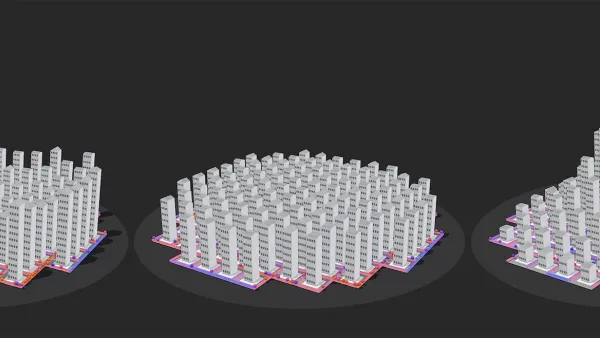
New study visualizes how city shapes impact mobility
Whether circular or linear, the shape and layout of cities affects how their residents get around.
William Whyte’s Seminal Urban Film Restored
‘The Social Life of Small Urban Spaces’ changed the way planners view public space and ushered in a new way of understanding urban patterns.

Planetizen Federal Action Tracker
A weekly monitor of how Trump’s orders and actions are impacting planners and planning in America.

California plans to bury El Niño’s downpour
If the state plays its cards right, it may be able to store a billion acre-feet of El Niño’s water in aquifers.

Desperate measures: Advocates weigh draining Lake Powell to fill Colorado River
Draining the reservoir could reduce evaporation losses by a couple hundred thousand acre-feet.

In Texas, data centers are swallowing promised parkland
Residents who moved to Taylor, Texas for a rural community now have to contend with three data centers in their backyard.

How a Chicago-sized wind farm beat the odds and powered on
The project spanned five presidential administrations and a standoff with a U.S. military base.

MTA gives itself 30 days to transform pit into basketball court
The site has been under construction since 2022; the city originally estimated it would finish the court in 2024.

FREE Course: Walkable City 1: Why Walkability?
After describing his path towards focusing on walkability as the essence of good planning, Jeff Speck marches through his five principal reasons for making more walkable places.
Reinventing Malls: Planning Alchemy—Turning Gray Fields Into Gold
The course focuses on the opportunities and imperatives that shape reinvention of mall sites.

City of Rosemead
Rutgers University, Edward J. Bloustein School of Planning and Public Policy
One Hundred Miles
Hunter College, City University of New York (CUNY)
The Architects Foundation
University of Cincinnati Online
City of Cambridge
Montrose County
The Pocatello Development Authority