Transportation is increasingly seen as a major concern as London prepares to host the 2012 Summer Olympics. As crowds fill the city, many wonder whether it will be able to handle the load and keep everyone moving.


Olympics officials have been weighing these concerns and are preparing ot release their final transportation plan, but many argue that the biggest challenge will be convincing locals to change their transportation habits during the event.
"Is London properly prepared for the demands on the system of an anticipated 5.3 million visitors? Forecasting these things is difficult. The capital's Underground system is a slowly-improving historical miracle but one that is susceptible to disruptions from many sources, a matter that will be discussed by the transport committee today with among others representatives of London's larger businesses and the RMT's Bob Crow. London's road congestion is already insane. The final edition of the Olympic Transport Plan, due very soon, will need to demonstrate that it has thought of everything that could go wrong.
Perhaps the most important thing will be persuading Londoners to make adjustments to their usual routines."
Read the full story: The transport Olympics
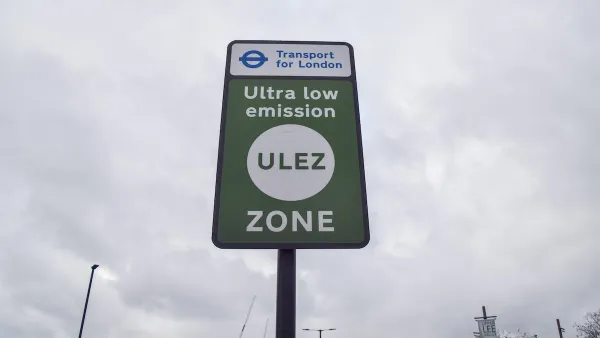
London Congestion Pricing Zone Has No Impact on Local Spending
The city’s cordon pricing scheme did not affect how much people spent at local businesses, new research finds.

Bike Lanes Don't Cause Congestion
Research from Europe shows bike infrastructure doesn't add to urban traffic and can shift mode share from cars to bikes and reduce the need for solo car trips.

Traffic Reductions in Outer London's 'Mini-Hollands' Curtail Vehicle Ownership
An analysis of areas designated as "low traffic neighborhoods" shows a decrease in vehicle ownership rates, a promising sign for the traffic-choked metropolis.

Planetizen Federal Action Tracker
A weekly monitor of how Trump’s orders and actions are impacting planners and planning in America.

California plans to bury El Niño’s downpour
If the state plays its cards right, it may be able to store a billion acre-feet of El Niño’s water in aquifers.

Desperate measures: Advocates weigh draining Lake Powell to fill Colorado River
Draining the reservoir could reduce evaporation losses by a couple hundred thousand acre-feet.

Mamdani’s pied-à-terre tax survives legal challenge
A panel of judges found that the plaintiffs failed to demonstrate injury as a result of New York City's implementation of the tax.

Eastern Nebraska is running out of electricity
Data centers and electrification are straining eastern Nebraska’s grid, throttling economic development.

Seattle passes record-breaking transit services expansion
Proposition 1 will double the city’s transit tax to add 95,000 more bus trips and preserve 180,000 bus trips annually.

FREE Course: Walkable City 1: Why Walkability?
After describing his path towards focusing on walkability as the essence of good planning, Jeff Speck marches through his five principal reasons for making more walkable places.
Reinventing Malls: Planning Alchemy—Turning Gray Fields Into Gold
The course focuses on the opportunities and imperatives that shape reinvention of mall sites.

City of Rosemead
Rutgers University, Edward J. Bloustein School of Planning and Public Policy
One Hundred Miles
Hunter College, City University of New York (CUNY)
The Architects Foundation
University of Cincinnati Online
City of Cambridge
Montrose County
The Pocatello Development Authority