Sustainability-focused programs offered at the federal level have received overwhelming support from communities and protection from budget cuts, even in an age of tightened budgets.


Columnist Neal Peirce explains how the programs have garnered this sort of support, and how they can use it to grow.
"The hard-fought budget compromise for 2011 protects, for example, two stellar programs of the new push, both triggers for hundreds of competitive applications.
One is the Sustainable Communities Initiative that helps localities (and federal departments) tie together and improve their efforts in housing, transportation and environmental decisions at the regional and grassroots level. The program is to receive $100 million for this fiscal year.
Another save, with $528 million appropriated, is the highly popular "TIGER" program of competitive transportation-related grants to cities and regions that come up with creative ways to rebuild the economies through such steps as safer streets, reduced carbon emissions and greater community livability."
Read the full story: ‘Green’ Community Aids Prove Their Political Mettle


Swapping your gas car for an EV is greener than keeping it, research shows
An EV repays the 'carbon debt' caused by building it after 4,400 miles.

Climate change could double household water costs in some cities, study finds
New research suggests that climate change-related stressors are straining municipal water systems.
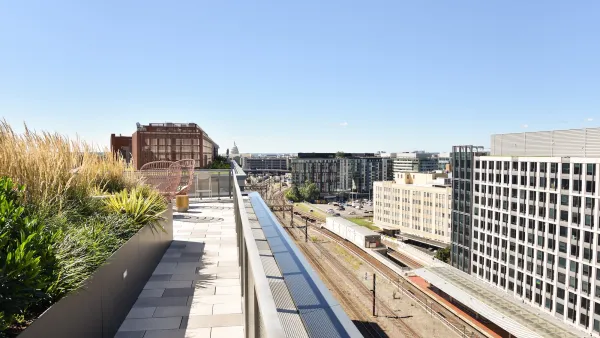
DC energy efficiency rule requires buildings to upgrade their infrastructure or face millions in fines
Building owners and condo co-op members say the upgrades are often prohibitively expensive.

Planetizen Federal Action Tracker
A weekly monitor of how Trump’s orders and actions are impacting planners and planning in America.

Amtrak, CN end decades-long dispute with eight-year agreement
The new operating agreement establishes an updated framework for the companies to work together, including processes to resolve disputes.

Northwest rail fans eager for Sept. 30 debut of Amtrak’s Airo fleet
Get ready for that new train smell and more seats. But they won’t go faster or run more frequently on the Cascades route in Washington and Oregon.

St. Louis Metro to test if single-car trains can reduce operating costs, maintain rider satisfaction
The pilot program will run from October to spring 2027, and begin with one single-car train operating on Metrolink’s Red and Blue lines.

Pennsylvania is building data centers in abandoned mines
Housing data centers in mines provides an alternative to destroying local forests and may spare residents from data centers’ noise and air pollution.

If Corpus Christi can’t revive desalination plant project, it may owe Texas $235 million
Earlier this month, city officials declined to pursue developing the plant for the second time in a year.

FREE Course: Walkable City 1: Why Walkability?
After describing his path towards focusing on walkability as the essence of good planning, Jeff Speck marches through his five principal reasons for making more walkable places.
Reinventing Malls: Planning Alchemy—Turning Gray Fields Into Gold
The course focuses on the opportunities and imperatives that shape reinvention of mall sites.

City of Thousand Oaks
City of Wisconsin Rapids
Harvard University Graduate School of Design
The Architects Foundation
University of Cincinnati Online
The Pocatello Development Authority
The Urban Renewal Agency of the City of Pocatello