Canadian cities are facing major backlogs in terms of maintaining and updating infrastructure. Putting off the work is expected to cost cities billions.


"Quite a bit of the nation's civic infrastructure dates back to the 1960s and '70s, a time when governments spent almost five per cent of GDP, or two to three times the low of a few years later, to build things. So all this is 40 or 50 years old -plus all the assets that are even older, maybe much older.
Yet routine maintenance and even full-fledged rehabilitation was all too easy to put off by governments struggling to balance their books throughout the 1990s and the early years of the decade just ended, Vander Ploeg noted."
Spending on infrastructure has increased in recent years, though not enough, according to this article.
Read the full story: Cities must spend billions to save their aging assets
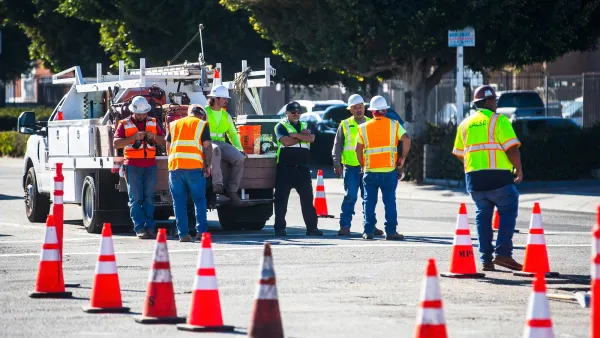
Commentary: LA’s ‘Large Asphalt Repair’ Policy Privileges Drivers, Endangers Others
A new policy to perform spot repairs rather than resurfacing entire streets lets the city skirt requirements to install accessibility and pedestrian infrastructure.
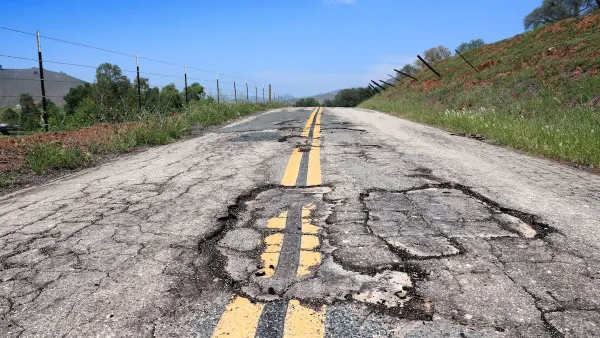
Engineers Gave America's Roads an Almost Failing Grade — Why Aren't We Fixing Them?
With over a trillion dollars spent on roads that are still falling apart, advocates propose a new “fix it first” framework.

Minnesota Dam Failure Highlights Nationwide Danger
The Rapidan Dam isn’t the only one at risk of imminent failure.

Planetizen Federal Action Tracker
A weekly monitor of how Trump’s orders and actions are impacting planners and planning in America.

Eastern Nebraska is running out of electricity
Data centers and electrification are straining eastern Nebraska’s grid, throttling economic development.

Washington state to charge fee to drivers with fuel-efficient cars
Revenue from the fee will go towards supporting the state’s highways.

Instead of building new housing, LA developers are turning mansions into mega-mansions
In the richest areas, the number of houses valued at $30 million with demolition permits has skyrocketed since 2018.

Illinois considers spending $1 billion in taxpayer money on data center
A quantum computing campus and data center are currently under construction in Chicago.

As development costs rise, Boston moves to lessen affordable housing requirements
The Boston Zoning Commission and the City Council still need to approve Boston Mayor Michelle Wu’s proposed changes

FREE Course: Walkable City 1: Why Walkability?
After describing his path towards focusing on walkability as the essence of good planning, Jeff Speck marches through his five principal reasons for making more walkable places.
Reinventing Malls: Planning Alchemy—Turning Gray Fields Into Gold
The course focuses on the opportunities and imperatives that shape reinvention of mall sites.

City of Charlotte
City of Rosemead
Rutgers University, Edward J. Bloustein School of Planning and Public Policy
University of Michigan School for Environment and Sustainability (SEAS)
Hunter College, City University of New York (CUNY)
The Architects Foundation
University District Partnership
City of Cambridge
The Pocatello Development Authority