Communities in the slums of India are well known for "making do". A new exhibit looks at how that spirit of innovation and adaptation plays out in these cities and how other cities can learn from them.


"'The concept itself came about when we looked at the cities,' said Kanu Agrawal, the exhibit curator. 'There was a tragic narrative that they're over populated; they're messy. But somehow things work-not in a banal way but in a creative way. We found that jugaad existed in so many ways.'
The exhibit is organized around resources, such as land, water, energy, and transportation and culls the material from communities in Delhi, Mumbai, Ahmedabad and Pune. Video, photos, graphics, renderings and object displays develop a narrative detailing how NGOs and designers can draw inspiration by observing the everyday survival of the India's poor."
The exhibit is now open at the Center for Architecture in New York City.
Read the full story: Jugaad Urbanism: More Than Just Making Do

How To: Design a User-Friendly Museum Exhibition about Planning
John King writes that the "Gallery + Ideas Forum" at the Presidio in San Francisco provides an excellent model for presenting issues and ideas of planning and urban design to the public.
New Development Projects Boost San Francisco's Northern Waterfront
The historic Fort Mason, along with several other development projects, has helped alter the landscape of the city’s northern waterfront, according to Jim Chappell, former head of the San Francisco Planning and Urban Research Association.
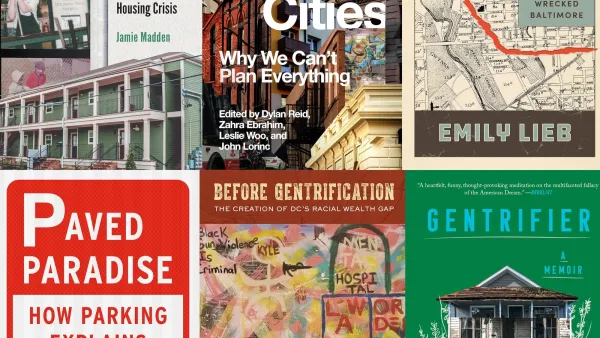
10 great urban planning summer reads
Wherever you're going (or staying) this summer, here are some suggestions for books to bring along.

Planetizen Federal Action Tracker
A weekly monitor of how Trump’s orders and actions are impacting planners and planning in America.

Amtrak, CN end decades-long dispute with eight-year agreement
The new operating agreement establishes an updated framework for the companies to work together, including processes to resolve disputes.

Judges permit Denver to divert 77,000 acre feet from the Colorado River for reservoir expansion
Overuse and climate change have caused the Colorado River’s water levels to plummet.

Atlanta City Council unanimously backs $3.5 billion Beltline light rail project
The resolution was drafted after Atlanta Mayor Andre Dickens pulled support for the Atlanta Streetcar extension last year.

SEPTA to bring nearby frequent transit to over 1 million new riders as part of decade-long plan
The agency's Accelerate plan will also bring frequent transit to twice the amount of jobs that are currently located near it.

NYC plants over 18,000 trees, the most new foliage in a decade
Many of the trees were planted in communities vulnerable to extreme heat.

FREE Course: Walkable City 1: Why Walkability?
After describing his path towards focusing on walkability as the essence of good planning, Jeff Speck marches through his five principal reasons for making more walkable places.
Reinventing Malls: Planning Alchemy—Turning Gray Fields Into Gold
The course focuses on the opportunities and imperatives that shape reinvention of mall sites.

City of Thousand Oaks
City of Wisconsin Rapids
Harvard University Graduate School of Design
The Architects Foundation
University of Cincinnati Online
The Pocatello Development Authority
The Urban Renewal Agency of the City of Pocatello