If a San Mateo County agency has its way, congestion pricing will be applied to two toll bridges to create additional revenue and reduce congestion as was done successfully on the S.F./Oakland Bay Bridge last July - but there are major differences.


San Mateo County's congestion management agency, known as C/CAG "released the new San Mateo Countywide Transportation Plan, which includes support for congestion pricing on the two bridges that connect the Peninsula and East Bay."
The plan is to do for the San Mateo-Hayward Bridge and the Dumbarton Bridge what congestion pricing has done for the Bay Bridge.
However, there may not be enough congestion on the two southern bridges to warrant the congestion-reducing strategy. The Bay Bridge had queue times of 27 minutes (reduced by 4 minutes after congestion pricing was applied) while the southern bridges average only two minutes during rush hour according to data supplied by the Bay Area Toll Authority. C/CAG feels the payoff would also be in congestion reduction on Hwy 101 though.
The proposal has to clear two county agencies and then the Metropolitan Transportation Commission.
Read the full story: Officials push for higher tolls during rush hours on San Mateo, Dumbarton bridges
Another Bay Area City Considers Urban Tolling
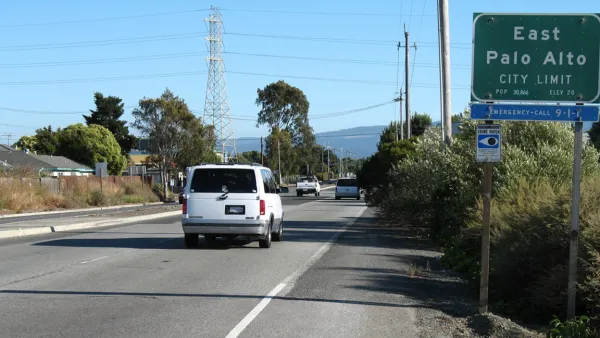
East Palo Alto has long suffered the toll that transbay traffic has imposed on this gateway to Silicon Valley from the East Bay in the form of air pollution and traffic congestion. Now the city is considering tolling the traffic.
Successful Debut Of Congestion Pricing On Bay Bridge
July 1 marked the $2 premium, commuter toll on the Bay Bridge, as well as new first-time charges for car pools on all Bay Bridges, and increased tolls ($5) on seven state-owned bridges. Congestion on Bay Bridge reduced by half during morning peak.
Evidence for Tolls as a 'Surefire' Traffic Congestion Fix
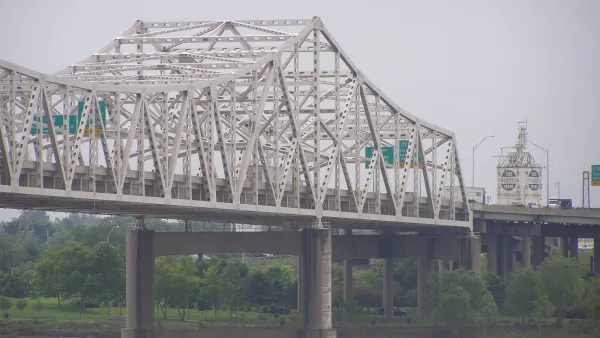
Traffic on a Louisville freeway fell by half after a toll was implemented. Could this be the best way to reduce traffic congestion?

Planetizen Federal Action Tracker
A weekly monitor of how Trump’s orders and actions are impacting planners and planning in America.

Eastern Nebraska is running out of electricity
Data centers and electrification are straining eastern Nebraska’s grid, throttling economic development.

California High-Speed Rail Authority picks trainset manufacturer
The California High-Speed Rail Authority aims to start servicing passengers by 2033.

What could the future of LA transit look like under Raman?
The mayor-elect views broken sidewalks and potholes as crises that can be fixed with better governance.

States are counting on battery farms. Some towns don’t want them.
While fire safety has improved, some communities are still wary.

Dallas releases zoning code overhaul to officials
The drafted overhaul is over 400 pages long.

FREE Course: Walkable City 1: Why Walkability?
After describing his path towards focusing on walkability as the essence of good planning, Jeff Speck marches through his five principal reasons for making more walkable places.
Reinventing Malls: Planning Alchemy—Turning Gray Fields Into Gold
The course focuses on the opportunities and imperatives that shape reinvention of mall sites.

City of Rosemead
Rutgers University, Edward J. Bloustein School of Planning and Public Policy
One Hundred Miles
University of Michigan School for Environment and Sustainability (SEAS)
Hunter College, City University of New York (CUNY)
The Architects Foundation
City of Cambridge
The Pocatello Development Authority
The Urban Renewal Agency of the City of Pocatello