Two Staten Island Republicans want to throw a wrench in the city's bike lane boom by requiring environmental review for all new lanes. Experts explain why that's a bad idea.


Streetsblog's Noah Kazis decided to give the Staten Island Council members the benefit of the doubt, and brought the idea to legal and planning experts. Here's what he found:
"'No bike lane would fail an environmental review,' said Michael King, a principal at the transportation planning firm Nelson\Nygaard.
There will always be a positive environmental impact, he explained, something that the city often has to demonstrate anyway to receive federal funding. Environmental review would add another layer of expense and red tape, setting a threshold that King has never had to meet for the bike projects he's worked on in a dozen cities around the country and the world."
Thanks to Noah Kazis
Read the full story: Enviro Law Experts: Review For Bike Lanes a Waste of Taxpayer Money

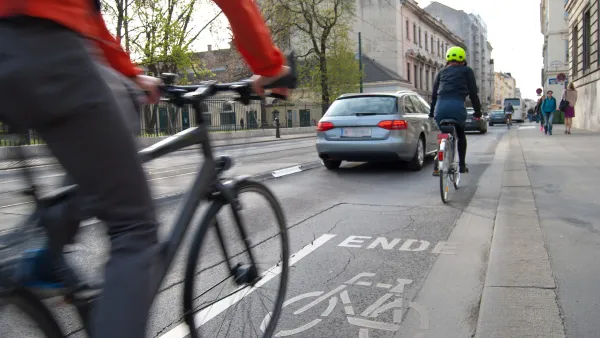
How New York’s L Train Shutdown Will Boost Cycling
When the line shuts down for repairs next year, an uptick in cycling is expected. Infrastructure improvements will make this shift easier and could promote biking well into the future.
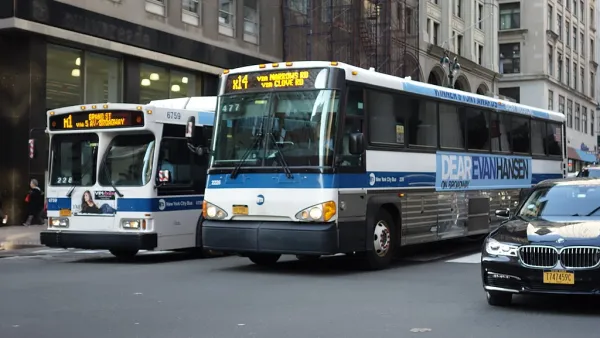
Staten Island Express Bus Relaunches
Express buses in Staten Island started their new routes August 19 with fewer routes and fewer stops and faster travel the MTA hopes.
'Homeowner-Friendly' Zoning Changes Proposed in Staten Island
Proposed zoning changes would allow residents to build "as-of-right" in Staten Island's "natural" districts.

Planetizen Federal Action Tracker
A weekly monitor of how Trump’s orders and actions are impacting planners and planning in America.

Amtrak, CN end decades-long dispute with eight-year agreement
The new operating agreement establishes an updated framework for the companies to work together, including processes to resolve disputes.

Judges permit Denver to divert 77,000 acre feet from the Colorado River for reservoir expansion
Overuse and climate change have caused the Colorado River’s water levels to plummet.

NYC DOT wants faster, more permanent street upgrades
The city is examining ways to build more concrete infrastructure without getting entangled in 'decades-long' projects.

'Something we’ve never seen before:' rising utility rates could strain city finances nationwide
Data centers, climate change and other factors have caused utility rates in the United States to increase by 38% since 2020.

Trump to overrule local leaders, lease millions of acres of America’s Pacific Island territories’ seafloors to mining companies
International law says that the Indigenous people of America’s territories have a right to prior and informed consent regarding projects that impact their countries.

FREE Course: Walkable City 1: Why Walkability?
After describing his path towards focusing on walkability as the essence of good planning, Jeff Speck marches through his five principal reasons for making more walkable places.
Reinventing Malls: Planning Alchemy—Turning Gray Fields Into Gold
The course focuses on the opportunities and imperatives that shape reinvention of mall sites.

Harvard University Graduate School of Design
KFH Group Inc.
Greater Baltimore Committee
The Architects Foundation
University of Cincinnati Online
The Pocatello Development Authority
The Urban Renewal Agency of the City of Pocatello