Express buses in Staten Island started their new routes August 19 with fewer routes and fewer stops and faster travel the MTA hopes.


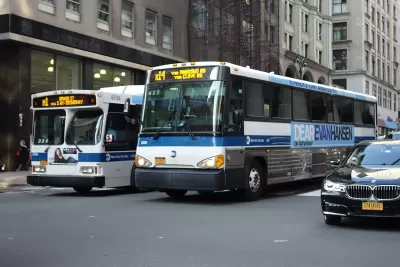
The MTA launched their redesigned Staten Island Express bus routes in the hopes of creating faster more reliable service. "The result is a network of 21 routes — there were 26, previously — and stops spaced roughly .4 miles apart on average, compared to about .25 miles of separation in the old network," Vincent Barone reports for AM New York. Fewer stops mean buses move faster, though some commuters will have to walk farther. Representatives from the MTA say that, while any change would cause some backlash, the majority of riders will be better served by these streamlined routes.
Like other bus transit systems around the country the MTA's buses have seen falling ridership. "Bus ridership across the city has fallen by 8.5 percent since 2010, according to the city’s recent mobility report," Barone writes. Changes to the Staten Island buses are aimed in part at slowing that decline and are the first part of a larger plan that will reach all across the city
FULL STORY: Staten Island express bus service overhaul launches


Denver's Regional Transit District to Overhaul Bus System
The Regional Transportation District will focus on providing improved service on its most popular lines while eliminating underused routes and replacing them with on-demand microtransit.

Bus Transit Still Faces Social Stigma
Improving headways and making service more reliable can help reduce the negative public image faced by urban bus transit.
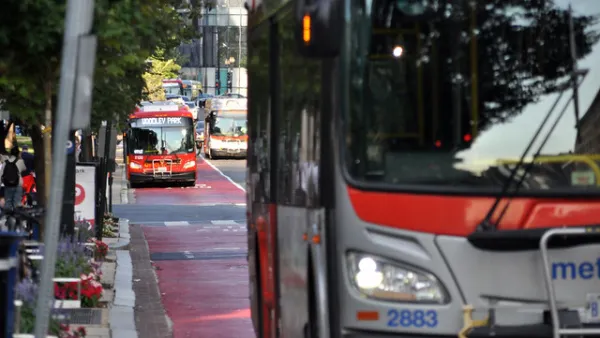
NRDC Releases 'Bus Priority Toolkit'
The kit, designed in collaboration with five U.S. cities, aims to provide lessons and tools for building a compelling case for bus priority and identifying measurable benefits.

Planetizen Federal Action Tracker
A weekly monitor of how Trump’s orders and actions are impacting planners and planning in America.

The state-sanctioned urbicide of Austin
People don’t kill cities. Freeways do.

US to reduce Colorado River water deliveries to Mexico
A new Colorado Treaty amendment reduces Mexico’s Colorado River water allocation by 250,000 acre feet.

5 New England states march closer to 800 megawatt wind energy project
Securing federal approval for the project may be complicated under the Trump administration, which has historically been hostile towards domestic wind power.

Baltimore to break ground on $50 million Transit Priority Project
The project will bring faster bus trips, safer streets and better bike connections to Baltimore.

Airbnb launches $250 million 'last-dollar financing' housing accelerator, makes first investment in Austin
The company will put $6.4 million towards affordable housing development in Texas’ capital.

FREE Course: Walkable City 1: Why Walkability?
After describing his path towards focusing on walkability as the essence of good planning, Jeff Speck marches through his five principal reasons for making more walkable places.
Reinventing Malls: Planning Alchemy—Turning Gray Fields Into Gold
The course focuses on the opportunities and imperatives that shape reinvention of mall sites.

Eagle County Government
Harvard University Graduate School of Design
Nashville Planning Department
The Architects Foundation
University of Cincinnati Online
The Pocatello Development Authority
The Urban Renewal Agency of the City of Pocatello
Journal of the American Planning Association