Victor David Hanson uses a broad historical perspective to examine the causes of the rise and fall of former world cities. He argues that the computer driven, global age will accelerate the process of growth and decline.


Rome, Athens, Florence, Byzantium and Ephesus are all cities of the same breed. Former capitals of politics, finance, industry or empire that saw their power and influence fade as the world around them changed. Hanson begins to examine the natural and human causes behind the pattern which is set to replay in New York.
He argues that the only way to sooth bi-racial tensions are by making a city multi-racial, and that good governance and sensible tax structures of the sort implemented in New York since the 1990s have served to renew the city in a way that is not possible in, for example, Detroit. What could end New York "as we know it," is commercial failure and flight of capital, similar to that which doomed renaissance Florence.
Hanson claims that New York's swerve towards being a "completely redistributive city," will result in a similar departure of banks and bankers to lower tax Southern or Midwestern states eager to couch it. The city's broad network of theaters, art, universities and foundations neutered without the flowing financial incomes that support them.
Read the full story: The Destiny of Cities

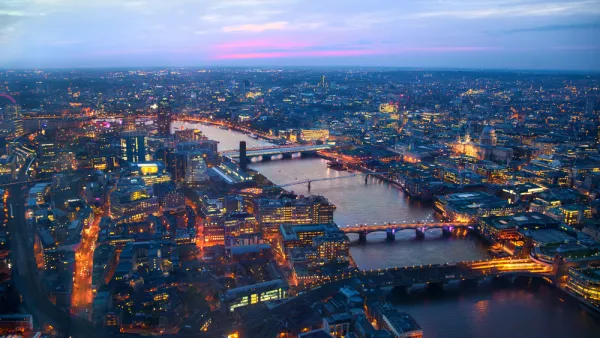
Around the Globe, Urban Diversity Is Alive and Well
It might feel like the world is shrinking as globalization expands, but many cities still have their individual characters and qualities.
What's Left for Venice in Its Golden Years?
Josh Stephens muses on the modern state of an erstwhile global capital that has kept its aesthetic charms, but lost its anima.
Can the Colombian Renaissance Be Sustained?
Globalization has spurned a renaissance in the formerly crime-ridden Colombian city of Medellin. But some worry that the city's improvements may only be temporary.

Planetizen Federal Action Tracker
A weekly monitor of how Trump’s orders and actions are impacting planners and planning in America.

Amtrak, CN end decades-long dispute with eight-year agreement
The new operating agreement establishes an updated framework for the companies to work together, including processes to resolve disputes.

Northwest rail fans eager for Sept. 30 debut of Amtrak’s Airo fleet
Get ready for that new train smell and more seats. But they won’t go faster or run more frequently on the Cascades route in Washington and Oregon.

As El Niño approaches, Newsom vetos bill aimed at protecting California levees from flooding
Gov. Gavin Newsom said the state’s allocated $170 million was enough funding; State experts estimate it will cost $3.3 billion to repair the California Delta's levees.

Boston sues Trump administration over revoked infrastructure grant
The Trump administration withdrew the infrastructure grant because less than 1% of the money would go to electric vehicle charging infrastructure.

NYC to turn city-owned property into thousands of homes
The city has scheduled a public hearing regarding the development for October.

FREE Course: Walkable City 1: Why Walkability?
After describing his path towards focusing on walkability as the essence of good planning, Jeff Speck marches through his five principal reasons for making more walkable places.
Reinventing Malls: Planning Alchemy—Turning Gray Fields Into Gold
The course focuses on the opportunities and imperatives that shape reinvention of mall sites.

City of Thousand Oaks
City of Wisconsin Rapids
Harvard University Graduate School of Design
The Architects Foundation
University of Cincinnati Online
The Pocatello Development Authority
The Urban Renewal Agency of the City of Pocatello