The city's Department of Transportation recently announced plans to expand its successful Manhattan pilot program to all five boroughs.


A 14-table, 50-seat pilot café, which was installed in place of five parking spaces Lower Manhattan last summer, proved so popular with pedestrians that the city will create 12 additional sites in 2011. DOT found the program also benefited nearby shops, which saw a 14% increase in business when the café was operating, according to Branden Klayko.
The pop-up cafés are part of a broader effort by the city to inspire New Yorkers to rethink the potential of streets, Klayko writes:
"The concept is simple: street space is limited and valuable. To that end, New York has been evaluating whether the highest and best use for street space along narrow sidewalks is storing cars. Like a glorified Park(ing) Day spot made (semi-)permanent and held on high, these pop-up cafés invite pedestrians to imagine their city in new ways."
Read the full story: New York Expands Pop-Up Cafe Program in 2011

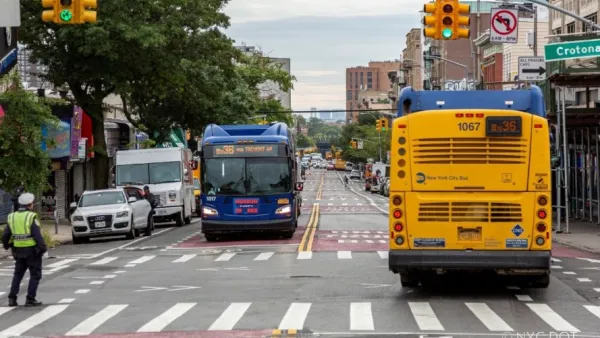
Buses travel at 5mph along this route in NYC. The Bronx's first-ever busway looks to change that
Prior to the busway, buses on the Bx36 route traveled as slowly as 5 miles per hour.
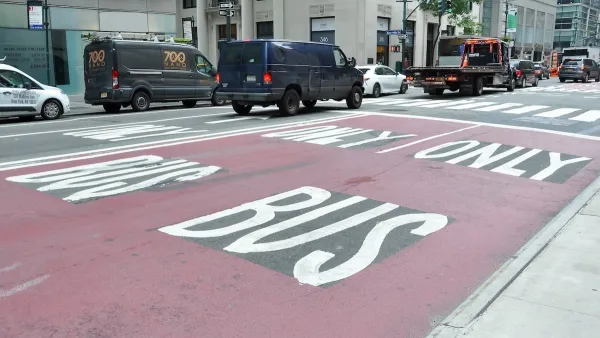
NYC DOT wants faster, more permanent street upgrades
The city is examining ways to build more concrete infrastructure without getting entangled in 'decades-long' projects.

Community feedback ushers in changes to NYC’s Park Avenue redesign
New aspects of the design include a two-way bike lane and separate paths for cyclists and pedestrians.

Planetizen Federal Action Tracker
A weekly monitor of how Trump’s orders and actions are impacting planners and planning in America.

Amtrak, CN end decades-long dispute with eight-year agreement
The new operating agreement establishes an updated framework for the companies to work together, including processes to resolve disputes.

Northwest rail fans eager for Sept. 30 debut of Amtrak’s Airo fleet
Get ready for that new train smell and more seats. But they won’t go faster or run more frequently on the Cascades route in Washington and Oregon.

As El Niño approaches, Newsom vetos bill aimed at protecting California levees from flooding
Gov. Gavin Newsom said the state’s allocated $170 million was enough funding; State experts estimate it will cost $3.3 billion to repair the California Delta's levees.

Boston sues Trump administration over revoked infrastructure grant
The Trump administration withdrew the infrastructure grant because less than 1% of the money would go to electric vehicle charging infrastructure.

NYC to turn city-owned property into thousands of homes
The city has scheduled a public hearing regarding the development for October.

FREE Course: Walkable City 1: Why Walkability?
After describing his path towards focusing on walkability as the essence of good planning, Jeff Speck marches through his five principal reasons for making more walkable places.
Reinventing Malls: Planning Alchemy—Turning Gray Fields Into Gold
The course focuses on the opportunities and imperatives that shape reinvention of mall sites.

City of Thousand Oaks
City of Wisconsin Rapids
Harvard University Graduate School of Design
The Architects Foundation
University of Cincinnati Online
The Pocatello Development Authority
The Urban Renewal Agency of the City of Pocatello