Buckminster Fuller's geodesic dome housing design is a popular form of housing at the temporary festival Burning Man. But why hasn't a good idea caught on in the mainstream?


This piece from GOOD explores the impact of Fuller's dome design, and why it hasn't found greater acceptance.
"Domes represent a whole new way of building, with an outcome that looks completely different from a conventional home. Their low cost should-despite the trade-offs of an awkward shape for furnishing, and weird acoustics-make them classic low-end alternatives to the norm. Would you be as likely to find a buyer for your dome as you would a conventional home? When making a purchase that will become your biggest expense over the coming years, taking a risk on the resale value seems imprudent. Further, in many places, neighbors or home owners associations might fight the development of a dome-next-door in order to protect the character of their neighborhood, which has something to do with their daily aesthetic experience but much more to do with their property values. Though domes have great disruptive potential, it appears that they are not disrupting the right thing, or, to use the language of disruptive-innovation theory: They are competing on the wrong terms."
Read the full story: Four-star Living at Burning Man: The Dome

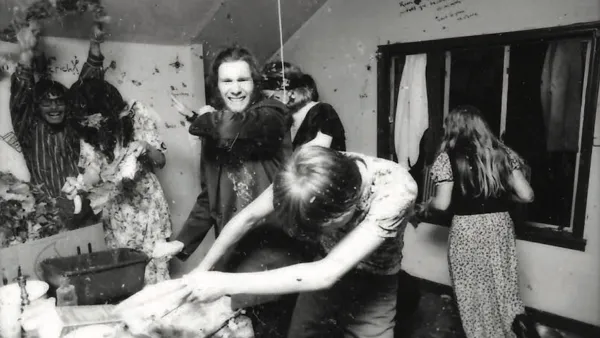
San Francisco is in a “Doom Loop.” A Legendary Artist and Burning Man Founder Knows how to Revive it.
Artists made San Francisco what it was. They might just be the key to its future.
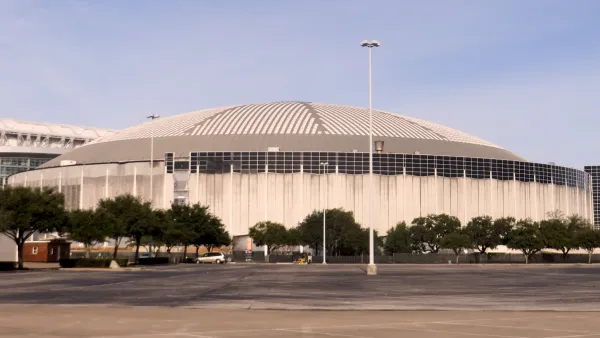
Renewed Efforts to Redevelop Houston's Historic Astrodome
A nonprofit hopes to create a viable plan for the iconic stadium—and find a way to pay for it.
There Goes the Neighborhood: Oh No, Not Burning Man!
Ben Brown unpacks the components of polarization. Recognizing some people are really pissed off for some really good reasons doesn’t seem to help us make better decisions, whether we’re talking about electing a president or planning a park.

Planetizen Federal Action Tracker
A weekly monitor of how Trump’s orders and actions are impacting planners and planning in America.

Amtrak, CN end decades-long dispute with eight-year agreement
The new operating agreement establishes an updated framework for the companies to work together, including processes to resolve disputes.

Judges permit Denver to divert 77,000 acre feet from the Colorado River for reservoir expansion
Overuse and climate change have caused the Colorado River’s water levels to plummet.

Boston has spent millions making the Green Line more accessible — and there’s no end in sight
While the city has invested millions into expanding and adding platforms to the Green Line to make it more accessible, new train cars set to arrive next year will be too tall for disabled passengers to board without raising the current platforms.

Idaho may see an 18% drop in federal surface transit funding — the largest estimated cut in the US
Transit systems in rural communities are much more reliant on federal funding to provide their services.

How ‘post-disaster gentrification’ alters neighborhoods after natural calamities
After hurricanes, fires or other calamities, the original residents of a community are often replaced by younger, wealthier residents.

FREE Course: Walkable City 1: Why Walkability?
After describing his path towards focusing on walkability as the essence of good planning, Jeff Speck marches through his five principal reasons for making more walkable places.
Reinventing Malls: Planning Alchemy—Turning Gray Fields Into Gold
The course focuses on the opportunities and imperatives that shape reinvention of mall sites.

City of Wisconsin Rapids
Harvard University Graduate School of Design
KFH Group Inc.
The Architects Foundation
University of Cincinnati Online
The Pocatello Development Authority
The Urban Renewal Agency of the City of Pocatello