Ben Brown unpacks the components of polarization. Recognizing some people are really pissed off for some really good reasons doesn’t seem to help us make better decisions, whether we’re talking about electing a president or planning a park.


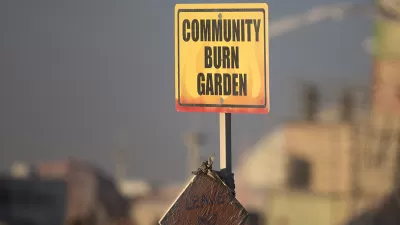
"Reprising: 'Can’t we all just get along?'”
"Answer: Probably not. And we should be thinking about why and how that informs what we do to help neighborhoods and cities adapt to change."
"Let’s pick an example unlikely to trigger the usual arguments over race, ethnicity and inequality, yet one that might be more helpful because of the absence of those factors. I give you Burning Man, the annual event in the Nevada desert where some 70,000 folks gather to test the limits of art, collaborative culture and diversity. On that last count, the one about tolerance for differences, a line was apparently crossed a few weeks back when one set of Burners decided others didn’t belong in the neighborhood."
Brown goes on to examine our tendency to disagree, with or without histories of exploitation and abuse. And how that mucks up the machinery of civic life.
Read the full story: There Goes the Neighborhood: Oh no, not Burning Man!
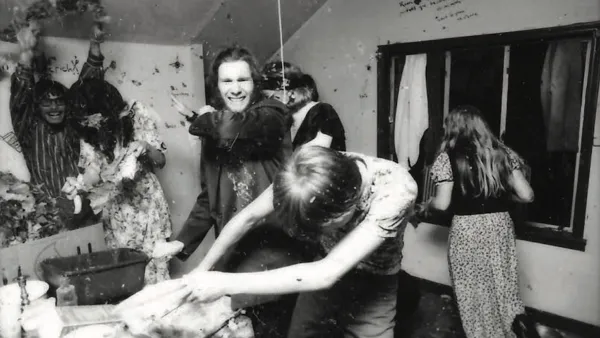
San Francisco is in a “Doom Loop.” A Legendary Artist and Burning Man Founder Knows how to Revive it.
Artists made San Francisco what it was. They might just be the key to its future.
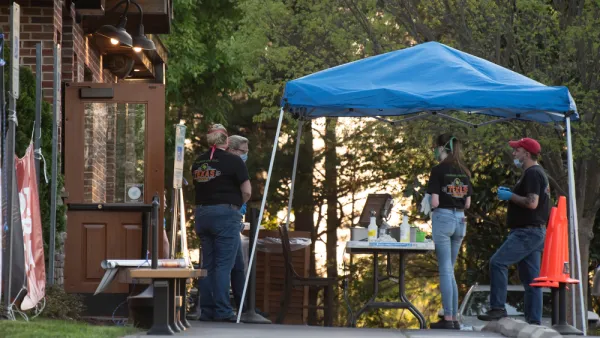
Lessons from the Pandemic: Housing, Retail, Broadband
Second in a series of conversations about what comes next in local government policies and processes, this time between Geoff Koski and Ben Brown on housing, retail, and broadband
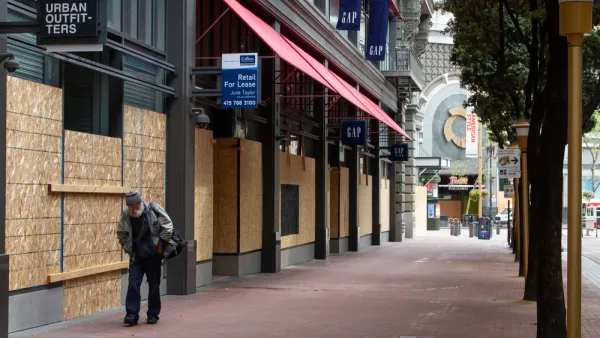
After the Plague: Go Big or Go Backwards?
Among unwelcome lessons of COVID-19 is growing evidence of what was already broken in politics and business. Ben Brown looks at making bold changes in order to improve the lives of the left out and left behind.

Planetizen Federal Action Tracker
A weekly monitor of how Trump’s orders and actions are impacting planners and planning in America.

Eastern Nebraska is running out of electricity
Data centers and electrification are straining eastern Nebraska’s grid, throttling economic development.

Washington state to charge fee to drivers with fuel-efficient cars
Revenue from the fee will go towards supporting the state’s highways.

Instead of building new housing, LA developers are turning mansions into mega-mansions
In the richest areas, the number of houses valued at $30 million with demolition permits has skyrocketed since 2018.

Illinois considers spending $1 billion in taxpayer money on data center
A quantum computing campus and data center are currently under construction in Chicago.

As development costs rise, Boston moves to lessen affordable housing requirements
The Boston Zoning Commission and the City Council still need to approve Boston Mayor Michelle Wu’s proposed changes

FREE Course: Walkable City 1: Why Walkability?
After describing his path towards focusing on walkability as the essence of good planning, Jeff Speck marches through his five principal reasons for making more walkable places.
Reinventing Malls: Planning Alchemy—Turning Gray Fields Into Gold
The course focuses on the opportunities and imperatives that shape reinvention of mall sites.

City of Charlotte
City of Rosemead
Rutgers University, Edward J. Bloustein School of Planning and Public Policy
University of Michigan School for Environment and Sustainability (SEAS)
Hunter College, City University of New York (CUNY)
The Architects Foundation
University District Partnership
City of Cambridge
The Pocatello Development Authority