This slideshow from Design Observer takes a look at New Deal-era utopian cities as they exist today.


Photographer Jason Reblando uses these cities to show how the ideals of utopian planning have fared over the years, and how these places are experienced by their inhabitants today.
"Observing the overcrowding and foul air of late 19th-century London slums, Howard proposed the Garden City concept, which would combine the social and economic opportunities of the city and the natural beauty of the country. The Greenbelt Town Program set out to be the most fully realized manifestation of Garden City principles in America.
In these photographs, my goal is not only to evoke the communal spirit for which the greenbelt architecture was designed but also to meditate on the urge to create a better society. I learned that many residents remain proud of the New Deal legacy; today the greenbelt towns enjoy common green spaces, and housing layouts encourage neighborly interaction. Yet I want my images to acknowledge somehow that utopia is a problematic goal. It is unsettling to realize that African-Americans helped to build Greenbelt, Maryland, but were not allowed to live in it; they were confined to a separate development, Langston Terrace. We might ask: Who defines utopia? Who has the opportunity to experience it? "
FULL STORY: New Deal Utopias

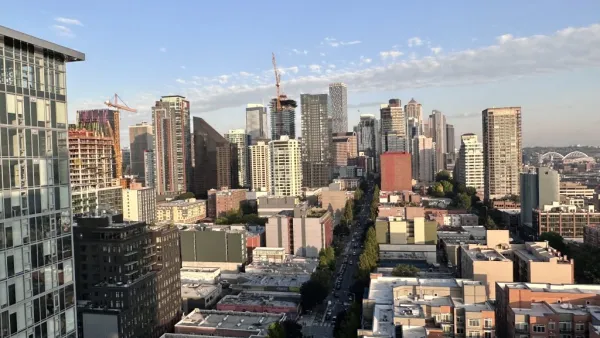
Capturing the Post-Pandemic City: The Power of 'Visual Prosecution'
Have you ever tried immersive photography to show how urban landscapes, with their ever-evolving stories, are changing post-pandemic? A three-time author of books about understanding the innate identities of urban places updates his perspective.
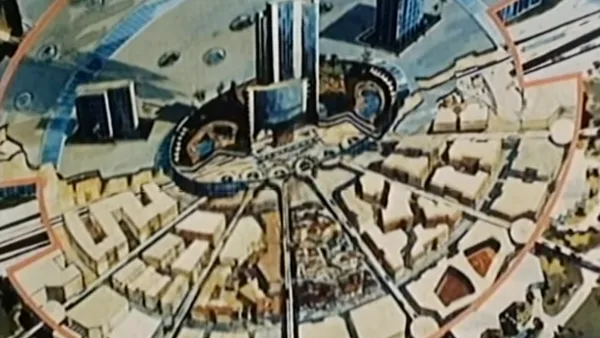
EPCOT: The Original 'Smart City'
What can today’s futurists learn from Disney’s unrealized utopia?
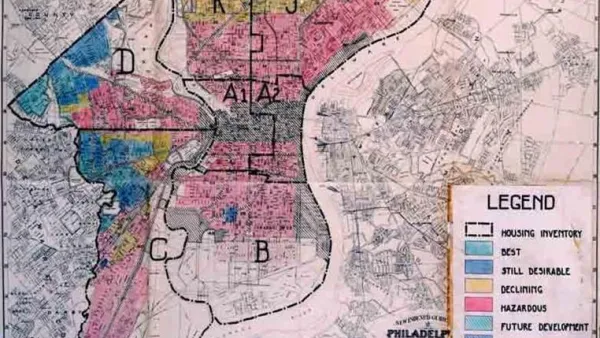
New Research Reexamines HOLC's Role in Redlining
New Deal agencies did engage in discriminatory lending practices–but not quite in the way we think.

Planetizen Federal Action Tracker
A weekly monitor of how Trump’s orders and actions are impacting planners and planning in America.

The state-sanctioned urbicide of Austin
People don’t kill cities. Freeways do.

US to reduce Colorado River water deliveries to Mexico
A new Colorado Treaty amendment reduces Mexico’s Colorado River water allocation by 250,000 acre feet.

Mamdani overhauls NYC's Vision Zero plan with 100 new policy goals
The overhaul aims to reduce traffic deaths and make streets safer for pedestrians, cyclists and drivers through lower speed limits, new safety infrastructure and more.

Amtrak not solely to blame for New Jersey commuter rail's unreliability, report finds
A new study from the Garden State Initiative found that NJ Transit’s budget grew 20% across a 4 year period, but reliability declined significantly over the same period.

EPA erases limits on planet-warming pollution from power plants
Under Monday’s plan, power plants would still have some limits on how much mercury, arsenic and other contaminants they can emit.

FREE Course: Walkable City 1: Why Walkability?
After describing his path towards focusing on walkability as the essence of good planning, Jeff Speck marches through his five principal reasons for making more walkable places.
Reinventing Malls: Planning Alchemy—Turning Gray Fields Into Gold
The course focuses on the opportunities and imperatives that shape reinvention of mall sites.

Eagle County Government
Harvard University Graduate School of Design
Nashville Planning Department
The Architects Foundation
University of Cincinnati Online
The Pocatello Development Authority
The Urban Renewal Agency of the City of Pocatello
Journal of the American Planning Association