A historic tree near the campus of Stanford University is the centerpiece of a fight to redirect California's planned high speed rail project.


Hundreds of years old, the tree is a defining symbol in the city and of the University. Locals there are fighting to make sure the proposed high speed rail line steers clear.
"The tree stands within 10 feet of existing Caltrain tracks between the Menlo Park and Palo Alto stations, with commuter trains passing by 90 times every weekday. Initial plans by the California High-Speed Rail Authority called for widening the tracks to accommodate the new rail line, which would put the tree in jeopardy. Proposed alternatives included a trench or raised track.
To be sure, critics cite many reasons for their opposition, including the costs. But in Palo Alto and neighboring communities, the tree has become a budding symbol for why high-speed rail - approved by a majority of the state's voters in 2008 - needs to be evaluated carefully."
Read the full story: Historic tree stands in the way of Palo Alto high-speed rail
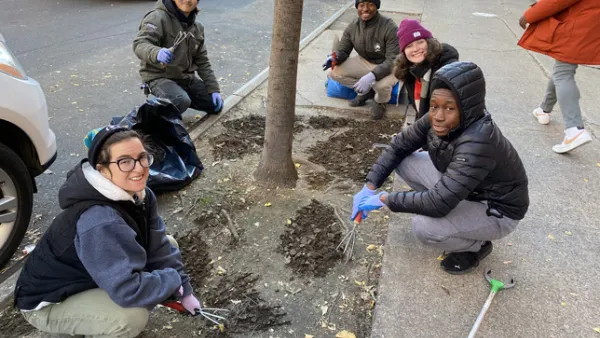
NYC plants over 18,000 trees, the most new foliage in a decade
Many of the trees were planted in communities vulnerable to extreme heat.
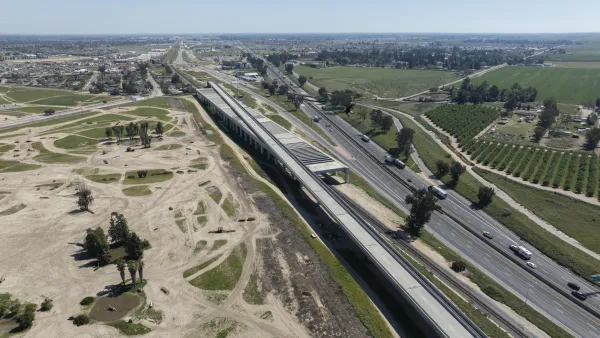
California High-Speed Rail Authority could be broke by the end of 2027
A report from the Office of Inspector General says the authority must borrow against state infusions to stay afloat.
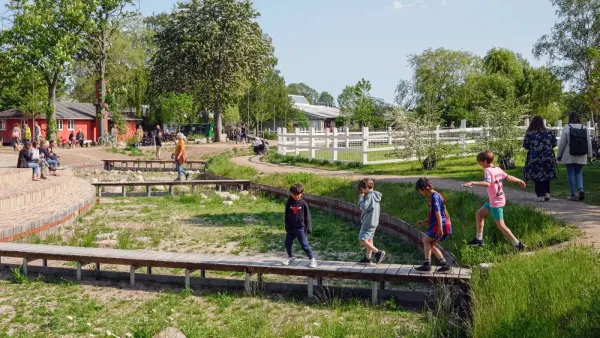
Copenhagen is losing its cool
In a city long designed to maximize light during dark Scandinavian winters, climate change is forcing the Danish capital to rethink its relationship with the sun.

Planetizen Federal Action Tracker
A weekly monitor of how Trump’s orders and actions are impacting planners and planning in America.

California plans to bury El Niño’s downpour
If the state plays its cards right, it may be able to store a billion acre-feet of El Niño’s water in aquifers.

Desperate measures: Advocates weigh draining Lake Powell to fill Colorado River
Draining the reservoir could reduce evaporation losses by a couple hundred thousand acre-feet.

In Texas, data centers are swallowing promised parkland
Residents who moved to Taylor, Texas for a rural community now have to contend with three data centers in their backyard.

How a Chicago-sized wind farm beat the odds and powered on
The project spanned five presidential administrations and a standoff with a U.S. military base.

MTA gives itself 30 days to transform pit into basketball court
The site has been under construction since 2022; the city originally estimated it would finish the court in 2024.

FREE Course: Walkable City 1: Why Walkability?
After describing his path towards focusing on walkability as the essence of good planning, Jeff Speck marches through his five principal reasons for making more walkable places.
Reinventing Malls: Planning Alchemy—Turning Gray Fields Into Gold
The course focuses on the opportunities and imperatives that shape reinvention of mall sites.

City of Rosemead
Rutgers University, Edward J. Bloustein School of Planning and Public Policy
One Hundred Miles
Hunter College, City University of New York (CUNY)
The Architects Foundation
University of Cincinnati Online
City of Cambridge
Montrose County
The Pocatello Development Authority