A small-scale urban agriculture project in Oakland, California is set to receive a $4 million grant to expand its work.


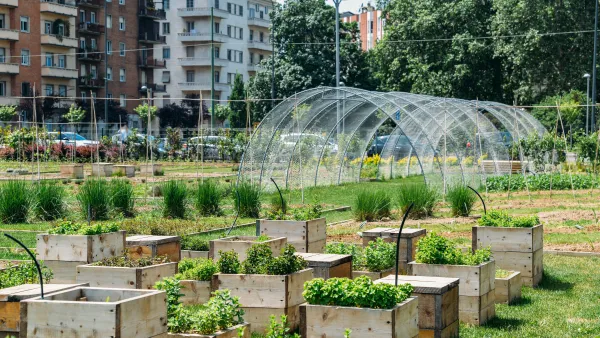
Known as City Slicker Farms, the group has installed urban gardens, farmers markets and agriculture sites throughout the city.
"City Slicker got its start in 2001 on a parcel of borrowed vacant land in the "food desert" of impoverished West Oakland (see Grist's food-justice story), where 32 percent of residents live below the poverty level and mortality rates for diabetes and heart disease are well above the county rate. They soon started a "pay what you can" farm stand, and then a program to help residents grow their own food in their back yards. Today, City Slicker Farms operates seven Community Market Farms, more than 100 backyard gardens, a greenhouse, and Urban Farming Education programs. It grows 20,000 pounds of food annually.
And soon, with state money, City Slicker will be purchasing a 1.4-acre parcel in West Oakland, the vacant, fenced-off former site of a paint factory that has undergone a thorough brownfield cleanup."
Read the full story: Urban agriculture in West Oakland gets a $4 million boost


A Multimillion Dollar Virginia Company is Turning Empty Office Buildings Into Farms
Area 2 Farms envisions a world where 90% of the U.S. population lives within 10 miles of an indoor farm.

Urban Farming Addressing Hunger (and More) in Pittsburgh
Urban farming provides opportunities to increase food security in addition to other benefits.
Urban Ag Activists Up In Arms About New Study
Researchers looked at the carbon footprint of urban farming versus conventional, and the results were surprising.

Planetizen Federal Action Tracker
A weekly monitor of how Trump’s orders and actions are impacting planners and planning in America.

Amtrak, CN end decades-long dispute with eight-year agreement
The new operating agreement establishes an updated framework for the companies to work together, including processes to resolve disputes.

Judges permit Denver to divert 77,000 acre feet from the Colorado River for reservoir expansion
Overuse and climate change have caused the Colorado River’s water levels to plummet.

NYC DOT wants faster, more permanent street upgrades
The city is examining ways to build more concrete infrastructure without getting entangled in 'decades-long' projects.

'Something we’ve never seen before:' rising utility rates could strain city finances nationwide
Data centers, climate change and other factors have caused utility rates in the United States to increase by 38% since 2020.

Trump to overrule local leaders, lease millions of acres of America’s Pacific Island territories’ seafloors to mining companies
International law says that the Indigenous people of America’s territories have a right to prior and informed consent regarding projects that impact their countries.

FREE Course: Walkable City 1: Why Walkability?
After describing his path towards focusing on walkability as the essence of good planning, Jeff Speck marches through his five principal reasons for making more walkable places.
Reinventing Malls: Planning Alchemy—Turning Gray Fields Into Gold
The course focuses on the opportunities and imperatives that shape reinvention of mall sites.

Harvard University Graduate School of Design
KFH Group Inc.
Greater Baltimore Committee
The Architects Foundation
University of Cincinnati Online
The Pocatello Development Authority
The Urban Renewal Agency of the City of Pocatello